Backstories and Backyards: Flying Shuttles
This month's column uncovers the importance of improved weaving tools to early Floyd County households by way of three handmade loom shuttles in the Old Church Gallery cultural arts collections.
"Backstories and Backyards" column looks back into the stories behind everyday objects, connecting each item with the people, places, and events of different eras in Floyd County history. This month's column uncovers the importance of improved weaving tools to early Floyd County households by way of three handmade loom shuttles in the Old Church Gallery cultural arts collections.
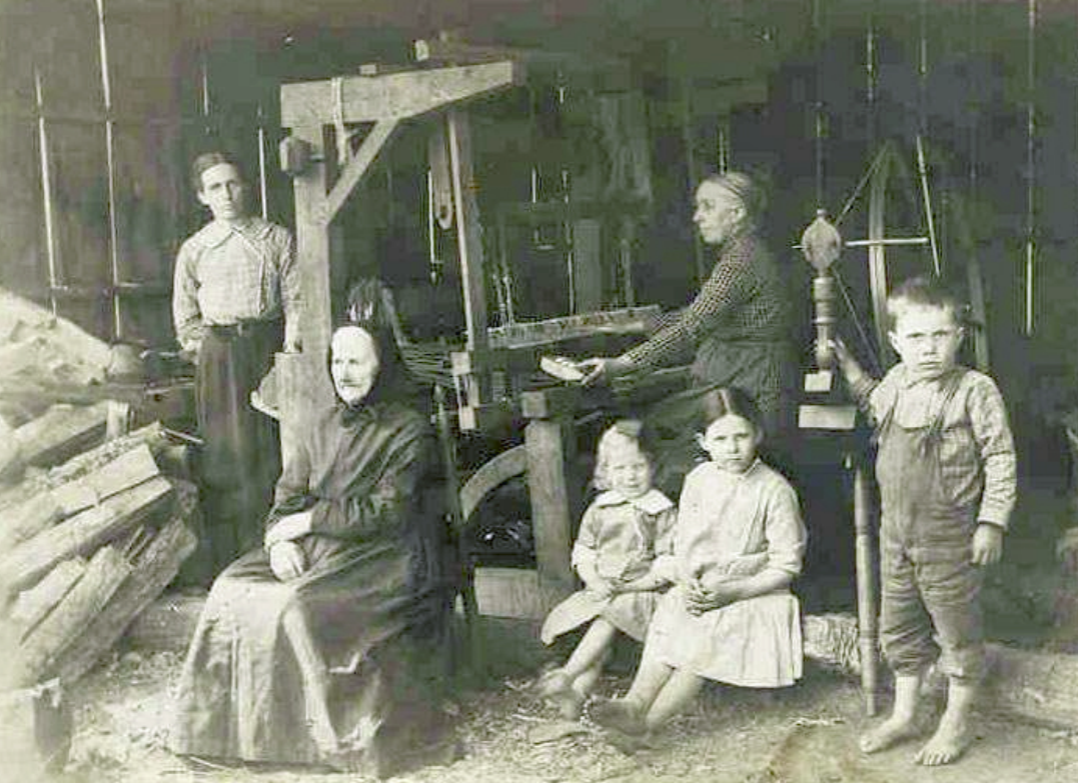
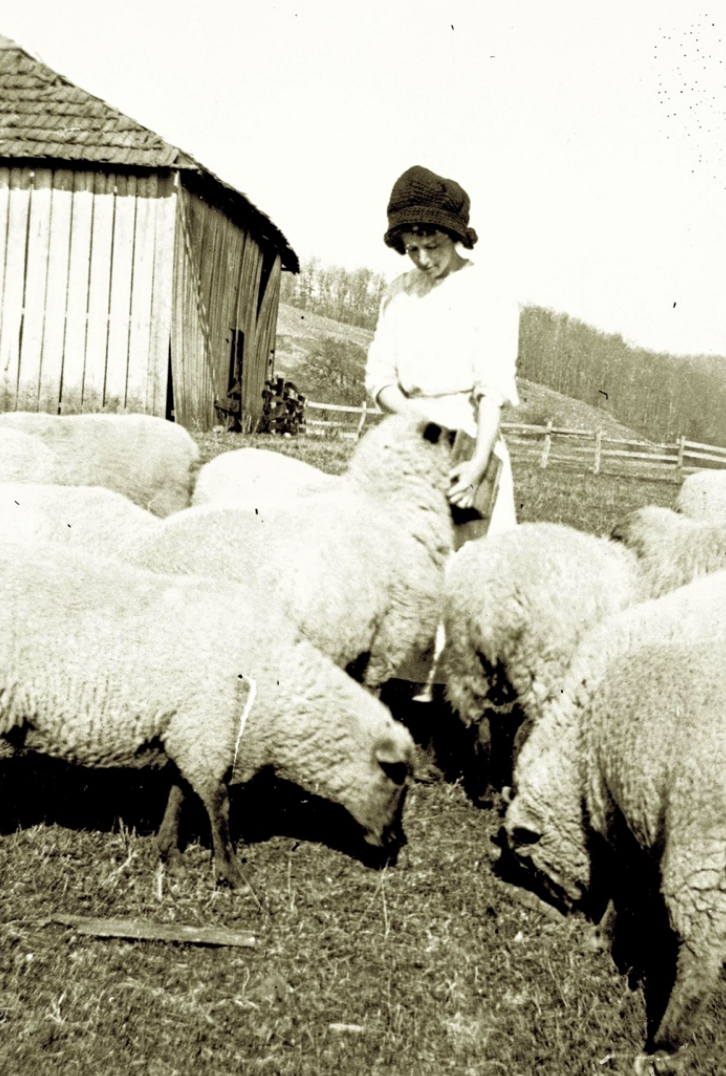
Early Floyd County farmsteads made practical use of natural materials for weaving: wood, reeds, and tanbark from the forest, as well as flax and wool from the farm. Flocks of sheep were a common sight. Their fleece, after shearing, cleaning, carding, and spinning into yarn, often made its way to the family's timbered barn loom, where cloth, blankets, and coverlets were woven.
The very first looms were frame-like structures, often upright, and the shuttle was just a notched flat stick covered with spun yarn that was passed over and under parallel threads. Early weavers had patience and skill, and spent hours and hours at their loom.
As an ancient craft, weaving predates history and, as a new skill, was a great technological advancement. Two weavers with an upright loom are shown on a painted Greek urn, 550 BCE. Biblical references are common: “My days are swifter than a weaver’s shuttle" (Job 7:6). In ancient Greece, both women and goddesses wove. According to The Odyssey, the enchantress Circe was “singing in a sweet voice as she went up and down a great design on a loom,” and Penelope's weaving fended off suitors until Odysseus's return.
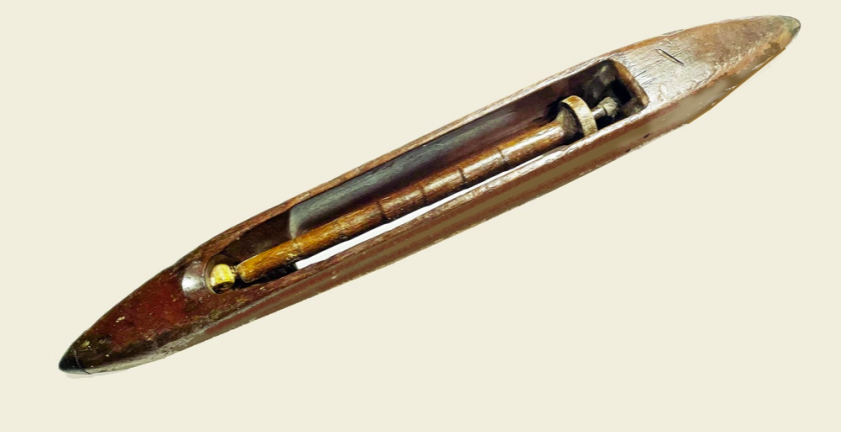
A shuttle tool is designed to neatly store a bobbin to carry the thread of the weft yarn across the warp while weaving on a loom. Shuttles are thrown or passed back and forth through the shed, between the raised and lowered warp threads, in order to weave across and form the cloth.
Here at the Bread Basket we are here for all your baked goods for the Holiday season: Pies, Sweet Bread, Cakes, Cookies and Sourdough Bread, Trays of Meat & Cheese, Cookies, and Sandwiches are prepared fresh made-to-order for each party. Bring this Ad in for a free loaf of bread for each 2 lb of deli products you buy. Call 540-745-5382 to place specials and orders-to-go.
The mechanized flying shuttle with a bobbin insert was a game changer when first invented by John Kay in 1733. Weavers would soon automatically shoot the shuttle rapidly across the loom to wider widths, rather than pulling yarn across the warp at arm’s length, doubling output. This innovation gradually opened the way for the trade of weaving in commercial mills, rather than what had previously been the hand work of an artisan.
Weavers inspired David Shaw's mid-19th century Irish lyrics, "The Work of the Weavers:"
If it was not for the weavers, what would you do?
You wouldn't have the clothes that's made of wool.
You wouldn't have a coat of the black or the blue,
If it was not for the work of the weavers!
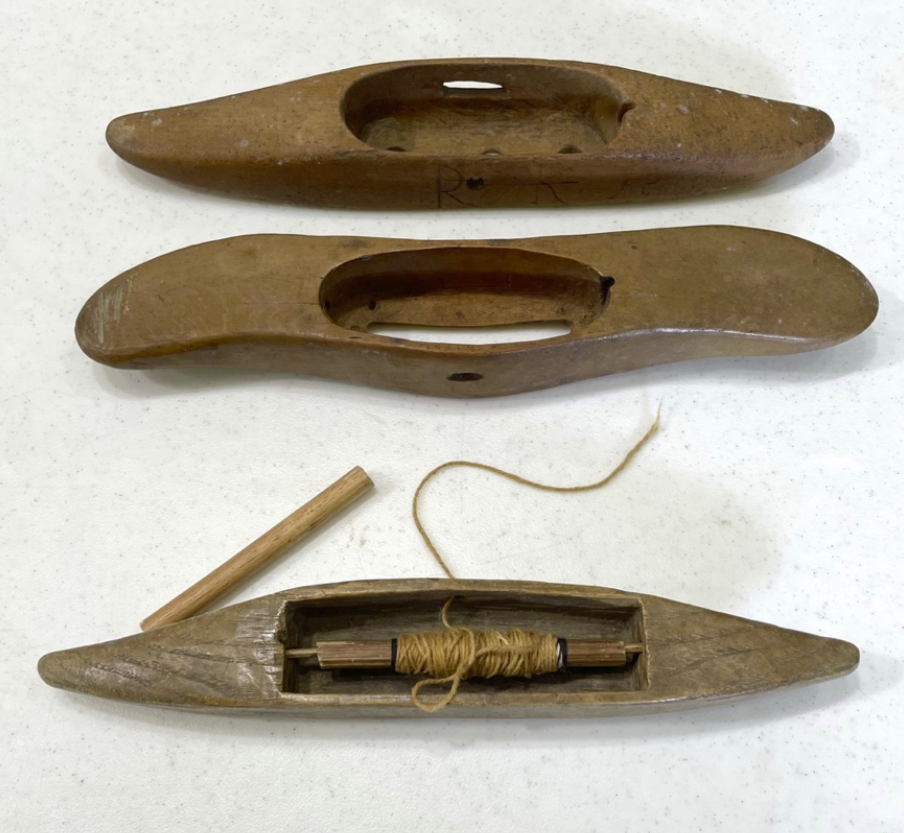
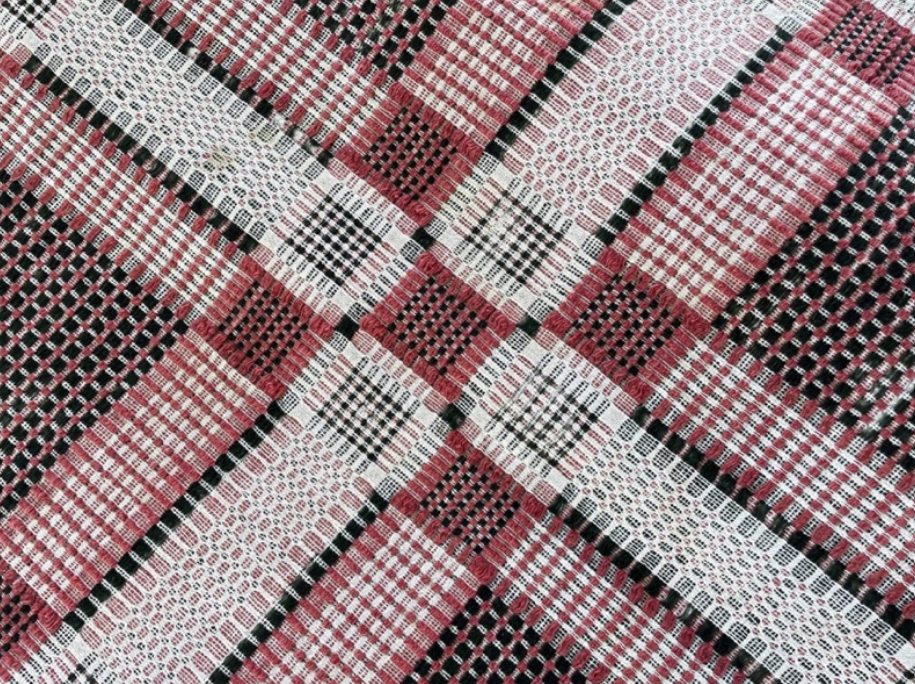
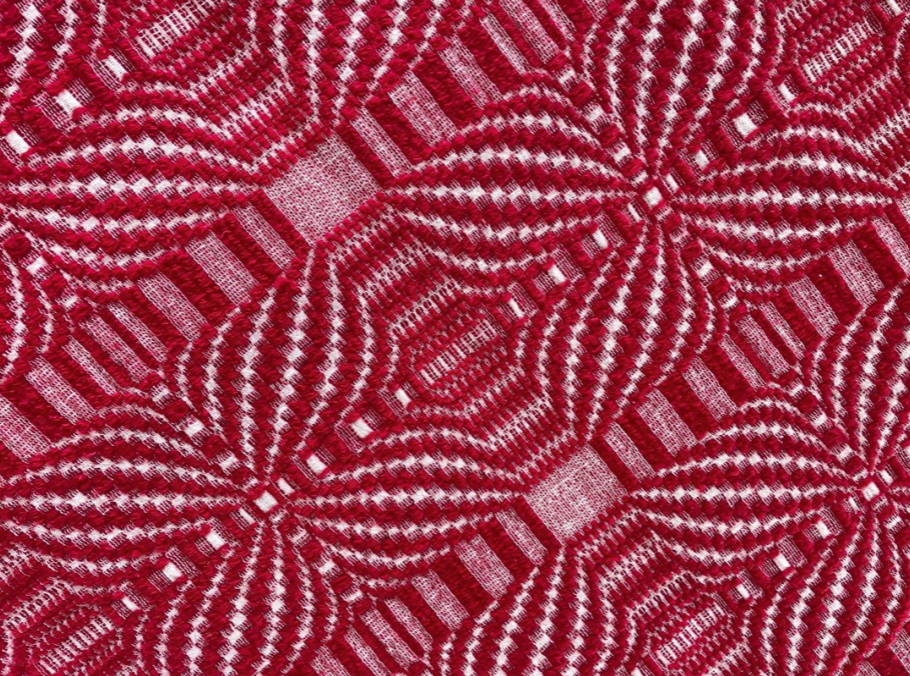
Early 19th century boat shuttles were often made of dogwood, a hard wood that resists splintering and polished up to a smooth finish. Shown here are three elegant Floyd County shuttles, the upper two from the Asa Bishop farm (one with initials R.K.), and the lower from the King family, undoubtedly used by Mattie Yates King (1858–1951) to weave this 1915 "Rose in the Wilderness" coverlet (detail shown below) for her daughter Effie, born 1910.
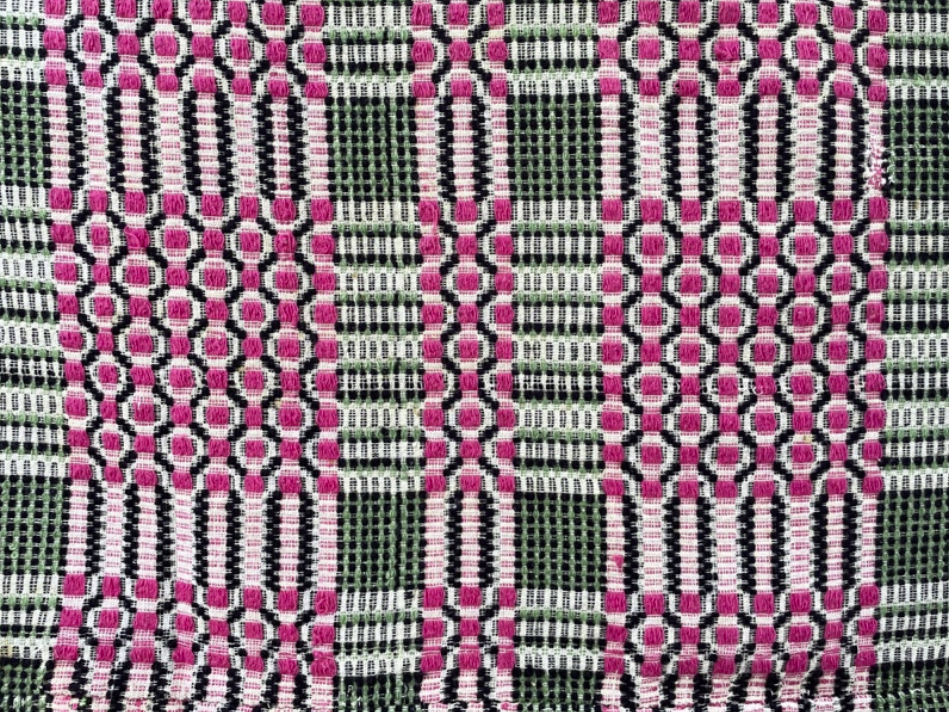
Asa Bishop (1813–1889) and Elizabeth Dodd Bishop (1823–1890) inherited one of the finest farms in the county from Elizabeth's parents, Benjamin and Mary Dodd, near what is now Slaughters’ Supermarket. Family oral history mentions the Bishop loom being housed in a building near the outside kitchen where enslaved workers did the cooking. It's possible that much of the weaving also fell to them, along with the labor-intensive preparation of wool and linen threads needed for weaving coverlets and linsey-woolsey cloth.

Citizens' SmartTown Community Wi-Fi helps EMS, Rescue, First Responders, and YOU get connected when you need it most. SmartTown is designed to provide Wi-Fi coverage in areas with poor or non-existent cellular coverage. Just another way Citizens connects people and communities!
Early four-harness looms were large and cumbersome but almost indispensable for farm households. Using stand-alone floor looms with four shafts holding separate heddles, a creative, technically skilled weaver would follow complex design drafts (patterns drawn on paper showing how to thread the warp threads through the loom heddles onto the winding shaft). Then, designated heddles would lift in unison to allow the colored weft threads to weave a pattern.
Most coverlets were woven with purchased cotton and locally produced wool yarns. The Old Church Gallery collections include linsey-woolsey blankets (linen and wool) and over 40 loom-patterned coverlets, many currently on display at the Floyd Center for the Arts exhibit, “Strings Attached – The Enduring Appeal of Overshot Coverlets.”
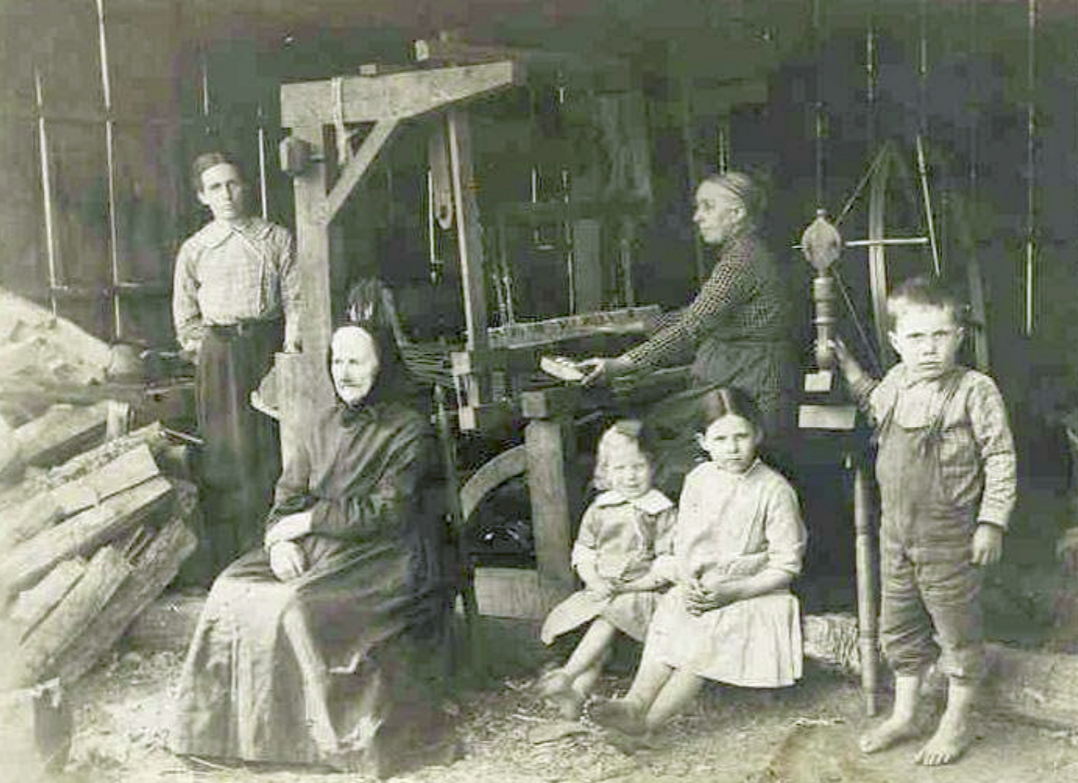
By the early 1800s, following the 1793 invention of the cotton gin, inexpensive mill-spun cotton yarn became readily available. Until then, farm families raised and processed flax for linen and reared sheep for their wool. Once home weavers could obtain purchased cotton yarn for their warp, they stopped using hand-spun linen. Weaving took on new possibilities. Overshot coverlets and dozens of weaving patterns quickly became a popular form of artistic expression.
Floyd County coverlets are mostly woven with the overshot weave. Using a four-harness loom, overshot weave intertwines the cotton warp with the cotton weft to form a plain weave or cloth foundation. The colored wool weft then skips over and under the plain weave to form a pattern, complex and sometimes multi-colored, according to the particular draft design.
Early coverlet makers remembered and recorded patterns using handwritten pattern books and draft strips on paper. Weavers memorized the physical sequence of pressing foot treadles for short, repeating geometric units (overshot block sequences) to maintain a steady working pace. The fabric pattern that was emerging on the loom also provided visual feedback so that the weaver could track steps without constantly checking notes.
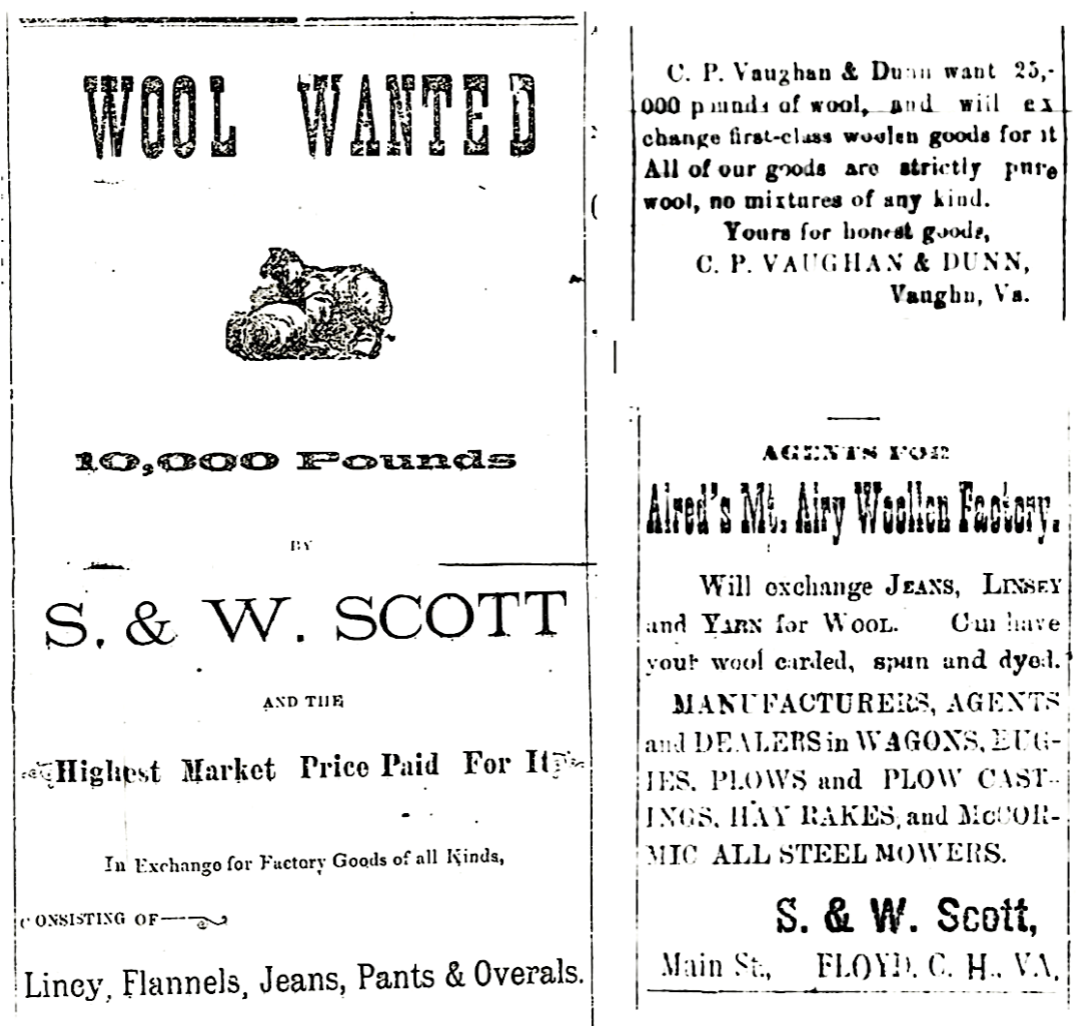
Mills began to solicit quantities of wool for their textile production, including the Vaughn-Dunn Woolen Mill in Willis. In the October 1988 Mountain Laurel issue, Tom Dunn's grandson recalled: "In the woolen mill the customer could trade his wool at the market price for stocking yarn, flannel, jeans, blankets, and coverlets. Or they could pay cash to have the wool made into blankets, etc. As I remember, it took eight pounds of wool and three dollars cash to get a blanket."

Our store offers a selection of lumber, roofing material, insulation, plumbing fixtures, electrical components, and conveniently located five minutes outside the town of Floyd.
After the Civil War, Wilson T. Vaughn (1810–1883) started a commercial wool-carding operation near Buffalo Mountain. In time, his sons Thomas A. Vaughn, Columbus Penn Vaughn, and Christopher Green Vaughn expanded the business. In 1873 they added equipment that cleaned and turned wool into rolls for hand spinning and weaving, a great boon for home weavers preparing yarn for their coverlets. Soon after J.T. Dunn joined the company around 1901, the Vaughn-Dunn Woolen Mill added mechanical looms and hired weavers to make coverlets in a factory setting. A water-powered turbine drove the carding machines, yarn spinners, and looms that produced coverlets, woolen blankets, and shirt flannel.
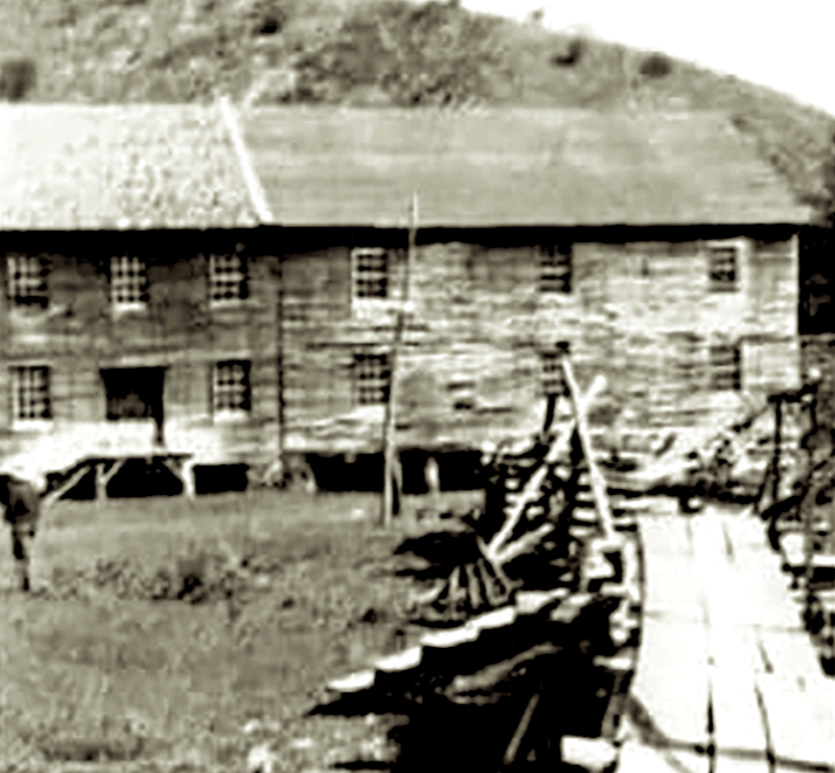
Stanley Lorton described the working of the flying shuttles at the Vaughn-Dunn Woolen Mill during his Floyd Story Center's Buffalo Mountain series 1999 interview:
Stanley Lorton: But they would spin this wool and put it on the bobbins and put these bobbins in a shuttle; and this shuttle’s going to go back and forth through the warp with the threads that’s coming off this warp, and this harness goes up and down, you know.
And this shuttle goes back and forth, that’s got this wool in it. It’s pulling the wool thread every time it goes through. It’s pulling the wool thread, and the harness goes up and down, makes that thread go in a different place each time, and that’s lined up with the blankets or whatever.
And they have a pattern and that can make these harnesses work different ways, to make different patterns, you know.
The Mountain Laurel, October 1984 issue, featured family recollections of the woolen mill. "Oneida (Dunn) remembers when she was an early teenager, how she helped to gather up the sun-dried wool from the grass lawn in front of the mill and carry it to the second floor. She remembers the newly purchased wool being washed in a 100-gallon copper kettle to remove excess oil and dirt. The same kettle was used for dyeing the yarn and fabric to obtain the many beautiful colors for which her father (Tom Dunn) was famous. . . . And she remembers, along with many folks when, 'All wool and a yard wide' was once a declaration of excellence."
Interviews with sisters Irene Vaughn Harris and Vada Vaughn Hylton (2006 and 1999) also captured early memories of the Vaughn-Dunn Woolen Mill:

Your trusted Floyd County real estate experts. Visit our downtown Floyd office adjacent to the stoplight or browse our current listings online. Representing both residential and commercial buyers and sellers with integrity and always working to get YOU the best deal!
Irene Harris: They made blankets and coverlets; they made some of the prettiest coverlets. We used to shear sheep, you know, and take the wool down there, and they washed it and dyed it. Oh, I stood and watched them make coverlets and you wouldn't believe, and they had big old wheels in there.
Vada Hylton: They had five thicknesses of lumber in that building to hold that machinery, and they had big looms, and it all run by water power. And the company that they bought it from sent an engineer in here to set it up for them, and show them how to do all this work. A young engineer (Tom Dunn), and he fell in love with my grandpa’s niece, and they got married and he stayed. And so, he run that place as long as it was run. And they made everything, they made yarn. People would take their wool in, and they would make yarn, and weave some of the prettiest woolen material you ever saw.
Inventories cited in “The Water-Powered Mills of Floyd County, Virginia” (Webb and Cox) show that between 1880 and 1917 at least 15 water-powered mills were processing wool for home weavers in Floyd County. And I learned that the site of one of those mills was on Beaver Creek when I found a local 1875 deed with a boundary line that ran through "the corner of a carding machine near the mouth of a creek." That was puzzling until I visited the American Textile History Museum in Lowell, Massachusetts. I had imagined heavy metal machinery hauled in somehow, but the museum had a 19th century wool carding mill on display, and I saw that the machine was freestanding, operated with belts and waterpower, and was made primarily of wood! Early American industry had once made its way to my neighborhood, courtesy of 19th century textile advances and the importance of the shuttle's work for the farm and family.
All Floyd Story Center interview excerpts are courtesy of Old Church Gallery, Floyd, Virginia.