
Backstories and Backyards: Frost, Freezes, and Frolics
"Backstories and Backyards" column looks back into the stories behind everyday objects, connecting each item with the people, places, and events of different eras in Floyd County history. Inspired by an early 1900s ice skate, this month's column uncovers much winter lore.

In recent times, Floyd County winters seldom stay cold enough to skate, slide, or even walk on iced-over ponds or rivers. In a 2002 interview, Roger Shortt recalled a time, about 1975, when he and his family were able to walk upstream on the frozen-over Little River.
"Ice was about that deep (7 inches), and we walked for a mile from down here on up the stream, right in the middle of the water."
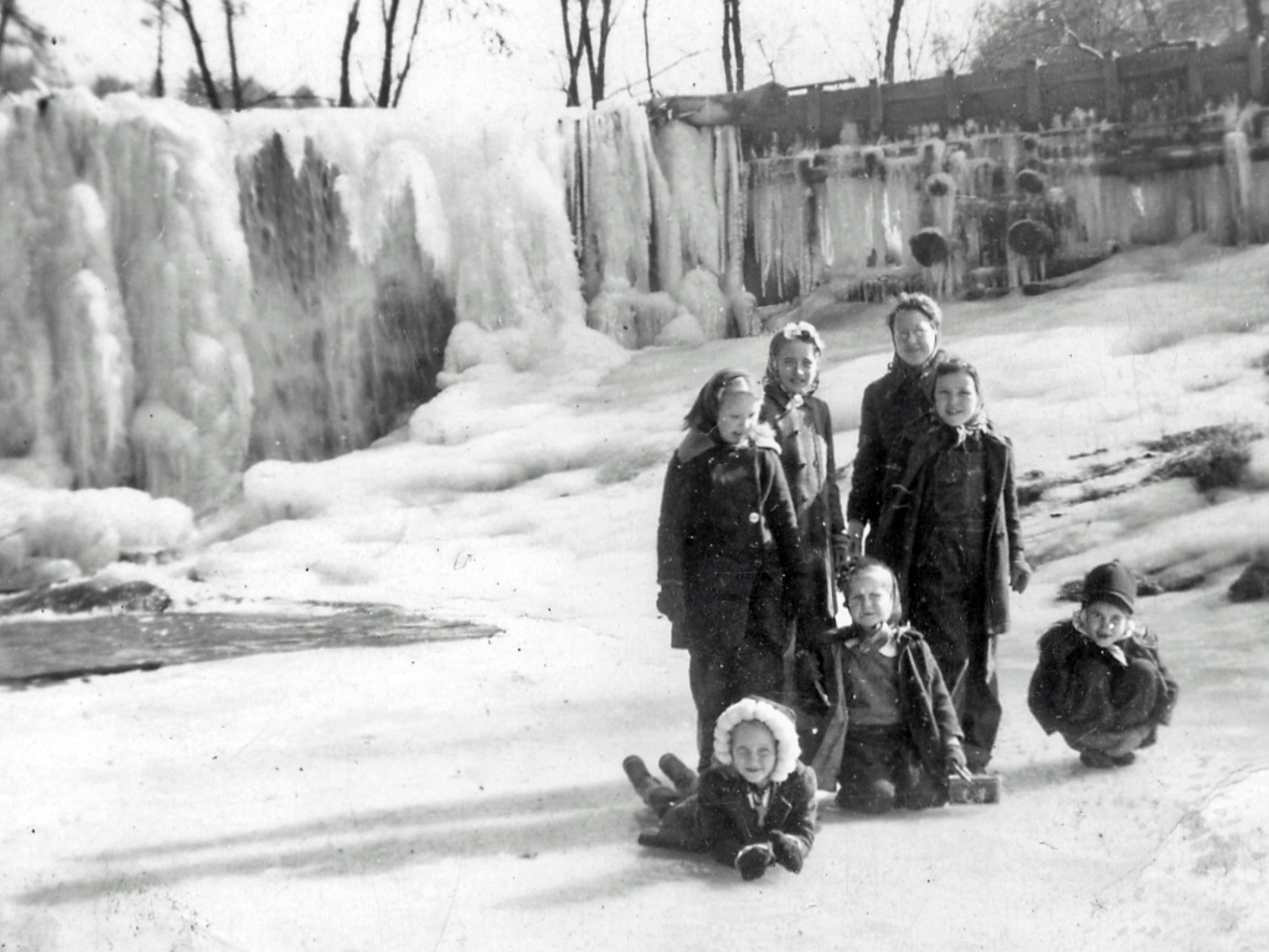
The 2002 Little River Place-based Interview Series, conducted by Radford University Anthropology students, in partnership with the Old Church Gallery, hold a wealth of river lore, including county life during winter freezes. Garfield Radford recalled some of those times for us.
Garfield Radford: "The river would freeze over, and then it would stay frozen over for months, you know. And Papa come over one day, and said he wanted to take the sheep over home while we can get them across the river. You see sheep won’t go in water. And we got down there to the river and Papa had the horse, and I was driving the sheep, and he went on across the river on the ice riding the horse. And I got two sheep, tied a rope around their neck, and got them to the bank and the others were all standing there. We drug them two sheep across and when one sheep goes, they all going to go, and they all just walked on that ice.
"We’d go ice skating on the river, get on the river and go for a mile or two just running and playing, you know. We just had our shoes, like we wear now every day. We didn't have no skiing, wasn’t no such thing as skating shoes."
Dorsey and Louise Thompson, interviewed in 2002, also related a time when the river could become a walking path. When interviewer, Ashley Robbins, asked, "Does the river ever freeze now?" Mr. Thompson recalled earlier times:
"Sometimes, it doesn’t freeze like it once did. Ice skate a little, maybe. Our winters haven’t been very cold. When it used to freeze over and stay frozen all winter, a neighbor could walk maybe three miles on the ice years ago. But it would freeze over, and in the Spring, they’d have a hard rain, maybe, that ice would go to breaking up, and it’d break trees over."

Citizens' SmartTown Community Wi-Fi helps EMS, Rescue, First Responders, and YOU get connected when you need it most. SmartTown is designed to provide Wi-Fi coverage in areas with poor or non-existent cellular coverage. Just another way Citizens connects people and communities!
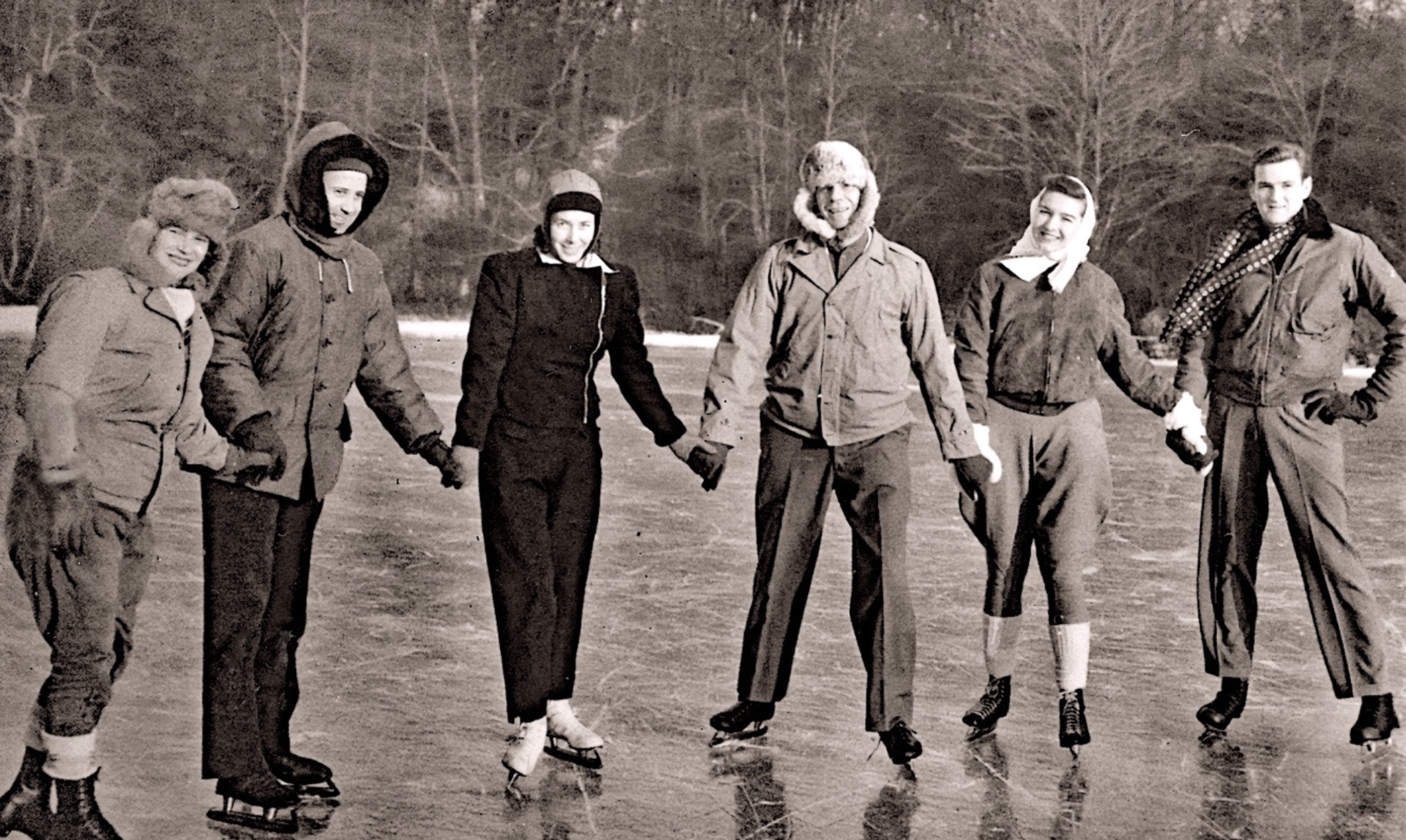
Youthful skaters in the 1960s could go to Board's pond for an afternoon’s fun, and, up into the late 1990s, I was able to ice skate on Harless Quesenberry's fish pond in early January. The group pictured here on the Irvin Huff mill pond seem to be wearing both hockey skates and figure skates. They were assured of safety after Irvin Huff (1882-1969) drove his car on the ice to confirm that it was frozen solid.
In her 2002 interview, Silvie Granatelli related Little River history she was told by her neighbors:
"Stories, you know, in the old days they would say the river would freeze over every winter, solid. And people used to ice skate up and down the river to visit each other, back in the time when there were more people that had carriages, horses, and wagons and not cars. They walked more, so they would ice skate on the river."
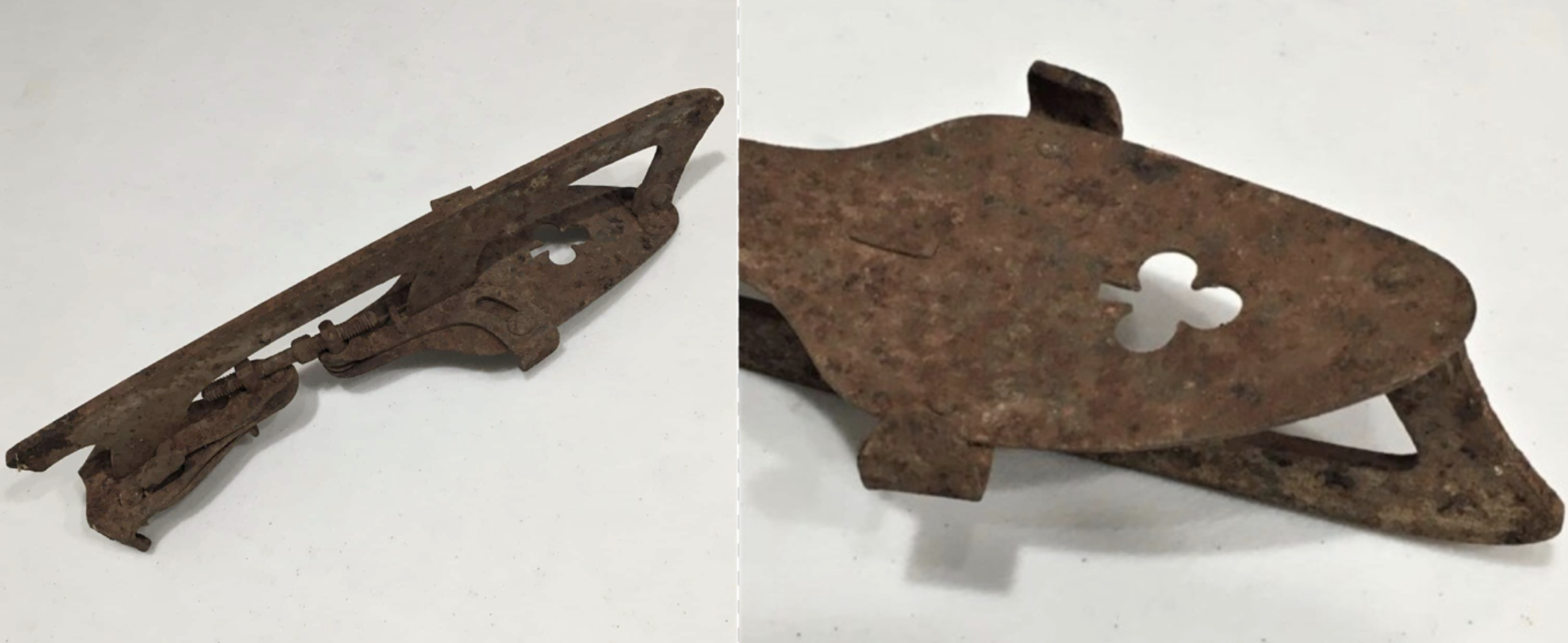
This single clip-on ice skate was found in a box of shoemaking tools purchased at the estate sale for Sarah Amanda Phlegar. The distinctive clover leaf design dates after 1894, manufactured by the Union Hardware Company of Torrington, Connecticut, and would have had a leather ankle strap. In the early 1800s, Sarah's great-grandfather George Phlegar (1762-1839) dammed up Oldfield Creek to supply water for his grist mill. The Phlegar mill pond near town became a winter recreation spot and most likely was where this skate’s original owner practiced figure-eights.
As noted in Margaret Welch’s booklet, “The Shepherd of Floyd,” Rev. John Kellogg Harris (1832-1910) took his Oxford Academy students ice skating on the mill pond, where the students found it as “hard to match” Rev. Harris in “playing ‘shinny’ or cutting intricate figures on the ice as to trip him in Virgil or mathematics.” [The main goal of shinny or pond hockey was to have fun!]

At Edward Jones, we deliver candid guidance and personalized investment strategies to help you plan for and realize the possibilities of your future — for you, your family and generations to follow.
Aside from winter fun, winter ice served a necessary function, unheard of now. Today, with the easy availability of home freezers, the old wooden ice box with its metal-lined interior would be hardly recognizable to most. However, every Floyd County home wasn't fully electrified until the late 1950s, and the icebox, ice house, springhouse, and cold cellar would have been essential additions to the homestead.
Large ice boxes were found in country stores, such as the S.E. Lawrence Store, as Diana Lawrence Wimmer described in her 2021 interview with Judy Hylton:
Diana Wimmer: "And later on, my father bought this huge wooden refrigerator, and the way it was made, there was a hundred pounds of ice that he would buy, and it would keep the entire refrigerator cool enough to keep things in there, like some things like cheese you know, and foods that needed refrigeration. I remember the ice truck; they would deliver that hundred pounds of ice once a week, and the inside of the refrigerator was metal, so that kept it really cool in there."
Curtis Sumpter (1908-2000) told of a long-past need for ice, as recorded in the 1987 Floyd Historic District survey: "Everybody in town had an ice house." As a boy, he was paid one dollar a month to get ice out from storage for people every other day.
At one time there was an ice storage cellar next to the public spring in town on Wilson Street behind the Pharm House. I was told that the two-story residence had double-wall construction with a pit basement below.
Bill Hayden, whom I interviewed in 2011, noted that Martin and Ocie Bower had another ice house prior to WWII, and that Mr. Bower transported ice to town:
"They had an ice barn. He sold ice. They put it in straw to keep it, and they sold ice there. They had an old granary down in there – they had a basement, they dug down, and they wrapped the ice in straw."

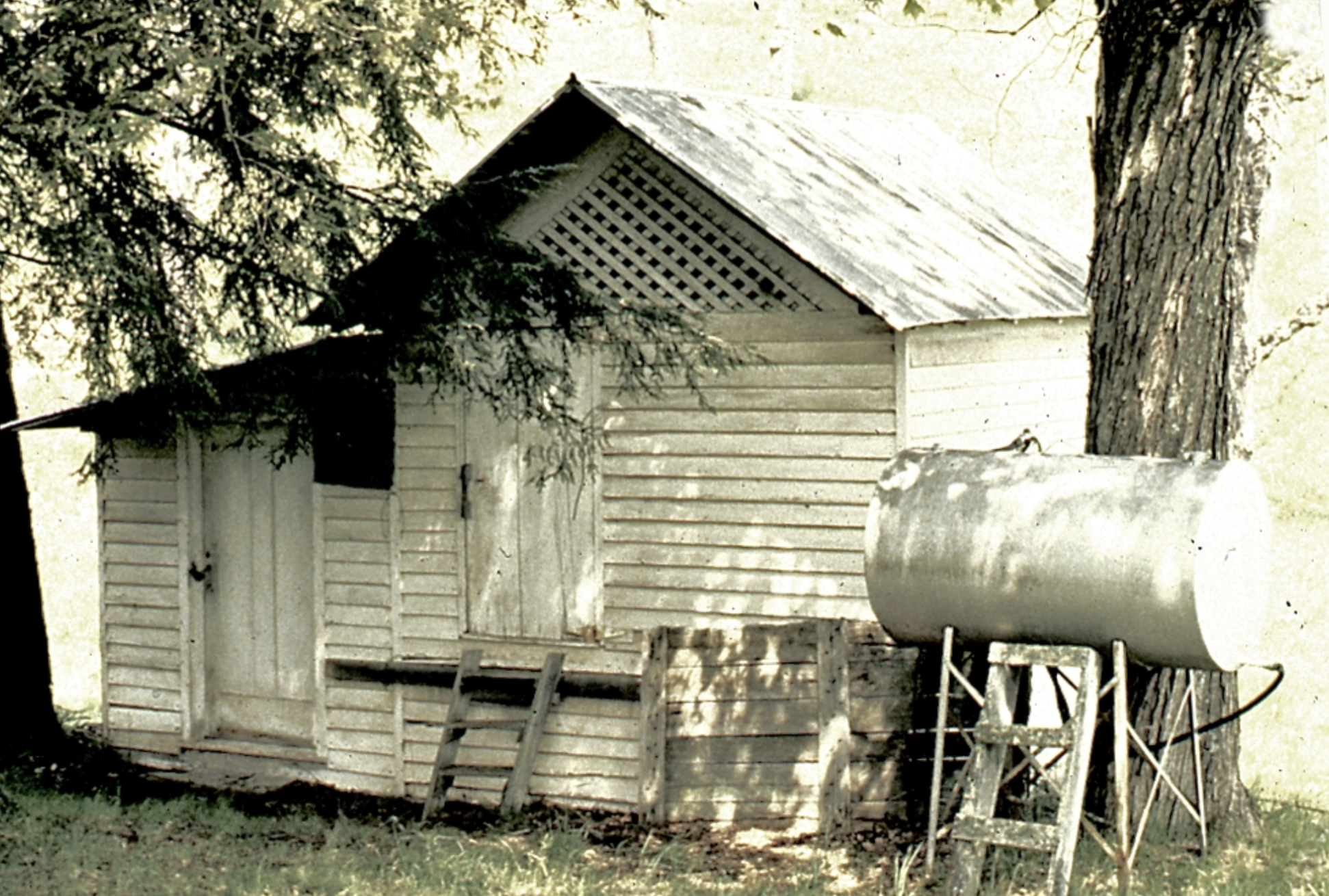
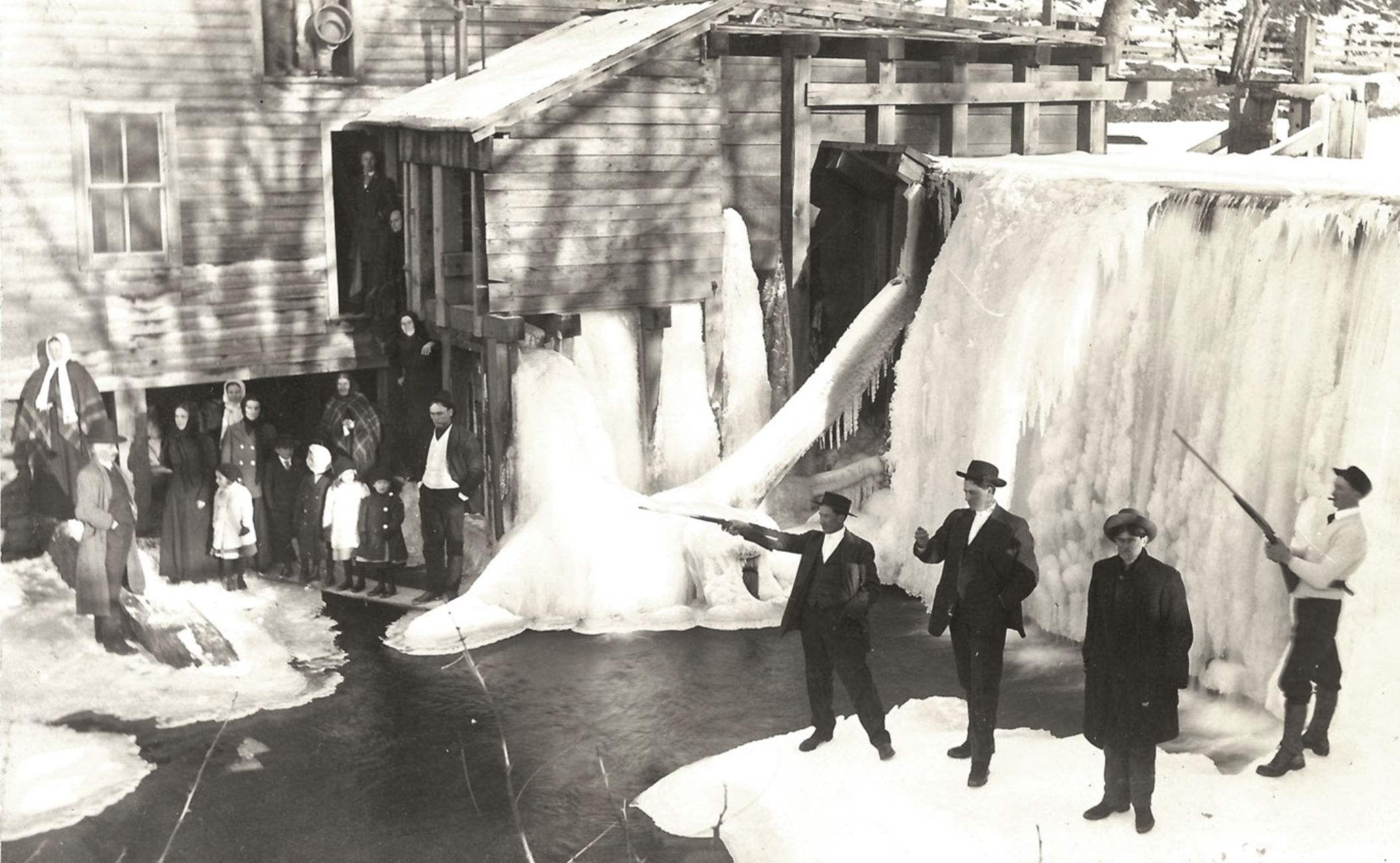
Natural winter ice was harvested from rivers and mill ponds during colder decades. Mills might close down without any thaws to turn the mill wheel. Ice houses were common. As George Edwards related to interviewers in his 2002 Little River series interview, at least during the 1930s, at Sowers Mill dam, river ice could become solid enough to drive an automobile on!
George Edwards: "Oh, that was, I’d say that was probably ’35, ’36, '40, somewhere along there. Oh, yes, the Model-A Fords were on the ice on the dam, you know, out there playing around, it was two or three of them. Preston Naff and his brother J.T. was two of them, and probably Ward Sutphin was out there on the ice. But the ice back then was so much colder than it is now. It got like eighteen-inches thick, so they was pretty well safe out there on the dam with their cars.
"And, people would go out on the creeks and cut out big chunks of ice and put it in, they called it an ice house, you know. They had sawdust and built it under the ground; they’d cover it all up with sawdust, thick. You’d go in there in July and dig out a block of that and wash the sawdust off of it and have ice for your tea and on special occasions."
Tiffany Shifflett: "So, what does the sawdust do? Does it help keep the ice frozen?"
Edwards: "Yes, it was insulation, you know. They covered it up in sawdust. In fact, people used to use sawdust in some of the houses, pour it between the studs for insulation. So, I don’t know of anybody ever cut ice off the river, they probably did. But my granddaddy had one of those ice houses. And I can remember going down there when I was a boy on Sunday, and they’d have company come, and getting the ice, you know."
Tiffany Beaver: "How would you get the ice off? Would you saw it out?"
Edwards: "They cut it out, with an axe, you know, or a saw, and sawed it out. [some saws were made especially for ice cutting] But back then, you know, the creeks weren’t full of everything like they are now. The water was about as pure as it was coming out of the spring."
Here at the Bread Basket we are here for all your baked goods for the Holiday season: Pies, Sweet Bread, Cakes, Cookies and Sourdough Bread, Trays of Meat & Cheese, Cookies, and Sandwiches are prepared fresh made-to-order for each party. Bring this Ad in for a free loaf of bread for each 2 lb of deli products you buy. Call 540-745-5382 to place specials and orders-to-go.
Indeed, many Floyd County settlers would have maintained an ice house with below ground storage. Janet Keith's written history of the Laurel Branch community notes such an ice house at the 19th century Goodykoonz farm:
"The ice house which served the community was on the bank between the house and West Fork. (In winter, blocks of ice would be cut and stored here when ice formed on the surface of West Fork.) When someone in the community was sick, an individual would be sent to get ice to 'break the fever.'"
The ice stored in pits or ice houses didn't last all summer, according to a story that neighbor Tom Sowers once shared with Silvie Granatelli:
"The Sowers used to have an icehouse, and they’d collect big blocks of ice. And it was built right down across the river, and they would share the ice, you know, in the neighborhood. And then in July, whatever was left, they would make ice cream. And I think that’s where the thing about having ice cream on the Fourth of July was when their ice was running out, so they needed to use it up and make ice cream."
Indeed, the ice didn't always last. But by the 1930s, electricity from the Sowers Mill dam generator eventually brought refrigerators to town. Catherine Dobyns Nester (1921-2004) recalled the time before the family's first refrigerator:
"What I remember most was that we didn't have a refrigerator, but the lady in the home above my house did have one. So, I would slip away from home and go to her house and tell her that I would go to town and shop for her, if she would only give me one cube of ice so that I could lick on that just like a popsicle. I thought that was the most fabulous thing you could possibly do was to have a piece of ice."
In past times, thrifty use of winter ice kept food provisions safe, leaving time to enjoy simple pleasures on bright winter days of frosts, freezes, and frolics.
"Backstories and Backyards" column looks back into the stories behind everyday objects, connecting each item with the people, places, and events of different eras in Floyd County history.
Special thanks to Ricky Cox for sharing Frank Webb's photo archives from their publication, The Water-Powered Mills of Floyd County, Virginia.
All Floyd Story Center interview excerpts are courtesy of Old Church Gallery in Floyd.