Backstories and Backyards: Games and Pastimes
This month's column uncovered all kinds of fun, inspired by a game carved on a repurposed poplar board in the cultural arts collections of the Old Church Gallery.
"Backstories and Backyards" looks back into the stories behind everyday objects, connecting each item with the people, places, and events of different eras in Floyd County history. This month's column uncovered all kinds of fun, inspired by a game carved on a repurposed poplar board in the cultural arts collections of the Old Church Gallery.
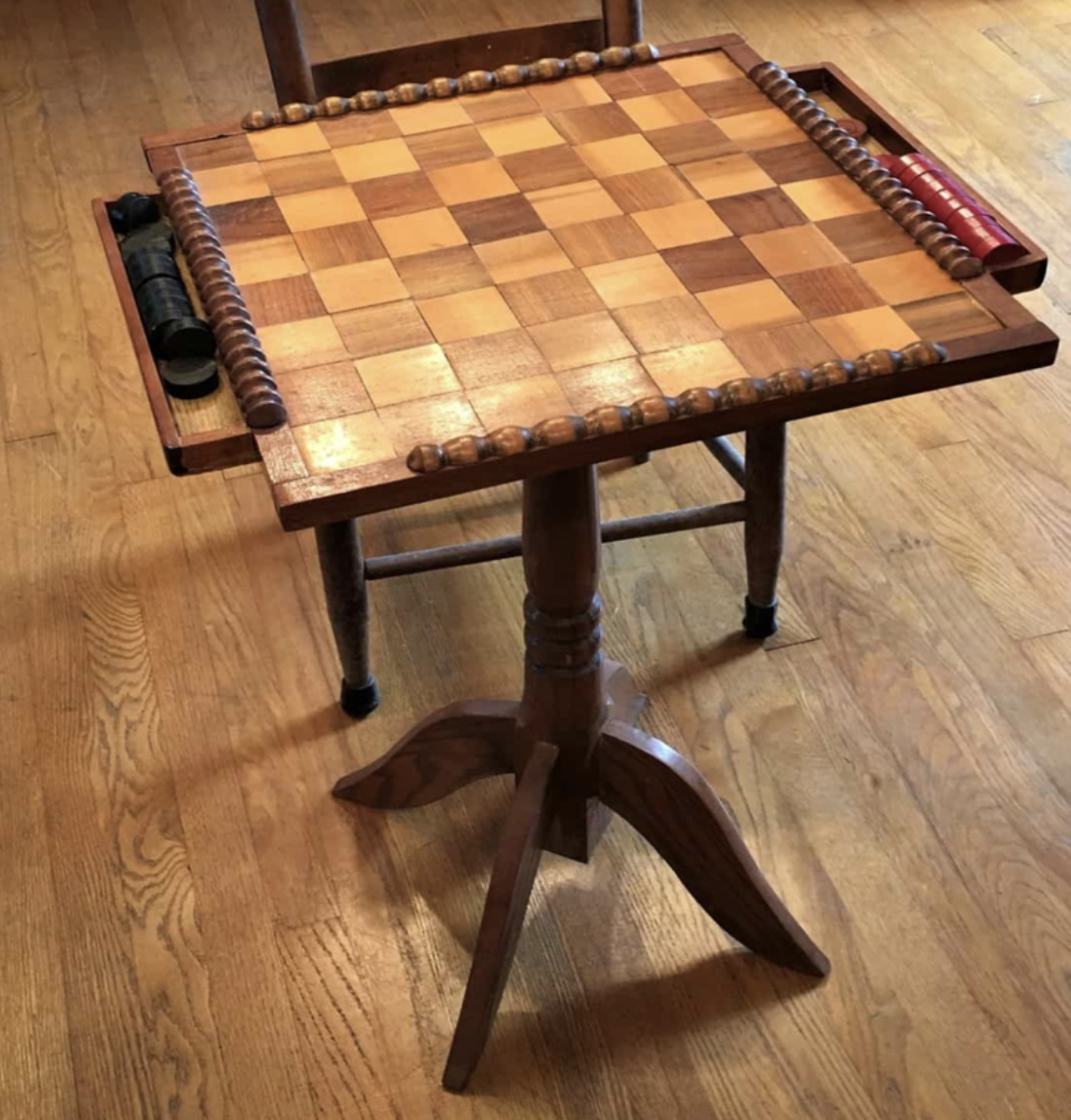
Although oral history can be second- or third-hand information, it usually holds a grain of truth, and sometimes might be the only record remaining. For example, it seems that Floyd County has the rare distinction of sharing a local placename with a game. Just prior to Rural Free Delivery providing mail to every village and neighborhood, in 1897 Postmaster J.J. Poff officially formalized the Check Post Office and named it after the popular game of checkers played there.

Citizens' SmartTown Community Wi-Fi helps EMS, Rescue, First Responders, and YOU get connected when you need it most. SmartTown is designed to provide Wi-Fi coverage in areas with poor or non-existent cellular coverage. Just another way Citizens connects people and communities!
Local historian Effie Brown, interviewed by Radford University student Patricia Jacobs for the 2006 Migration Interview Series, gave us the whole scoop:
Patricia Jacobs: How did Check get its name? That's an unusual name. Do you know?
Effie Brown: Yes. [laughs] I'll tell you that one, too. There was a store in Check owned by Mr. Harvey Poff. The men gathered there and played checkers. And sometimes, they didn't go home for lunch. They just stayed all day. And if any of the women visited each other, and, of course, they had no telephones then, they'd say, "Where's so-and-so?" And they'd say, "Well, I guess he's playing checkers," or "I guess he's gone to checkers," or "He's not home. I guess he's at checkers." Well, it come a time when they were going to apply for a post office, and they suggested the name Checkers, because that's what they called the store. They applied for Checkers, and that was already the name of one post office in Virginia. So, they settled on Check instead of Checkers. And it's been Check ever since.

Andrew Blevins
210 N Locust Street
Floyd, VA 24091-2105
(540) 745-2777
Next to School House Fabrics on Route 8 in the Town of Floyd.
Another early board game in the Old Church Gallery collections has ancient roots worldwide. Found in the Burks Fork district, this game board, repurposed from a tongue and groove poplar panel, sports two mill games: Fox and Geese and Twelve Men's Morris, each played at the local mill using contrasting colors of dried corn kernels.
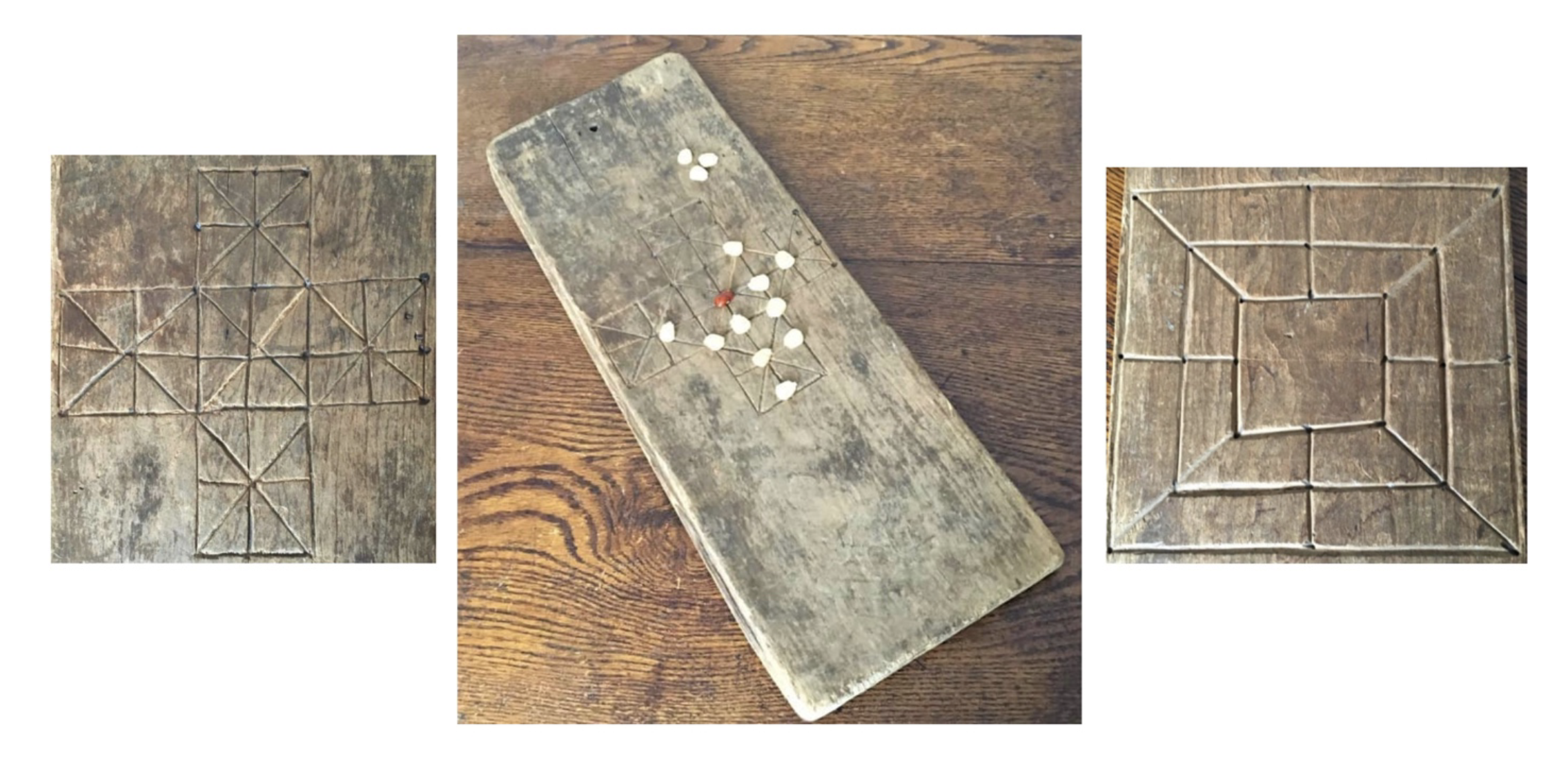
Twelve Men's Morris holds a very long tradition, having been most popular in the Middle Ages. [The term "morris" is thought to be derived from the Latin, "merellus" or game piece.] One early mention of the game is in Ovid's Ars Amatoria (circa 8 AD): "There is another game divided into as many parts as there are months in the year. A table has three pieces on either side; the winner must get all the pieces in a straight line. It is a bad thing for a woman not to know how to play, for love often comes into being during play."
Floyd County children in past times often had little time between chores, but adventuresome young people still found ways to add fun and games into their lives. As J.E. Bolt told us in his 2001 Buffalo Mountain series interview: "We made our own fun, I reckon, here on the farm. We had neighbor kids, and we’d all get together and have ball games and do different things."

Your trusted Floyd County real estate experts. Visit our downtown Floyd office adjacent to the stoplight or browse our current listings online. Representing both residential and commercial buyers and sellers with integrity and always working to get YOU the best deal!
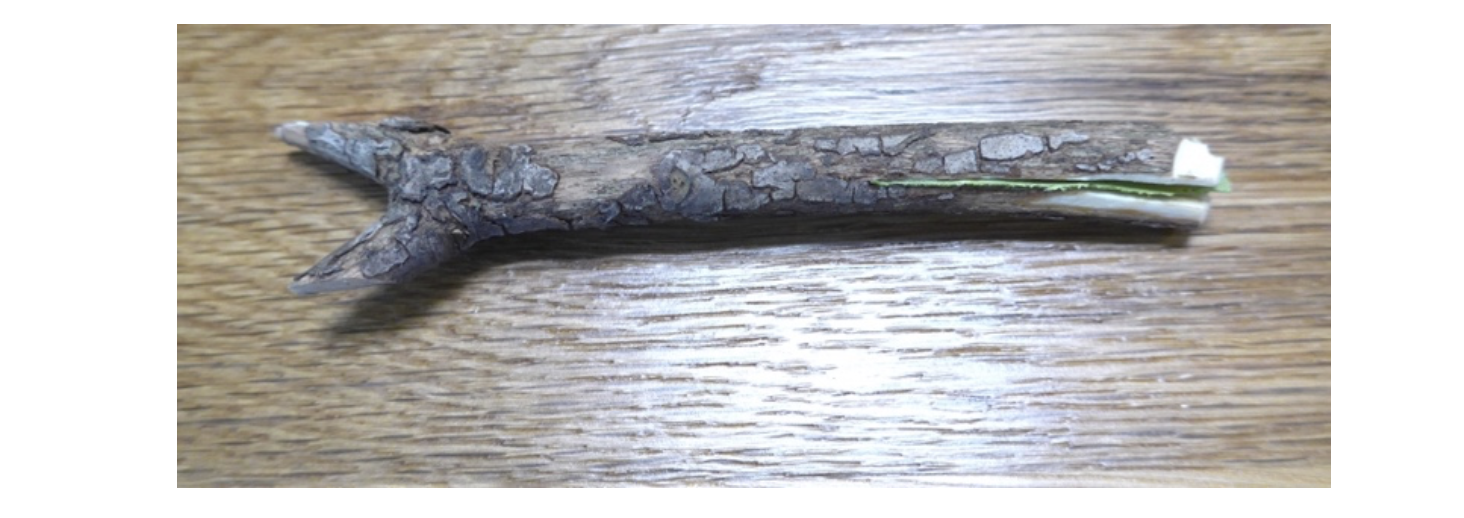
Frank Hancock demonstrated some of his own homemade childhood diversions during his 2017 interview for the Floyd Story Center's Community and Neighborhood Series. He picked up a rhododendron stick he'd brought and started to whittle, explaining: "This I grabbed off a rhododendron bush a while ago. I was talking about us making our toys when I was young." [Mr. Hancock worked on the branch some more and inserted a leaf in the slotted end] And then: “Whoo-ooo-whoo-whoo. [a loud whistle beat is heard] About every kid knew how to make what we called a crow call."
Indeed, without a hint of plastic, circuit boards, or video screens, a child could venture into the woods and create an imaginary world with sticks, stones, mud, and leafy coverings.
Frank Hancock: Something my brothers and sisters and I did quite a bit was we had little cars and we’d go out to a bank and take an old spoon and make roads that came down the bank. And all the turns were slanted quite a bit. So, you could turn your car loose at the top, and it would come down and make all the turns to get to the bottom. We’d take little sticks and make fences for our little farms. In our little pick-up trucks, we’d haul these locust shells that you see on trees from time to time after locusts come out, well, those were our cattle. And we’d put those on the little pick-ups and take them down and put them in their pastures.
Stanley and Ruby Lorton, interviewed in 1999 and 2000 by Radford University students, shared some childhood memories for the Buffalo Mountain Place-based Series. Stanley describes what Foxfire's Appalachian Toys and Games book calls Rolling Hoops, yet another game with ancient roots in Asia and in Greece. Also described in Foxfire, Ruby tells of the schoolyard game Base played with opposing teams with the object of running to a "safe" area without being tagged.
Stanley Lorton: The way we amused ourselves, and Ruby may have done the same thing. All the wood wheels used to have a metal rim on them. You’d find you one of them old wooden wheels that had gone bad, and the metal rim would come off, and you’d have a hoop. What you’d call a hoop, like a barrel hoop or something. We’d bend us a piece of wire and run along and run that hoop up and down the road or across the field or anywhere, just for hours at a time. [chuckles] That’s the kind of toy we had. Go to the woods and cut a grapevine loose and make a grapevine swing, which was a dangerous thing to do, but we did it.
Ruby Lorton: In the school, it was just, not too large a building, but was all in one room. And, at recess we were all allowed to go out and play. Some played ball, lots of different games, stealing sticks, and long base, and hide-and-go-seek.
Jennifer Tush: Long base, what's long base? Do you remember how to play long base?
Ruby Lorton: Well, they teamed up so many on each side, and I don't remember exactly how we had to steal bases to get to the other side without getting caught.
Stanley added some historical perspective of the early Depression era: "Back when me and Ruby was just kids, you know, people couldn’t find a good steady job. They didn’t have money to buy you no toys. There weren’t many toys bought back then but just for a few people. Most people done without."
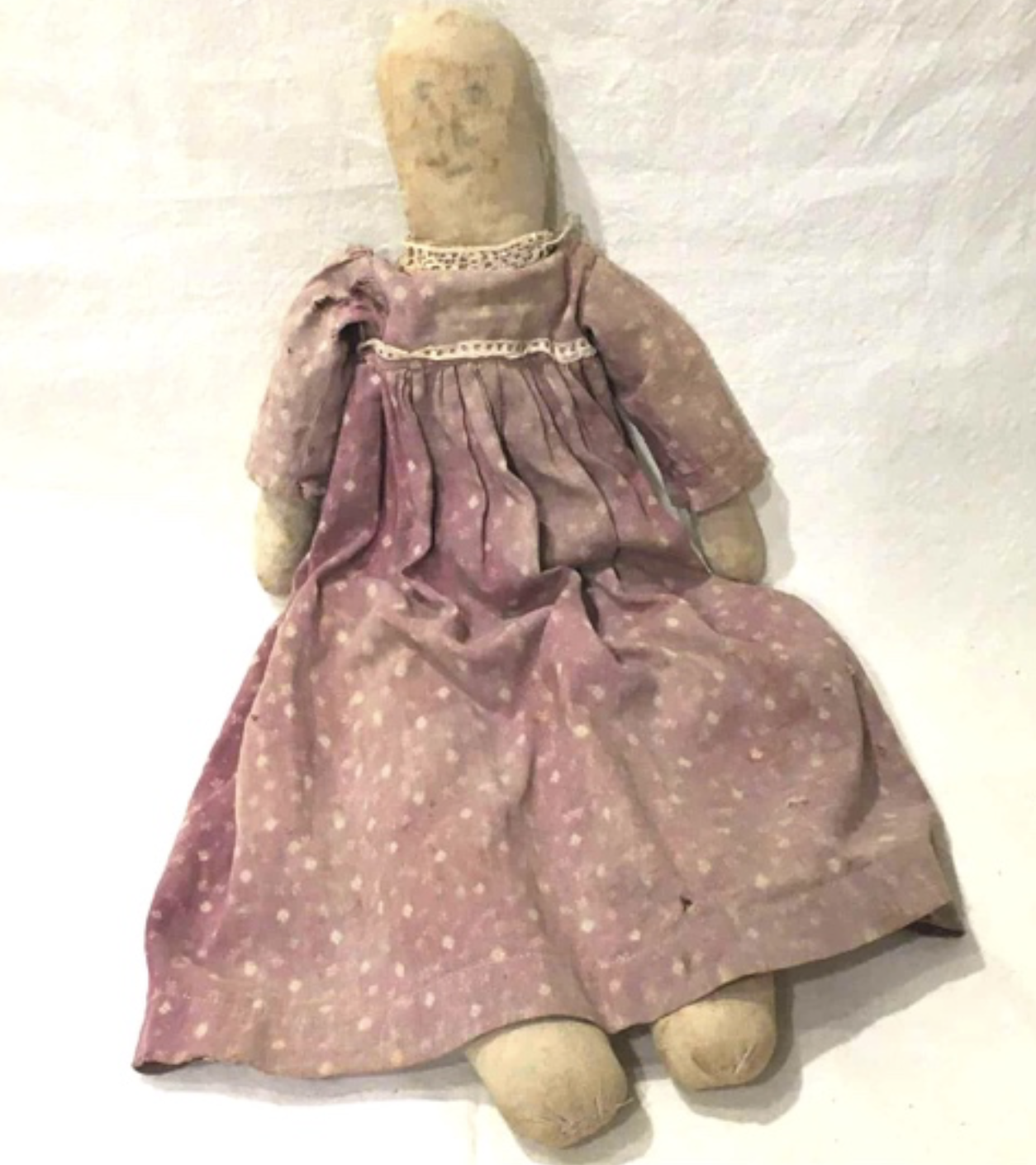
Ruby Lorton: The only toys that we had were handmade. I had a rag doll [example below], and the boys made the doll a bed and a little ole wagon; they made the wheels out of a log, made a hole in them and built a little wagon like that. Just about anything you could find to make a toy out of, other than that, we didn’t have anything. As an older child I had a store-bought doll.

Your Best Move
Craig Chancellor
126 North Locust St.
Floyd, VA, 24091
(540) 523-1300
Each Office Independently Owned and Operated.
Vada and Carl Cox, interviewed in 2019 by Molly Cox during Floyd County Public Schools Teacher Training with the Old Church Gallery, seconded having a happy childhood. Vada noted: "I had a great life. When I think back on it, we had a happy life. Because we had to work hard but we got to play. They gave us time to play."
Molly Cox: What kind of games would you play?
Carl Cox: We skipped a rope. And we throwed a ball, throwed it over the schoolhouse. Some of the children would be on the other side of the schoolhouse and some would be on this side, [points to one-room Franklin School photograph] We called it handy-over. They’d throw the ball over the schoolhouse, and them over there would catch it, or get it and throw it back over. And we’d throw it back to them and they’d throw it back to us. [named Anty Over in Foxfire]
And then, skip a rope -- you know two of them would get each end of a rope, and twirl it and we’d jump through that rope. But called it skip a rope.
Vada Cox: I guess we played Anty-Anty-Over too, but we played ball. I think we called it town ball; it’s kind of like softball and stuff. When we were smaller, I remember going into woods, which wasn’t too far from our house, in the pines, you know, open under. And we would go build playhouses in there when I was younger; we’d do that. We’d make us little beds out of the moss and all you know. That was fun for us.
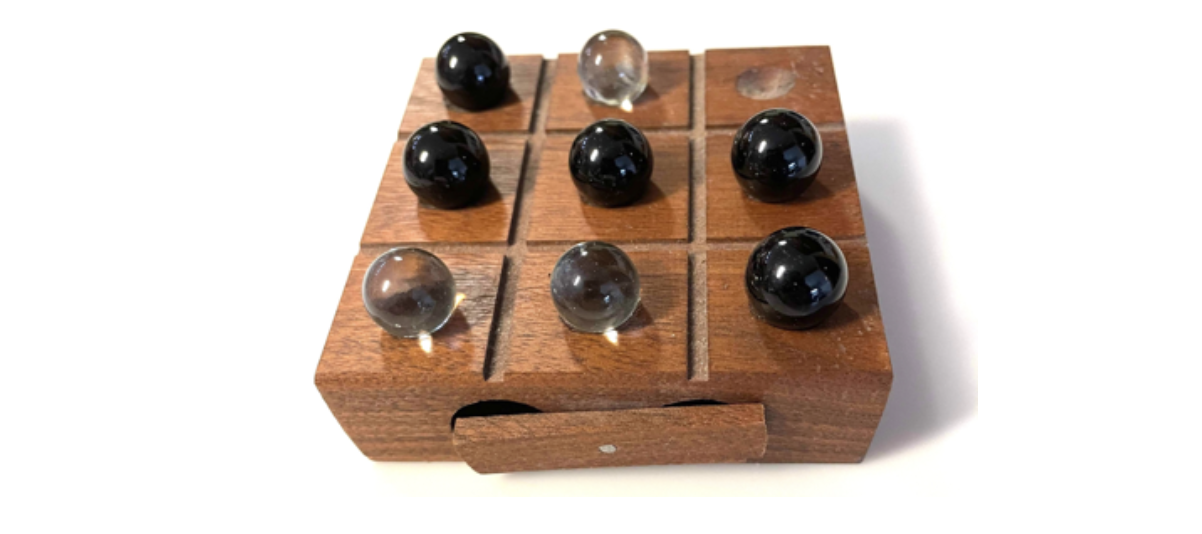
Playing Anty Over was popular during Earl Moles' childhood in Willis as well. It was one of the most commonly played games, since all that one needed was a medium-size ball, a low building and enough space for each of the two teams to run around to the other side. In Anty Over, one team threw the ball over the roof, and the second team, out of any line of sight, had to catch it after hearing the shout, Anty Over! If the ball was caught, that team raced around the other side to tag an opposing team member. Much excitement ensued, but everyone played fair. Earl Moles described that game and others for David Rotenizer during his 2000 interview in the Buffalo Mountain Place-based Oral History Series.
Earl Moles: When we were kids, they had a ball we threw over the house called Anty Over. There used to be two on one side, three on one side. When that ball come over, who caught the ball and run around to hit the other, won. That’s the way we played.
Earl Moles: And there also was dodge ball. Ole car shed up here used to have a big wide board, they’d put you against that and throw the ball at you. You had to dodge it. When it hit you, you were out. That’s what we had. And, pitching horse shoes, was another big thing."
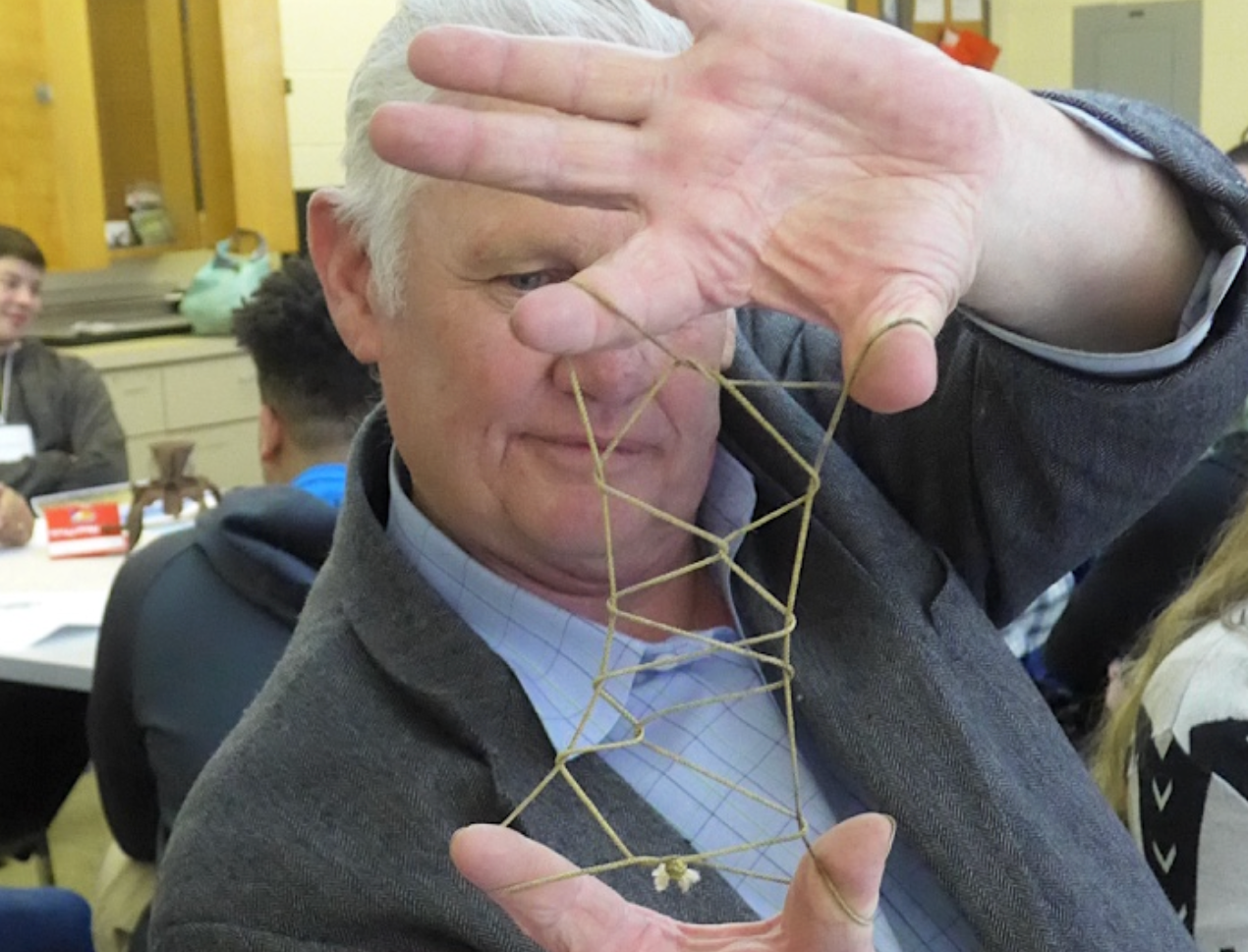
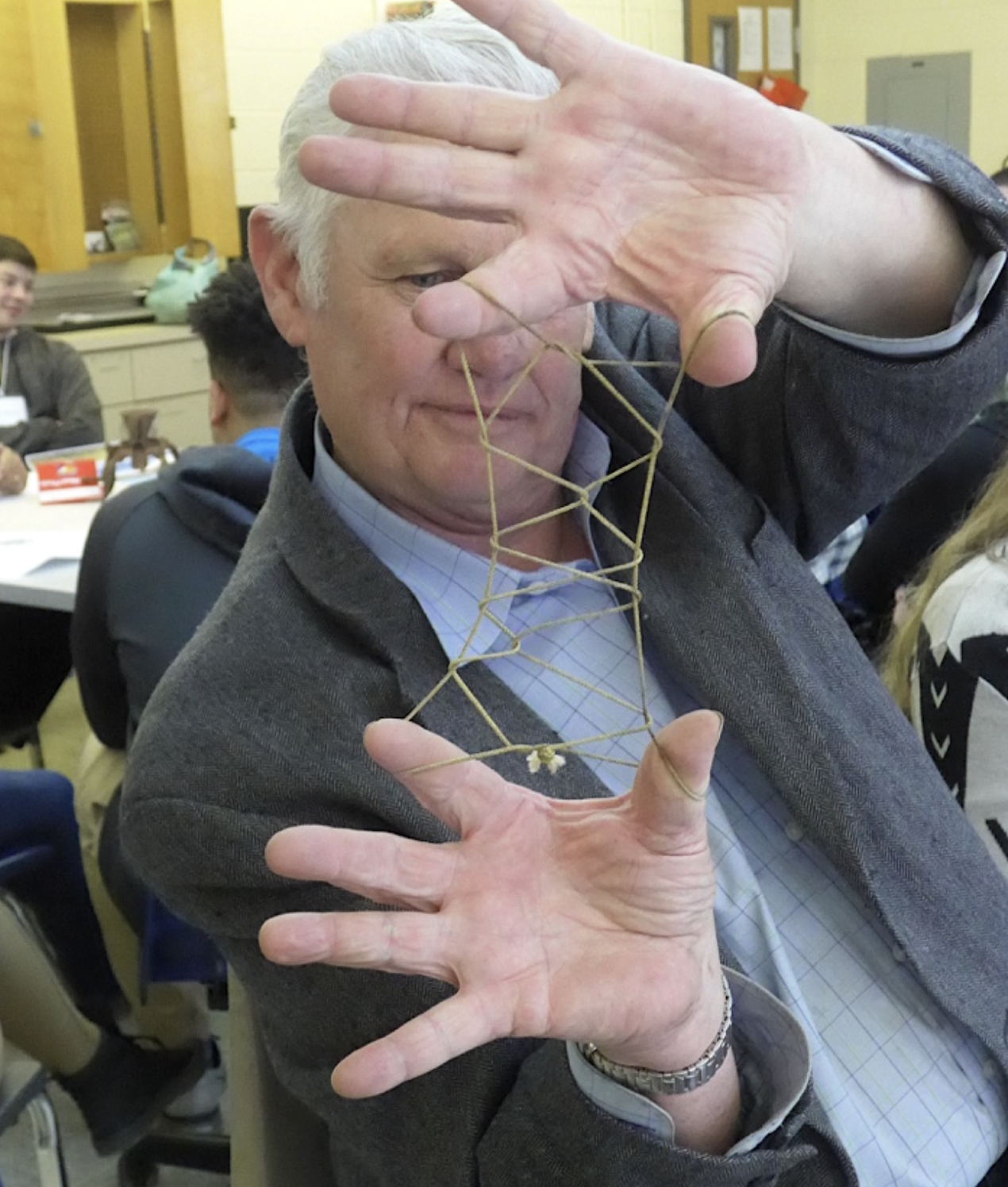
As far as pastimes, we were treated to some examples during the Floyd Story Center's 2017 Spring semester interviews. Floyd County High School students got to know the four interviewees for a "Meet and Greet" classroom day. Dale Belcher, who had assisted noted photographer Earl Palmer, brought in photographs as well as several items for the students to see. Dale showed us a hand-carved wooden chain, cleverly made from a single piece of wood, and also proceeded to demonstrate several string figures, including Jacob's Ladder (with ten or eleven separate finger steps), pictured here.
It's been a remarkable experience to discover the deep roots of Floyd County childhood games. The entertainment pastime of creating a string figure, for instance, has been found in parts all around the world, possibly humankind's oldest game, documented among native peoples, ancient societies, and on every continent [Jayne, String Figures and How to Make Them; 1905, Dover 1962]. The stories of childhood in Floyd County found within our interviews hold an amazing cultural continuity, all the while confirming a happy, wondrous, and timeless link to games, play, and youthful traditions, many that still endure. With good weather on the horizon, it certainly does seem like a very good idea for all of us to find a bit of spare time to go outside and play.
All Floyd Story Center interview excerpts and photographs are courtesy of Old Church Gallery in Floyd. The excerpts presented in this column represent a larger archive of over one hundred and twenty interviews, 1980s-2024, many recorded with both audio and video.