
Backstories and Backyards: Simpsons, Turtle Rock, Vocal, and Nasturtium
"Backstories and Backyards" column looks back into the stories behind everyday objects, connecting each item with the people, places, and events of different eras in Floyd County history.
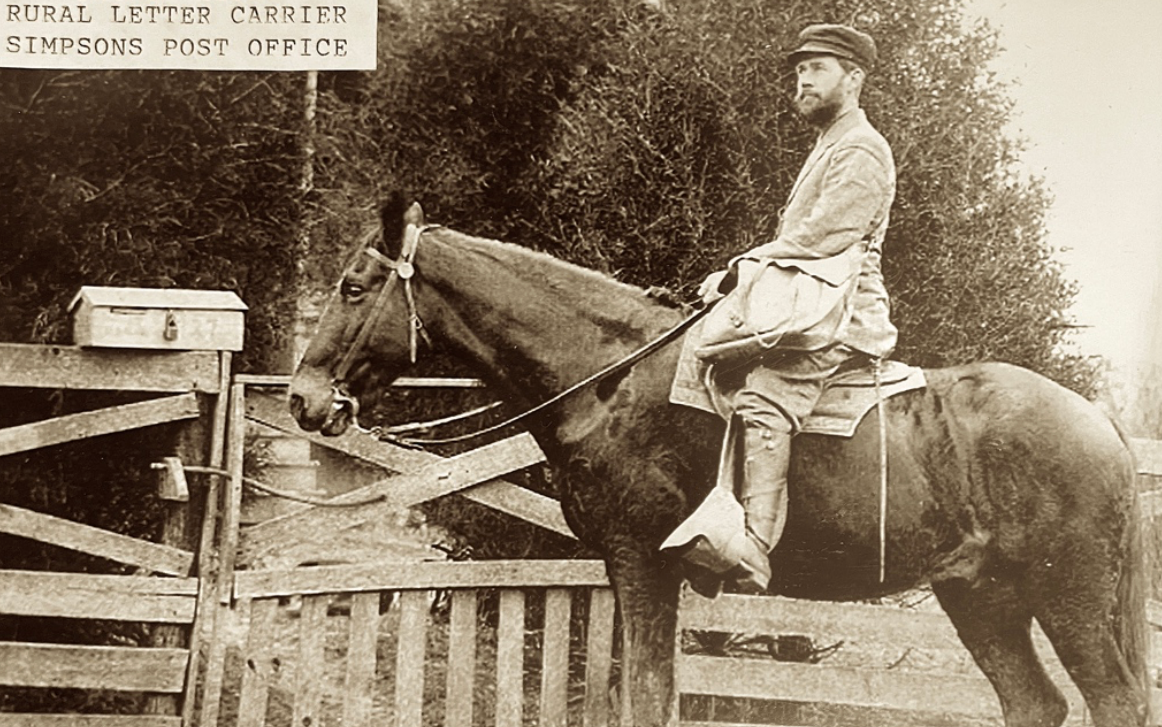
With the 250th anniversary of the U.S. Post Office being this year, one could say that the mail has come a long way from the days when Floyd County was home to more than 100 rural post offices with official names such as Simpsons, Turtle Rock, Vocal, and Nasturtium. Not to mention Carthage, Elmetta, Silver Leaf, Quoit, Ego, Posey, Lilac, Monday, Hemlock, Dulaney, Leach, Gage, Arsenic, Aria, Pharoh, and Flat Head.
In 1775, before the Declaration of Independence was signed in 1776, the Continental Congress turned the Constitutional Post into the Post Office of the United States, with Benjamin Franklin as the first Postmaster General. A mail route opened via the Wilderness Road after 1800, reaching Appalachia and eventually Floyd County when it was established in 1831.
A post office at Floyd Courthouse opened in 1832, followed by Simpsons, Greasy Creek (Willis), Fork Road, and Little River post offices and dozens of later community sites where one could collect or post mail. At one time, a mail hack ran daily between Cambria Depot and Floyd Courthouse with the mail delivery.
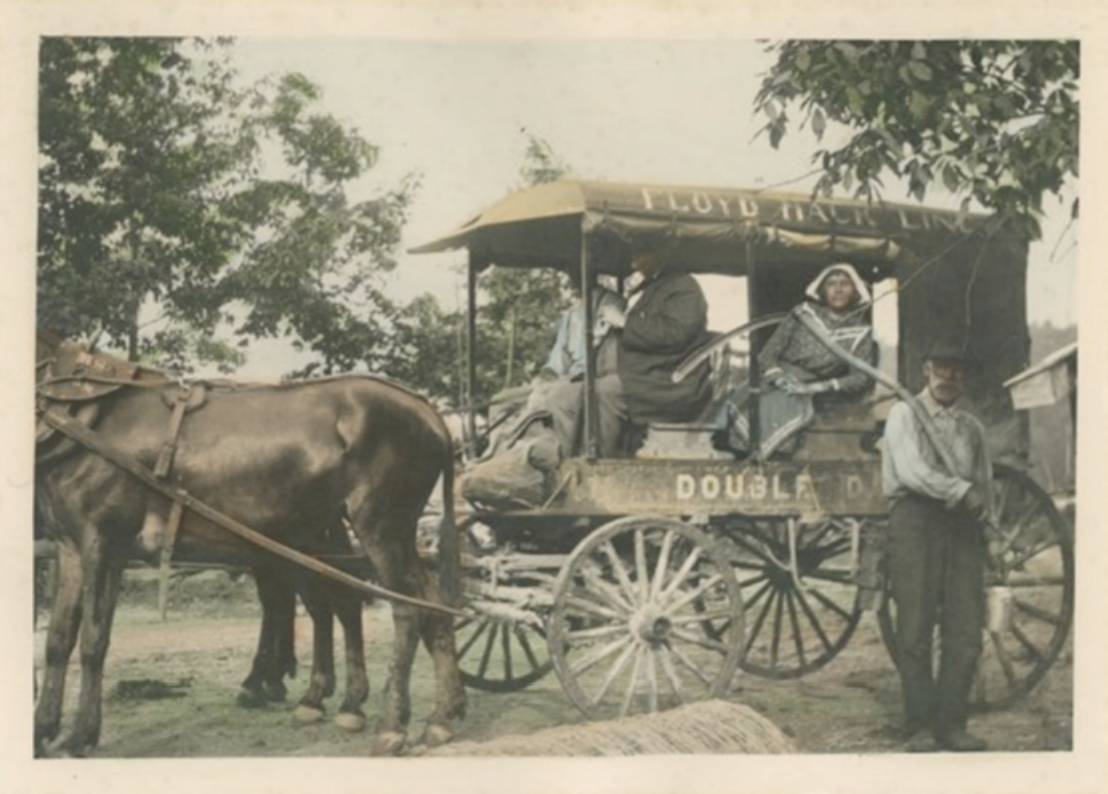
Effie Brown knew the earlier history well, and in her 2006 interview gave a concise description:
"Well, in about the 1880s, the mail came from Christiansburg across Pilot Mountain, and went on out to 221 straight ahead. And turned at the top of Franklin County at Pine Spur [Pine Spur Overlook] and went into Franklin County and then into Botetourt–Fincastle.
"There was no road up Bent Mountain. So, in that area was a relay station where the person who was carrying the mail changed horses and spent the night. So, sort of a tavern-like inn. But it was a relay station also for the change of the horses. And the man who owned it, set twelve locust trees around his front yard and called his place Locust Grove. The whole community picked up that name, Locust Grove. One of those posts is still standing at that place, and the Union flag and the Confederate flag both were flown over that post during the Civil War."

Family-owned HVAC installation and services.
25 years of experience. Committed to excellence.
Financing available with approved credit.
540-745-4912
436 Floyd HWY S
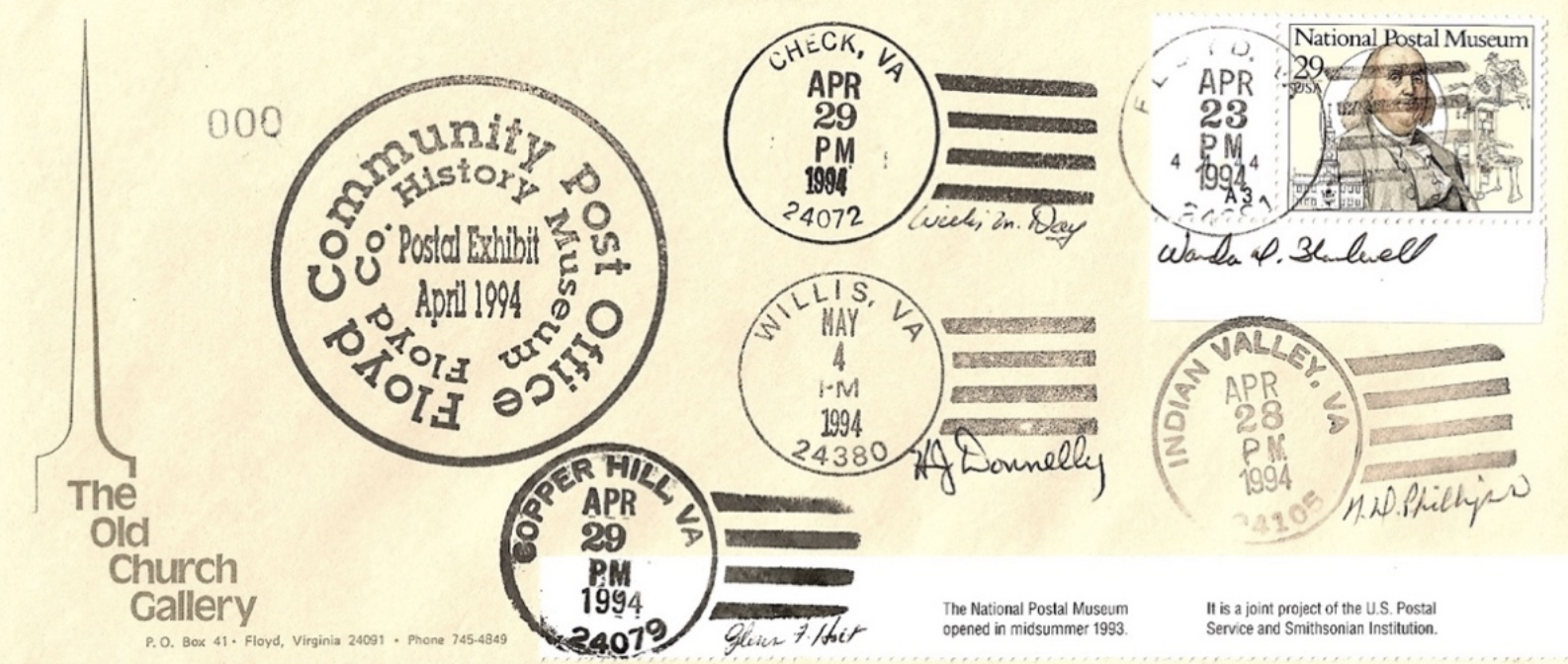
In 1994, the Floyd County Historical Society and the Old Church Gallery, with Dick Giessler as guest curator, jointly presented an exhibit on postal history in Floyd County. The exhibit, "Simpsons, Turtle Rock, Vocal, and Nasturtium," not only detailed more than 100 names and postmasters of early U.S. Post Offices in the system, but chronicled the changes of mail delivery over time. This envelope, with a Ben Franklin, National Postal Museum stamp, commemorated the exhibit with the signatures of each postmaster and postmistress of the five Floyd County post offices here in 1994.
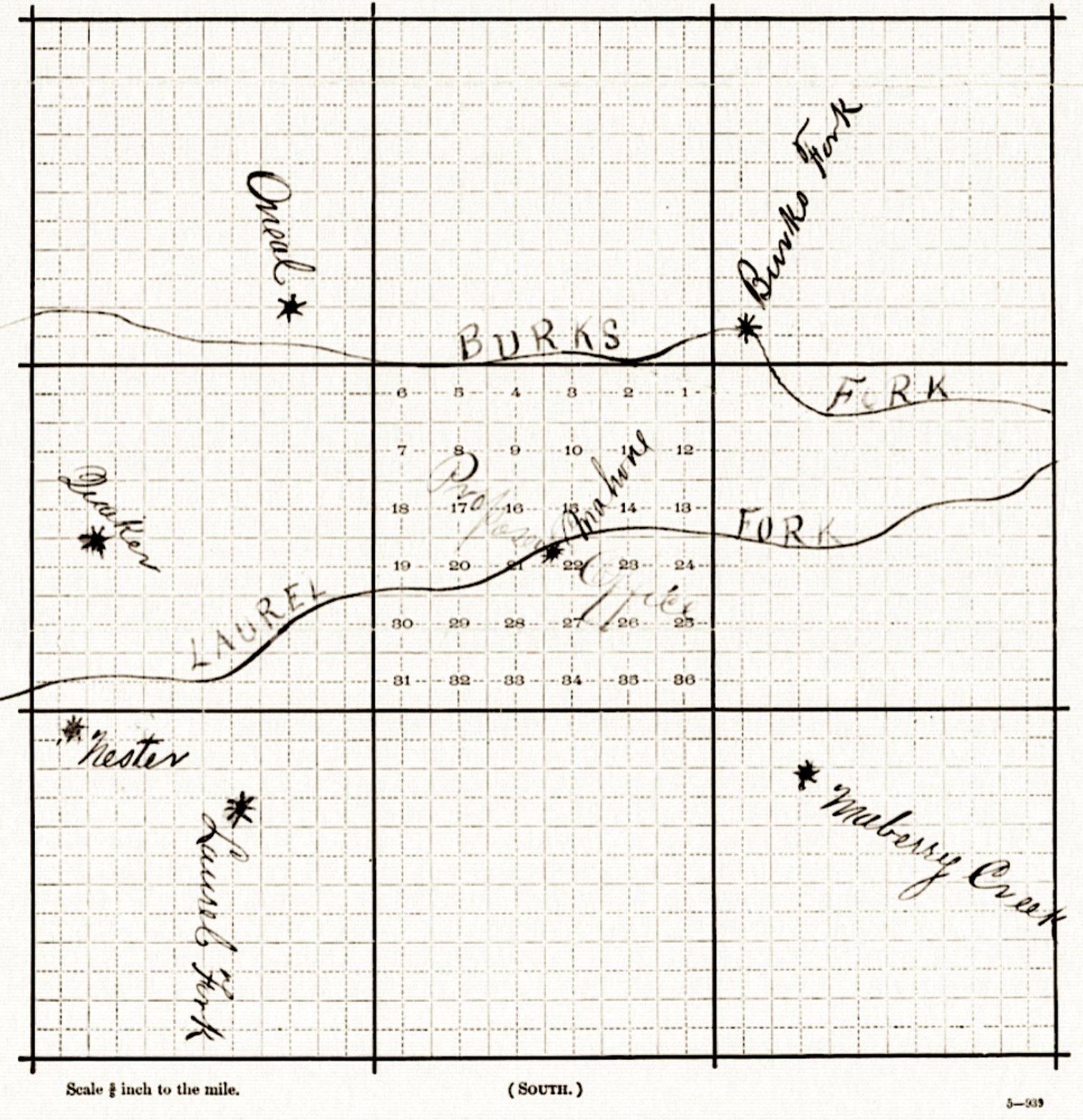
During the 19th century, U.S. Post Office topographers mapped every outpost for its horseback postal riders with delivery times and pay. This 1890 map, with what appears to be an eighteen-mile grid, shows seven post offices and a proposed eighth addition called Quoit in Burks Fork (postmasters could choose the name, and quoits is a game of tossing iron or rope rings over a post). Mail was ferried between post offices on a regulated schedule, where patrons could pick up or mail any letters or cards.
Shepherd Alderman was one such rider in the 1890s, traveling between Burks Fork and Santos three times per week, adding the route of Minerva to Burks Fork on the alternate two days.
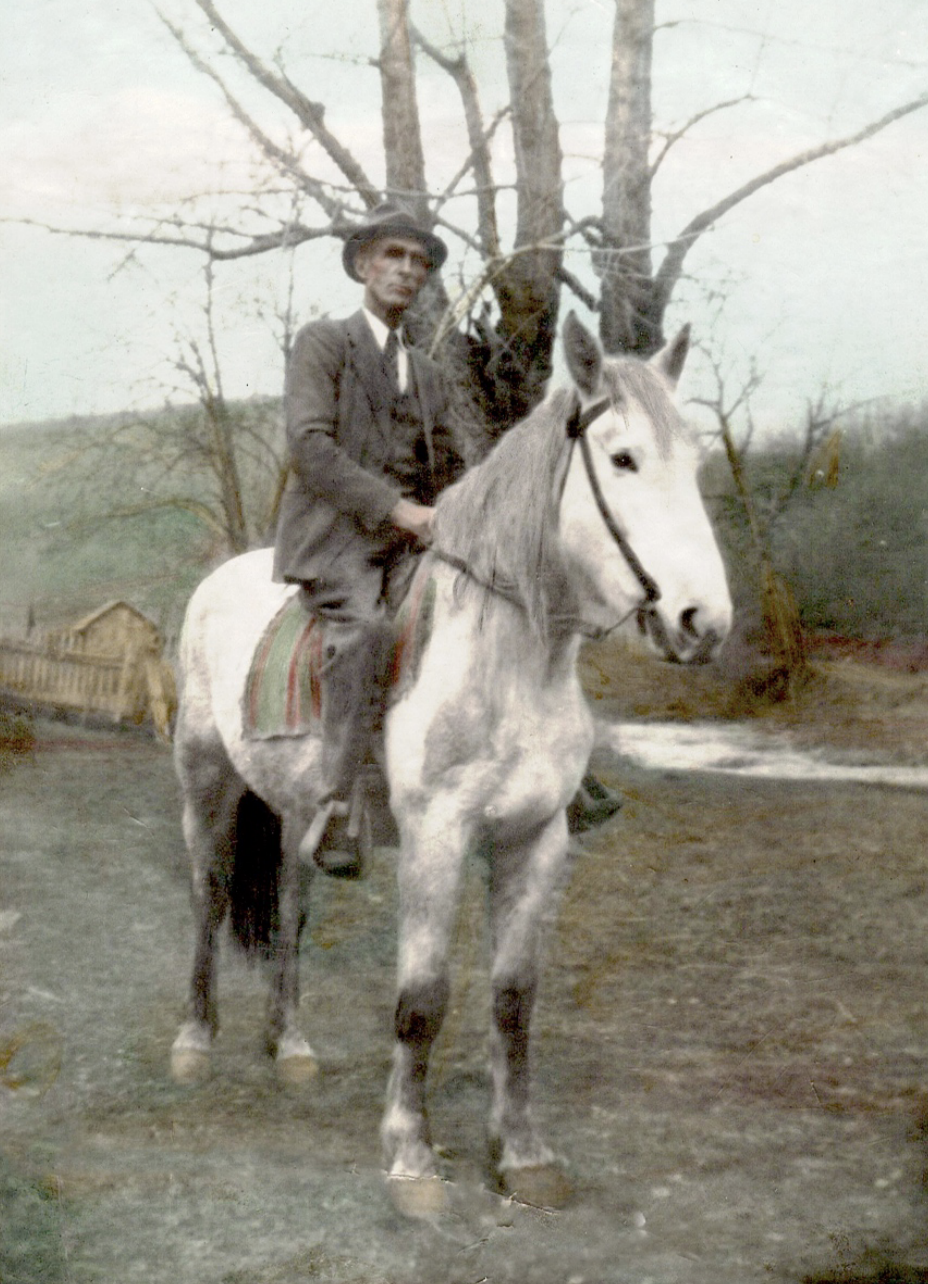
Household mail deliveries didn't begin until the 1902 Rural Free Delivery system first opened the world to Floyd, adding even more local post offices, many in homes or stores, on rural mail routes covered on horseback. Residents purchased RFD mailboxes and maintained their part of the roadway, which was instrumental in road improvements and county development. This changed everything.