Mitigation banking drives restoration work in Floyd County
Copper Hill has witnessed a live demonstration of the site work that mitigation banking requires. Those steps included obtaining one permission from the Floyd County Planning Commission, he said.
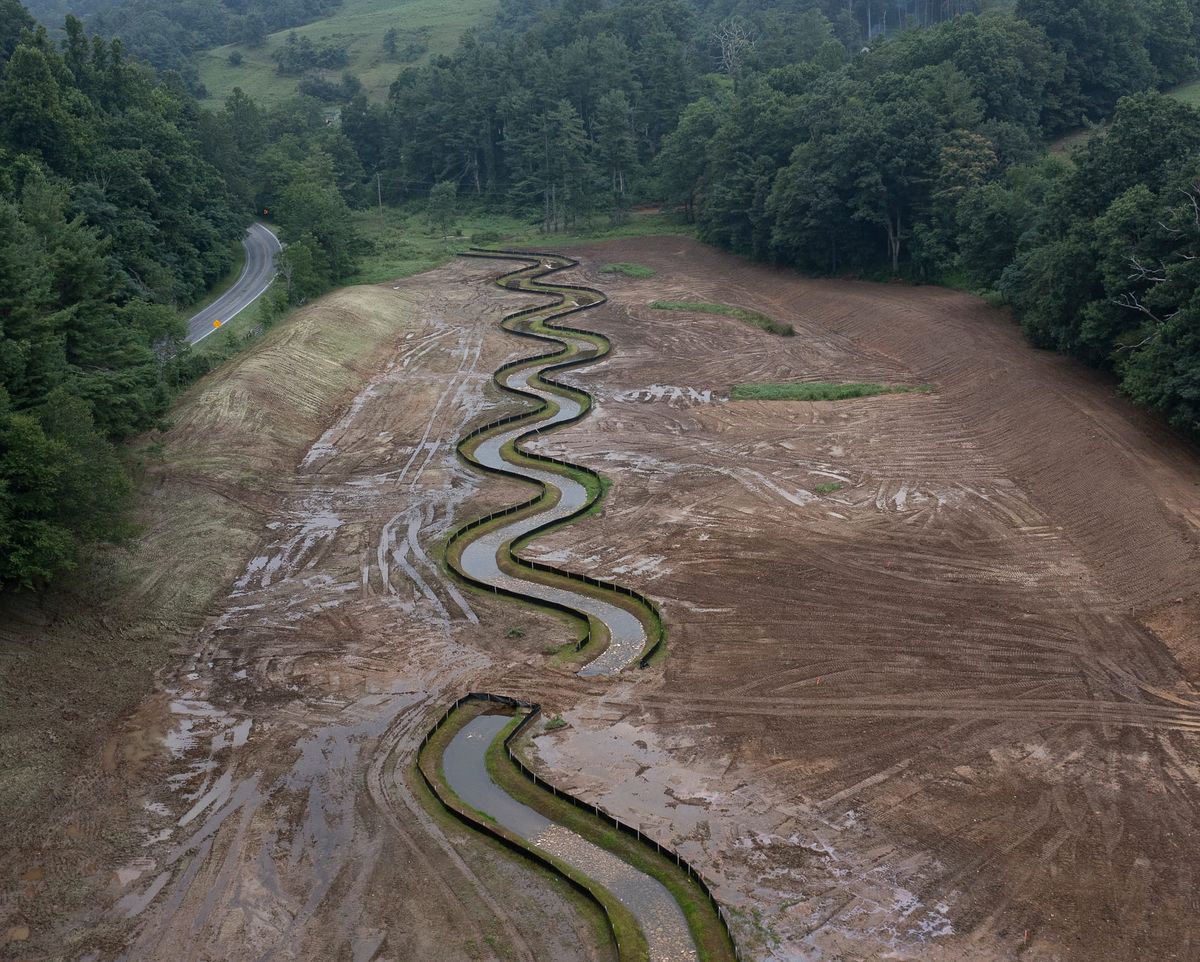
This spring, earthmoving equipment working along the Floyd Highway reshaped a Copper Hill pasture.
The work, visible to traffic, triggered immediate speculation. Some people thought the location of the former Nichols family farm had fallen into the hands of housing developers. Or, was it the initial construction phase for a convenience store — maybe a 7-Eleven to compete with the Dollar General up the road?
They were turning dirt across much of the farm’s 17.7 acres adjacent to the farmhouse where the late Sherman and Effie Nichols raised five boys.
In fact, no one is going to build anything there ever. According to the new owner, David Jordan, it will become a restored natural area — a place designed to function as a wetland and wildlife habitat.
There will be no public access. No more cows, either.
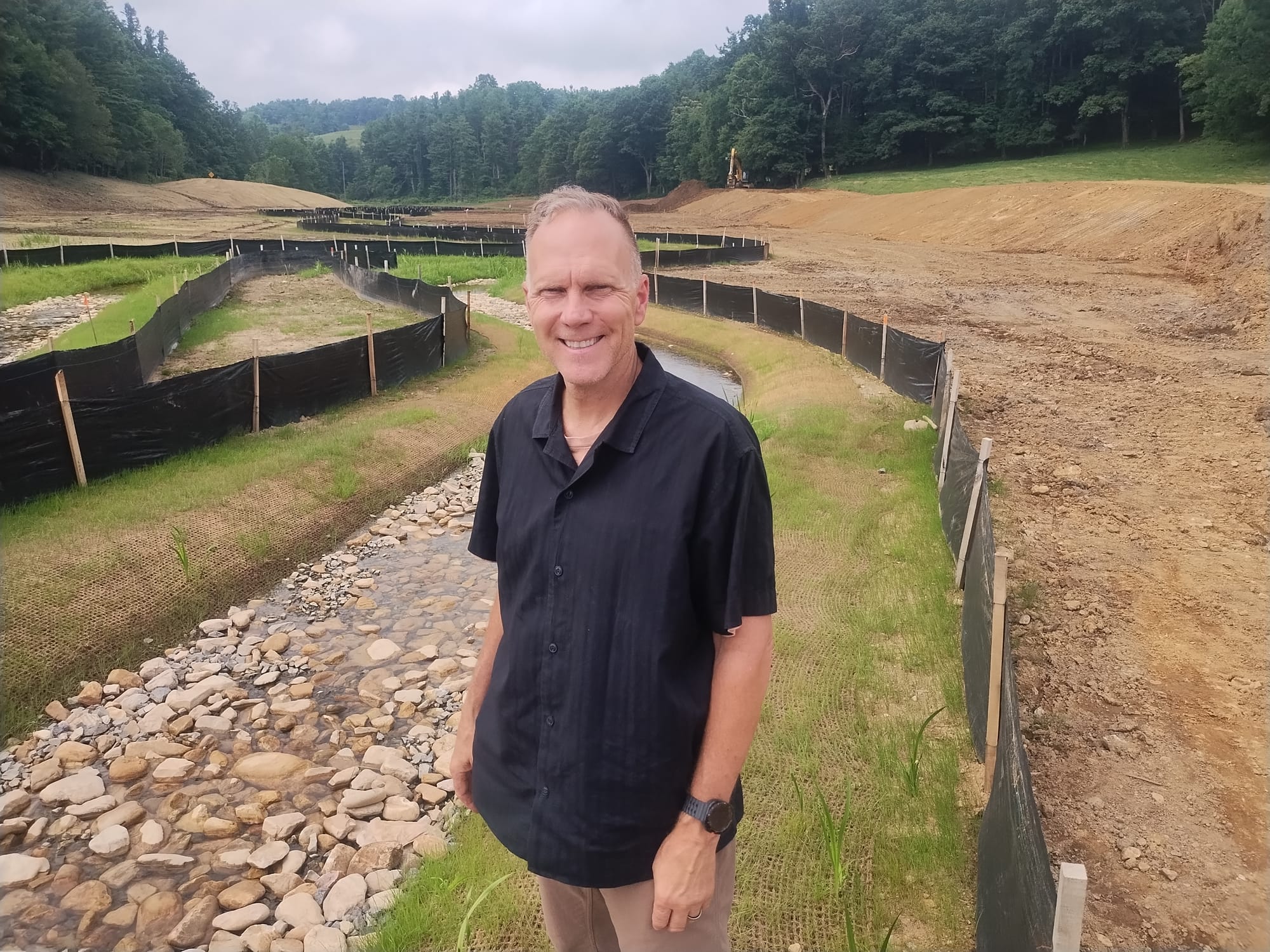
Jordan, a Virginia Tech-educated engineer and former land developer, is not preparing the land for development. He is restoring it — a business model known as mitigation banking.
Mitigation banking is a system in which companies, governments and other parties that damage wetlands or streams during construction pay restoration specialists to repair or create similar habitats elsewhere.
Rather than grade out construction pads, roads and trenches for utilities, Jordan has instead carved a new stream bed that winds back and forth for half a mile. His crews smoothed the former cow pasture into expansive wetlands spanning seven acres. The grading recreated the shallow, slow-moving conditions of a natural wetland on the drainage-focused pasture that existed there. And, eventually, workers will plant between 8,000 and 9,000 new trees spanning nearly end to end, according to Jordan’s plans.
Jordan buys degraded land that has lost some or all of its natural function and pays to restore streams, wetlands, and wildlife habitat typical of a healthy ecosystem. That often means rebuilding streams so they follow natural winding paths, flow at the proper slope and contain the pools and shallow areas that support aquatic life.
602 East Main Street
Floyd Virginia
540-745-8686
In Copper Hill, he picked an area containing a segment of Lick Fork and another unnamed stream. They merge on his land and, downstream, the fork descends more than 1,000 vertical feet through a scenic gorge to Shawsville. It flows toward the Roanoke River and Atlantic Ocean.
A 62-year-old licensed professional engineer based in Leesburg, Jordan described his reception in Copper Hill as positive.
“Everyone I’ve talked to, especially all the neighbors, once they see what I’m doing, they really appreciate the effort I’m going to,” he said.
On a recent visit to view substantial improvements now in place, he walked the shore in a pull-on work boot to a spot where crews will plant young willow and sycamore trees for a vegetated buffer beside the waterway. Small fish explored a pool underlaid by river rock he sourced from a supplier near Harrisonburg.
“It’s definitely an art,” he said.
It’s also a business. Each segment of stream he restores, and each acre of wetland he restores or creates, earn Jordan saleable credits in a mitigation banking market. Enterprises such as highway departments and businesses go to the market to purchase credits when construction of roads, buildings, and facilities leads to unavoidable environmental damage.
After working as a land developer himself who built homes and commercial projects, he shifted to environmental projects more than 15 years ago and found traction that has furnished job satisfaction and enjoyment and financial rewards.
More recently he shifted efforts to this part of Virginia to get in front of a wave of development activity likely to require credits, such as the widening of Interstate 81, the installation of the Mountain Valley Pipeline and such projects as a planned rocket motor manufacturing facility in Pittsylvania County, he said.
“Things started moving down here,” he said. “There was a lack of people doing what I was doing.”
In this area, he already finished one site in Bedford County and after he completes the Copper Hill project, plans to begin another near Parker Lane Road NW and Duncans Chapel Road NW in Willis in a few years. Jordan has 16 sites in the state.
Although he makes his home in northern Virginia, he lives part time in Christiansburg and will spend a night or two at a home he built at the Copper Hill site, such as when he and his wife Tina were in town for FloydFest.
His work has drawn industry recognition. He won a 2025 award of excellence from the National Environmental Banking Association in Washington, whose citation honored “his entrepreneurial leadership and innovation within the mitigation banking industry” and “years of advancing high-quality restoration projects.”
A study of the credit market ranked Jordan third in transactions in Virginia between 2021 and 2025 with 118 or 7.3% of the market, according to a July report by Water Ledger Global.
Jordan’s business exists because of a nationwide policy decision nearly 40 years ago to protect fragile wetlands, a legacy of the administration of President George H.W. Bush, an outdoorsman who led the nation from 1989 to 1993. At the time, wetlands were disappearing at a rate of hundreds of thousands of acres a year due largely to farming practices that, in Copper Hill and elsewhere, shrank wetlands through tiles, ditches, and other practices to convert the soggy ground to usable space. Sometimes referred to as “nature’s kidneys,” wetlands clean and hold water, provide habitat, store carbon and provide recreation.
Going forward, officials declared, wherever construction was going to inevitably diminish wetlands, the parties involved would have to take responsibility for equivalent enhancements elsewhere. They would have to buy credits tied to completed or upcoming environmental restoration work at another site, ideally nearby or in the same watershed. Those credit purchases reimburse mitigation bank sponsors like Jordan and furnish the financial rewards, enabling them to voluntarily undertake multiple projects.
In effect, developers who damage wetlands help pay for restoration projects elsewhere.

The old school building converted into three floors of almost all types of fabrics available, and craft supplies! Plus - an extra building of upholstery fabrics and supplies!
220 N. Locust St., Floyd VA
(540) 745-4561
sfabrics@swva.net
The U.S. Army Corps of Engineers oversees all activity, along with the Virginia Department of Environmental Quality. DEQ Director Mike Rolband is a former mitigation bank sponsor himself who Jordan talked to about getting into the industry.
Copper Hill has witnessed a live demonstration of the site work that mitigation banking requires. Jordan did two and a half years of planning before breaking ground four months ago. Those steps included obtaining one permission from the Floyd County Planning Commission, he said. He found the site when Zillow flagged it in response to a saved search.
Wetlands are worth protecting and where they’ve been allowed to deteriorate into muddy bogs trampled by livestock, are worth bringing back, said Dan Crawford, who chairs the Roanoke group of the Virginia chapter of the Sierra Club.
“We have a long-time tradition of covering them up, building over them and that’s finally being addressed,” he said.
Crawford knew nothing of the Copper Hill project, but reacted favorably to Jordan’s efforts. “Sounds encouraging,” he said.
Jordan’s expertise lies in spotting and purchasing sites with good potential. He lines up technical talent and crews to plan and install the improvements and makes it work financially. He can spend a vast sum on a single project before his payday. That’s partly because his responsibility continues even after the improvements are in and the credits are sold, as he must monitor his sites for a decade.

G.J. Ingram & Son
Fuel, Farm & Home Supplies
Proudly Serving Floyd County for 80 years!
2107 Floyd Hwy North, Floyd VA
540-745-3201
Jordan declined to provide an estimate of how much money he expects to eventually receive from credit sales out of the Copper Hill project, but estimated that he will spend more than $1.5 million to establish and maintain it. The price per credit will depend on the supply and demand of credits at the time of those sales, he said.
“I do well by doing what I do but I’m willing to put the work in what I do,” he said.
Most of the credits he will earn in Copper Hill aren’t yet authorized, he noted. However, he said he has so far sold a small number to the Mountain Valley Pipeline for work it did in Pittsylvania County, like Copper Hill a part of the Roanoke River Basin.
Jordan talked at length about the myriad regulations all springing from the Clean Water Act of 1972 under which he works.
Archeological studies — which involve checking for evidence of past human cultures — appear on a checklist he must complete, as well as plant and animal surveys, soil analyses, and much more.
Family-owned HVAC installation and services.
25 years of experience. Committed to excellence.
Financing available with approved credit.
540-745-4912
436 Floyd HWY S
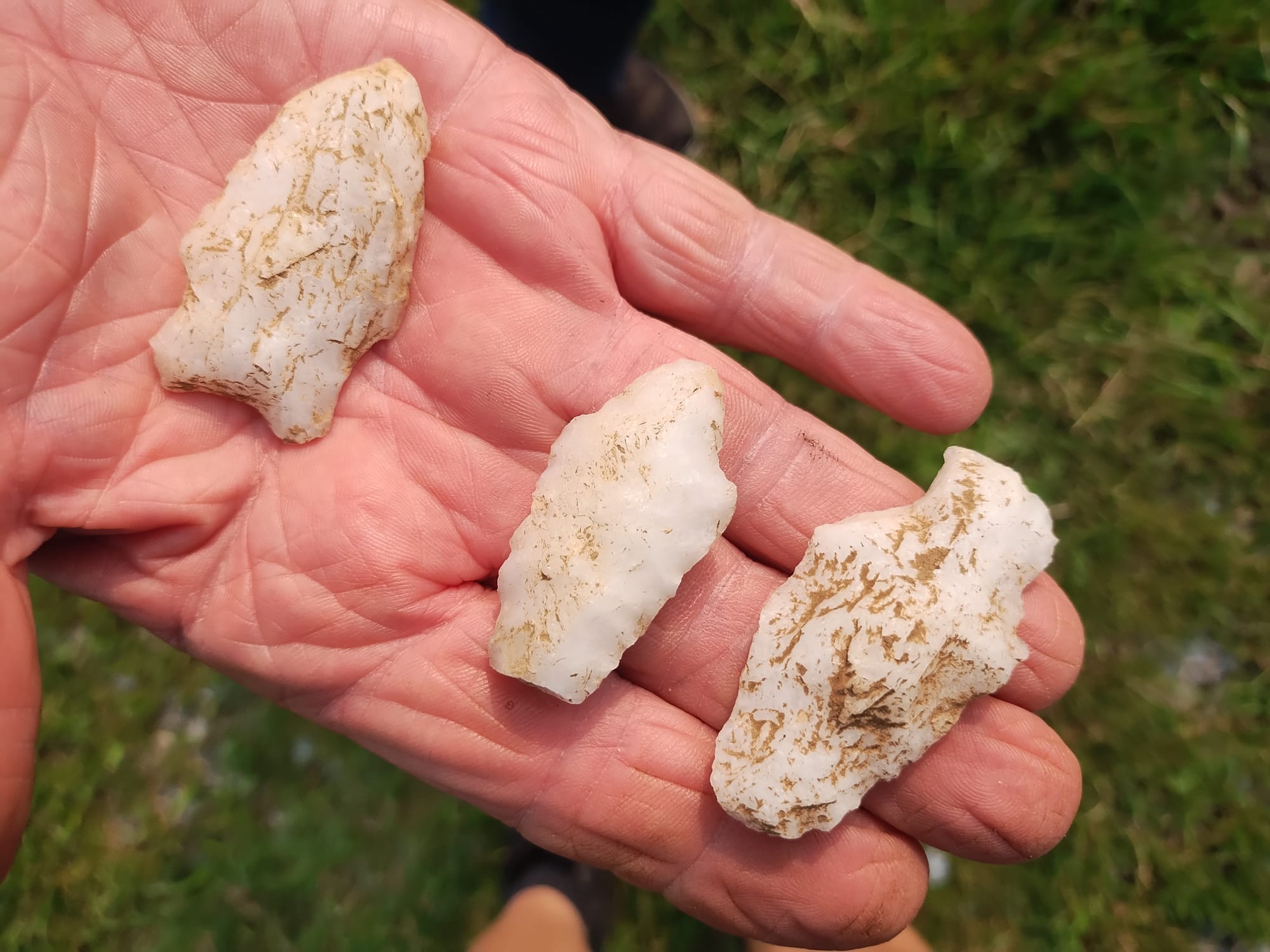
Tom Nichols, who grew up on the Copper Hill site, showed a reporter three objects that appeared to be white quartz arrowheads that were found on the ground there perhaps half a century ago.
"My brother, Tim, he had the eye. He could spot the arrowhead, whatever you want to call it. There’s no telling how many he found down there," Nichols said. His family always believed Native American people had lived or visited there, though "we never found any bones or anything like that," he said.
Asked about this, Jordan said that regulators from whom he received permission for the Copper Hill project did not require a field investigation to check for archeological artifacts and that he didn’t do one. He did perform a required desktop analysis of existing studies of the area, which found no sensitive sites, he said. He didn’t see any arrowheads or anything of the type in the area, either, he said.
Mitigation bankers like Jordan have options if surveys indicate the presence of sensitive resources at a site under consideration for remediation, be they human, plant or animal. They can work around the sensitive areas or step up protection.
Take the bog turtle, which is listed as threatened under the Endangered Species Act due in part to losses of wetlands where it lives. A bog turtle found at a mitigation bank property would likely trigger a decision to design and install upgraded habitat improvements specifically for the creature’s protection, Jordan said. Regulators would in turn authorize higher-value credits because of the protective work, he said.
“I follow the rules,” Jordan said.