Safe Surfin’ empowers teens to lead conversations regarding online safety
One of the first steps in staying safe online is identifying potential predators and knowing how to handle the situation. Worth said it's important to be able to recognize an inappropriate conversation and tell a parent, teacher, or other trusted adult as soon as possible.

About 14 years ago now, the headquarters of the Safe Surfin’ Foundation landed in Floyd because longtime volunteer Eddie Worth was asked to take over as the nonprofit's president and executive director.
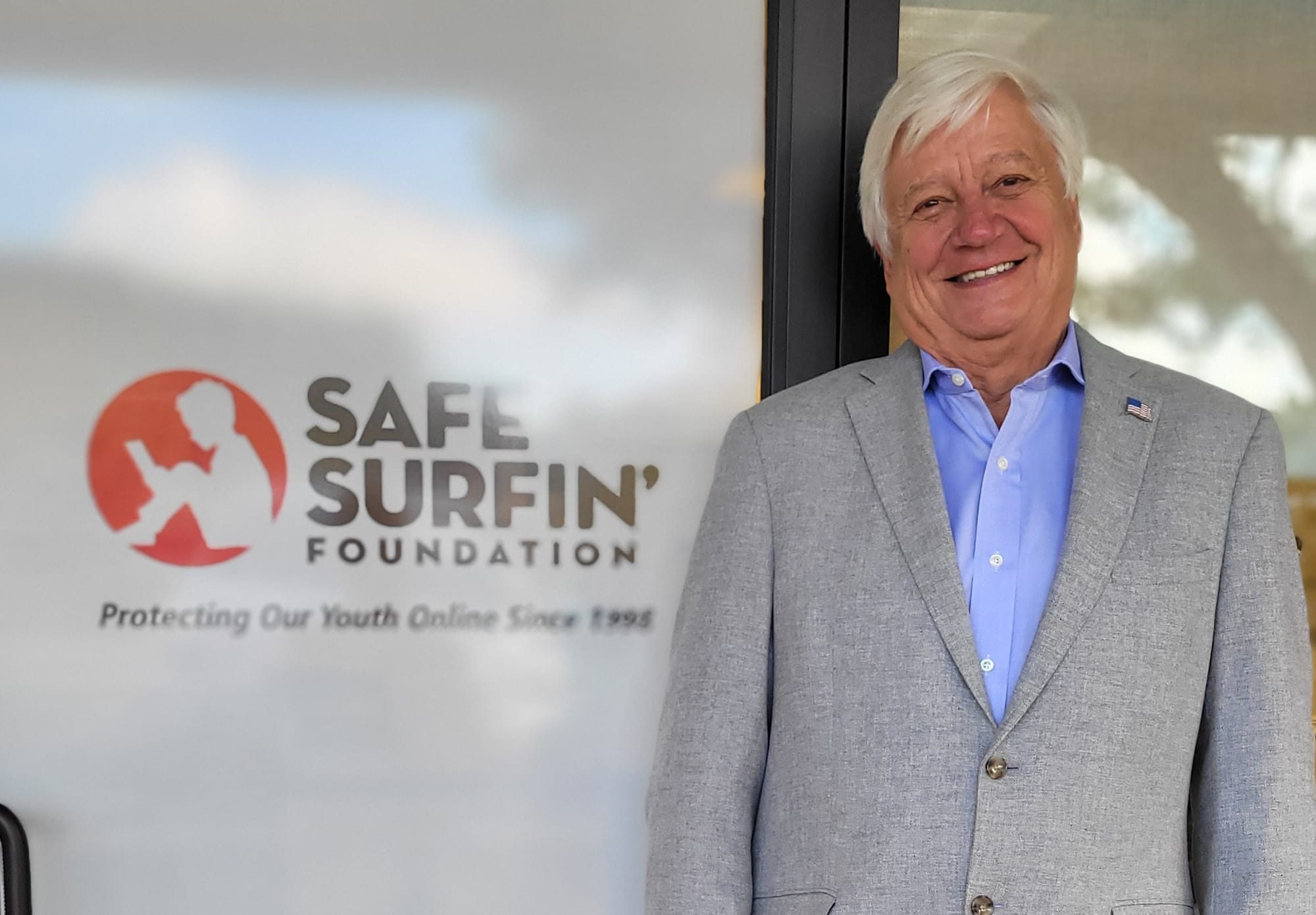
The foundation was created in 1998 by Sheriff Mike Brown of Bedford County because he realized "early on" that the internet and computers would expand the worlds of children and invite new dangers into homes. "There were more and more predators approaching kids," Worth said.
He explained that Brown "realized that we weren't going to be able to arrest and convict all of these [online predators]. It's just too many and it was a nationwide problem. So, he (Brown) created the Safe Surfin’ Foundation as an educational tool for us to use to educate kids and parents on how to surf the web safely.”
One of the first steps in staying safe online is identifying potential predators and knowing how to handle the situation. Worth said it's important to be able to recognize an inappropriate conversation and tell a parent, teacher, or other trusted adult as soon as possible.

Providing a welcoming space where patients feel heard, valued and receive the care they deserve. Our combined services are customized to meet various health needs, whether it's an urgent care visit, a routine check-up, or specialized wound care, all while honoring the concepts that WIN Care stands for - Wholistic Integrative Networked Care.
Throughout the years, Safe Surfin's approach has changed. They have tried several programs where officials would travel to talk to kids in big groups, such as assemblies. Worth said that some time ago, after a trip to California, he was having a conversation and said, "I don't think the kids are really listening to what I'm saying," and someone pointed out that teenagers might not always listen to adults, but they do listen to one another. Worth said that a lightbulb went off.
“We decided that, hey, maybe we need to do a peer-to-peer program, and that's when we created, back in 2019, the Team Cyber S.W.A.T. - Safety While Accessing Technology program," Worth said.
The Team Cyber SWAT program was developed for high school juniors and seniors to put together a presentation, using their own words based on information that Safe Surfin’ provides to them from reputable sources. Worth noted that the presentation can be “on any particular subject because we might have an issue with extortion in one school, cyberbullying in another school, human trafficking in another school. We'd go directly to the schools, explain to either the superintendent of schools or the principal and show them what the presentation's all about and ask them to pick a couple of kids that are really well-liked, well-respected in the school that all the kids look up to.”
After choosing the participating students, the students will then be coached by the Safe Surfin' Foundation on how to put a club together called the Team Cyber SWAT Club.

Our store offers a selection of lumber, roofing material, insulation, plumbing fixtures, electrical components, and conveniently located five minutes outside the town of Floyd.
Worth said that the results were immediate. “Dr. Janet Brown from Liberty University received a grant from Liberty to go back to all of these schools and interview the kids individually about the program. And she wrote a report on each."
Worth continued, "In every instance, it was like the kids got together and said the same thing. It was totally successful according to the kids. The kids that did the presentations, they listened to each other talk, they shared information and statistics, and safe practices. and made sure that they knew that it was coming from either the National Center for Missing and Exploited Children, the FBI, or whomever we were pulling the information from.”
Although the reportable number of children reached by Safe Surfin's programs is unknown, it is utilized across the nation, and according to Worth in “West Virginia alone, almost 240,000 kids that we reach out to just in West Virginia in our educational program.”
Worth stated that “When I would go in and do presentations, it's always in front of 500 or 600 kids at a time. There's always mumbling and you could hear them talking back and forth. They're not really paying attention. But when these kids, their peers get up and do these presentations, it's silent. The students are paying attention.”
Safe Surfin' works to provide the educational element with each interaction, ensuring that the kids walk away knowing more about how to surf the web safely than they did when they walked into the presentation.

Two Trees Catering is a unique full service catering company; we specialize in offsite events with affordable fully mobile capabilities serving the greater Floyd area
“There are ways you can even block your kids from going to websites," Worth said. "The key is when the kids are on the sites that they go to — in particular the gaming sites because that's where the majority of these predators are finding their kids — ... the child has got to be aware of what is inappropriate."
There are recommendations on the Safe Surfin' website for programs that can be installed to make phones and computers more safe for teens and children.
“We have an incredible amount of information on our website on how to surf safely. They can call us," worth said. "We just had a situation... that one of our team members received a text at 10:30 at night from a lady that had heard him speak in Atlanta. She was from Pennsylvania. She goes, 'My son's getting ready to commit suicide. He's being sextorted'.”
Worth explained that his team walked her through every step on contacting the police. and explained the process of contacting the National Center for Missing and Exploited Children (NCMEC).
A recent study from NCMEC reported 1.4 million CyberTipline instances of online enticement of children in 2025, a 158% increase from 2024.
Additionally, Worth recommends that all parents and seniors have a thumb drive with their children's or elderly parent's fingerprints and identifiers on it, so that they can quickly hand it to the police in case of an emergency. He said it is also a service that Safe Surfin' provides. “We can fingerprint them, take a picture of them, and put it on the thumb drive with all of their pertinent information, name, location, so that in the event they wander off, then when the police come, they've got a picture of them, their fingerprints, and they can get to be on the lookout.”

Troika Crafts is Southwest Virginia’s premier showcase of local and regional fine craft.
Find us at 203 S. Locust Street in The Station.
Learn more www.troikacrafts.com.
If you or your family is experiencing harassment, blackmail, or threats online, according to Worth, the next step is for the parent or a trusted adult to contact local law enforcement and let them know what's going on with whatever information (website, social media handles, etc) is available.
If you have identified that there is a predator taking interest in yourself or your child, you can report this by calling 1-800-THE-LOST, by visiting NCMEC, or by visiting FBI's Internet Crime Complaint Center.
You can visit Eddie Worth or Lizena Thompson at Safe Surfin’ Foundation at 201 E. Main St., Suite 9, or by calling (540) 855-7432.
Additional NCMEC CyberTipline data can be found here:
www.missingkids.org/gethelpnow/cybertipline/cybertiplinedata

Your trusted Floyd County real estate experts. Visit our downtown Floyd office adjacent to the stoplight or browse our current listings online. Representing both residential and commercial buyers and sellers with integrity and always working to get YOU the best deal!