
Artisan Jim Grant forges a new creative path
Floyd is home to hundreds of artists and musicians. For Jim Grant, that spirit of acceptance is what makes the county special. He noted that Floyd seems open to all artists: "It is a wonderful thing because in other places, you don't find that.”
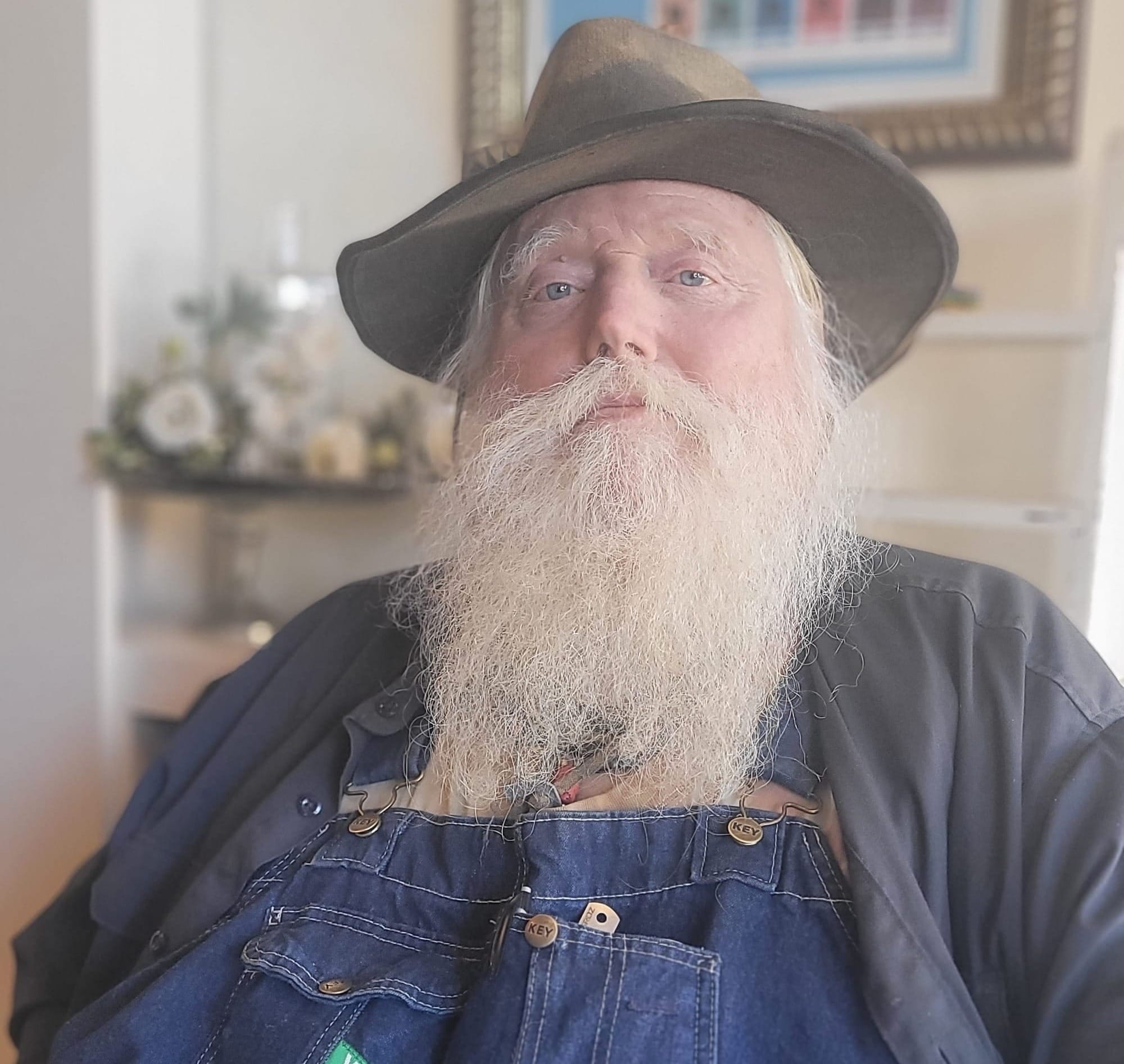
It was over two decades ago when James “Jim” Grant, who is originally from Michigan, first set foot in Floyd County. Now he is a craftsman and artist known throughout the area for his ability to turn raw wood into one-of-a-kind bowls or vases, many of which have found homes across the world.
Grant had just finished running an ax-throwing booth at the Carolina Renaissance Festival, “teaching thousands and thousands of people” how to throw, he said, when he first arrived in Floyd. He had friends who participated in renaissance festivals and stayed in the area, and he took the opportunity to visit after a show. "I was like, 'Woah, this is the place,'" he said. "I knew this is where I was meant to be. The people are good, the atmosphere is great — I felt drawn to it. Floyd is the place I love.”

Providing a welcoming space where patients feel heard, valued and receive the care they deserve. Our combined services are customized to meet various health needs, whether it's an urgent care visit, a routine check-up, or specialized wound care, all while honoring the concepts that WIN Care stands for - Wholistic Integrative Networked Care.
Floyd is home to hundreds of artists and musicians. For Grant, that spirit of acceptance is what makes the county special. The entire area is known for its deep well of visual artists and musicians, and he believes that creative energy is part of the town’s heart. He noted that Floyd seems open to all artists: "It is a wonderful thing because in other places, you don't find that.”
It was shortly after moving to Floyd County that Grant was introduced to woodturning — the art of taking a raw block of wood and carefully placing a chisel to the wood to uniformly slice away at it. He explained that a friend of his "got a mini-lathe for Christmas. He called me and said, ‘You’ve got to try this out.' I did, and it was fun. Next thing I knew I was doing it, and I never looked back.”
Grant believes that when making art from a raw log, “you have to look at the wood, and it will tell you what you can get away with making. I look at it and say, 'What do you want to be?' and if you listen, it will tell you. Then you start turning.”
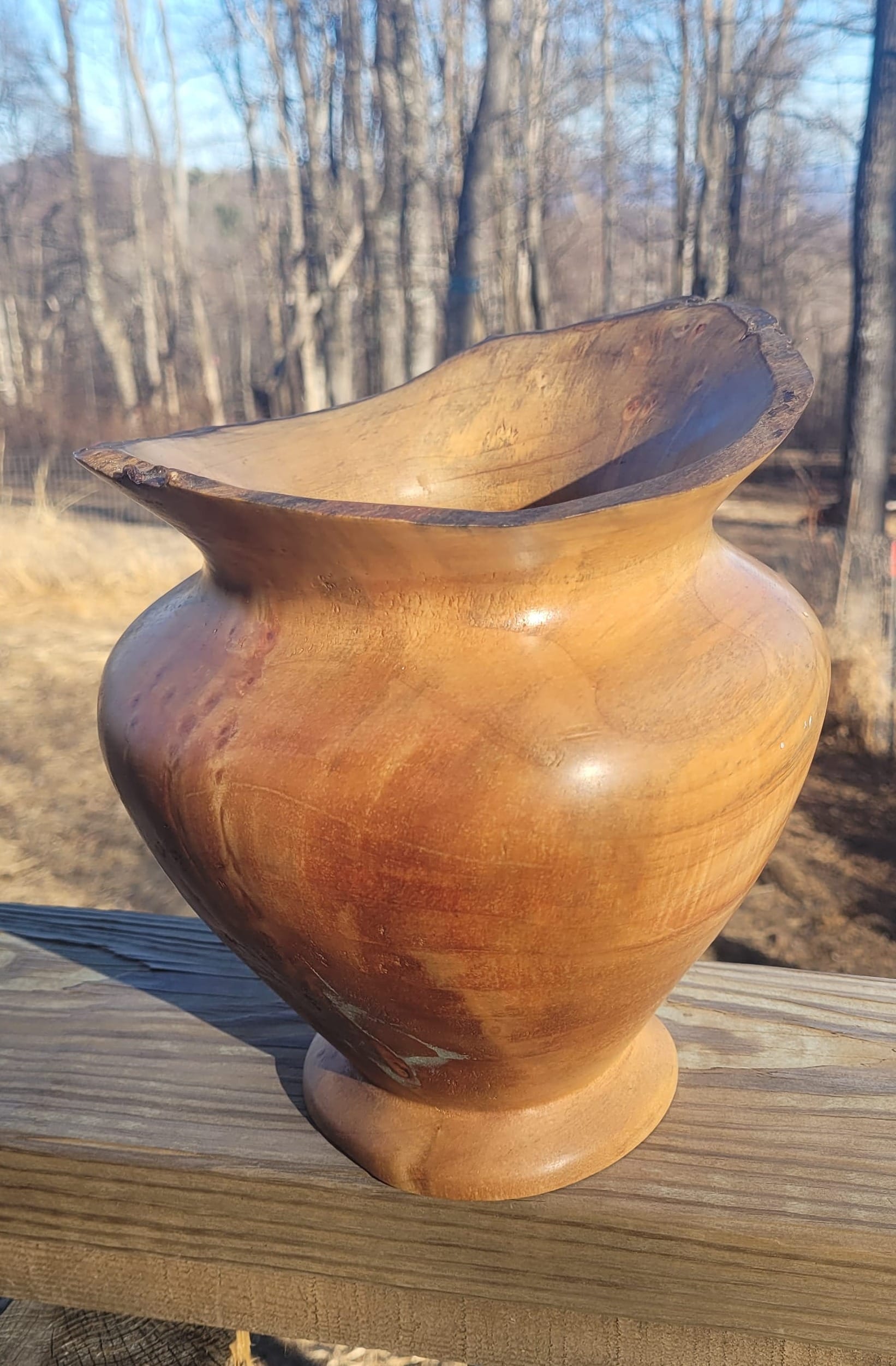
While woodturning looks peaceful, Grant explained that the craft “is not easy or safe to do. It is fairly dangerous.” The process begins with a raw log, which is rounded down with a chainsaw, flattened on one side, and equipped with a four-inch metal plate that secures it to the lathe. The tailstock is then tightened into place. If the wood isn’t locked down firmly, the consequences can be immediate.
"It will rip right off the lathe,” Grant said, adding that when a piece of wood breaks free, “it goes wherever it decides to go. The piece of wood is spinning at 400 to 500 rotations per minute." He noted, "One time a 30-pound piece hit me in the chest. Another time a piece came off and shot across the shop and hit a gallon paint can. Anyone I know who has worked on a lathe has been injured. It is just the way it is. You always have to be paying attention to what you are doing.”

The old school building converted into three floors of almost all types of fabrics available, and craft supplies! Plus - an extra building of upholstery fabrics and supplies!
220 N. Locust St., Floyd VA
(540) 745-4561
sfabrics@swva.net
Sometimes even being cautious can't stop the danger. Grant said, “Sometimes you get wood that is ‘wood shook.’ The tree, when it is standing, gets shook real bad by the wind. It will crack along the [interior] rings, and you can't tell. You will be turning away, and all of a sudden, a chunk will just fly right off. Those pieces just get tossed in a big pile that turns into firewood.”
Once the wood is securely attached, the woodworker forms the outside of the piece. After the outer shell is formed, they start hollowing out the center. "You have to constantly readjust, move your tool to the other side,” Grant said.
While he has worked with "just about" every type of wood, Grant prefers burl wood. “It is a lot harder to turn because the grains are going every which way, but it is beautiful. You never know what you will find on the inside. The grain patterns and the colors are simply amazing; Mother Nature does beautiful work. I just get to show it off," he explained.
Turning a bowl or vase is not a quick process. According to Grant, it can take anywhere from a couple of hours to 12 hours depending on the intricacy. "Vases are harder because you are going in through a small end with a chisel that is curved. Hollowing the inside out creates a whole lot of force.”

Throughout the years, Grant has sold his work at local crafters markets and farmers markets. Despite reaching collectors as far away as Africa, Germany, England, New Zealand, Australia, China, and Hawaii, Grant was always determined to keep his prices fair. He said, “People tell me that they really love my bowls. It is always satisfying as an artist to have people appreciate what you make.”
Sometimes retirement from a craft is chosen, and sometimes it is forced. Last year, after tearing his rotator cuff, Grant had to stop turning bowls. “It got excruciatingly painful, so I just couldn't do it.” Once the community found out he was no longer able to create his signature pieces, people flocked to buy the last of his work. Grant said it took just “a couple weeks” to completely sell out. “I sold them all. I don't even own one of my own bowls.”

The Schroeder Law Firm is dedicated to helping individuals, families, and small businesses plan for the future and achieve their goals. We focus our practice on real estate closings, business law matters, estate and trust planning, probate and estate administration, elder law and special needs planning, and uncontested divorces.
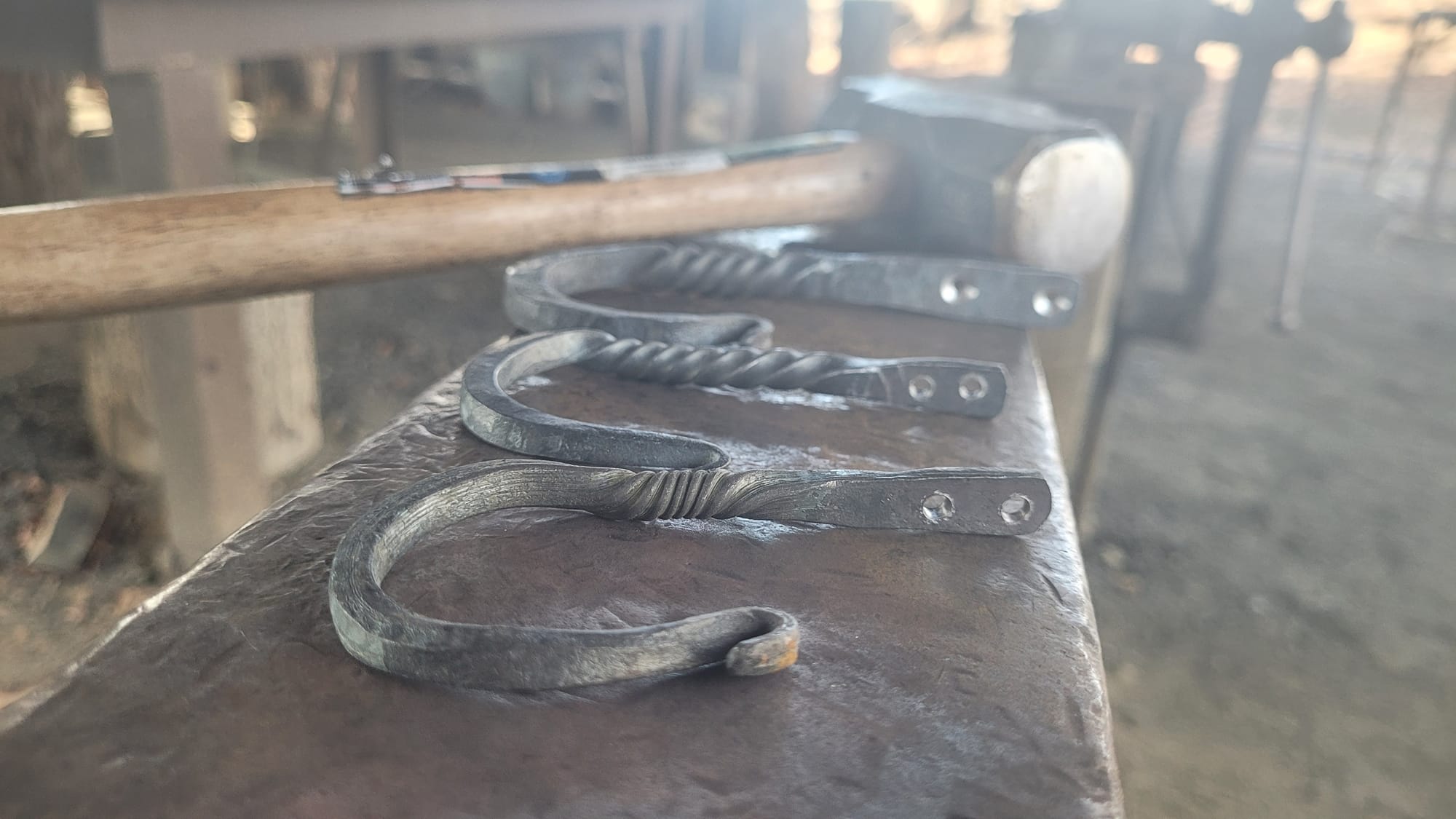
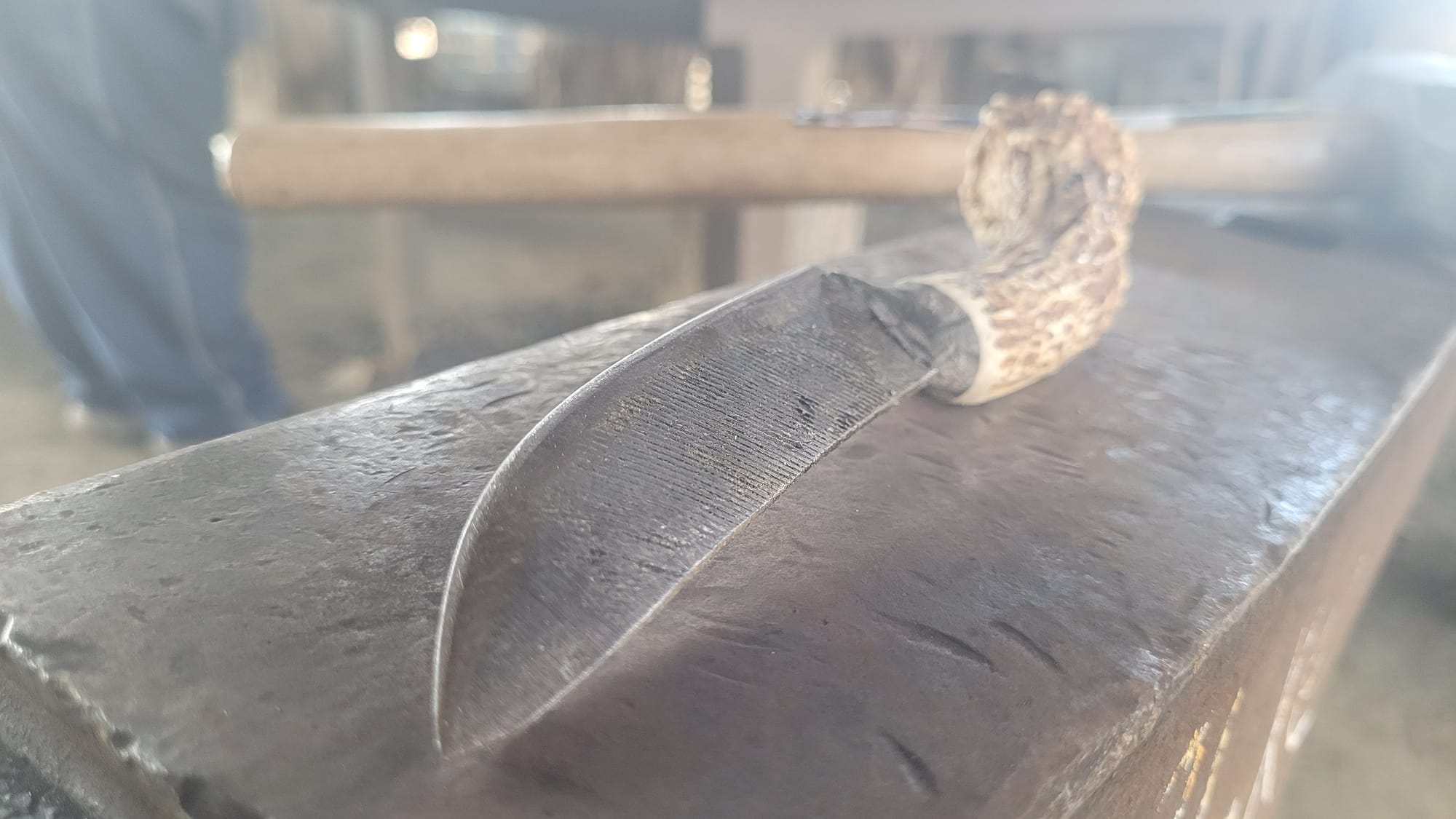
Regardless, Grant was not able to sit still for long. As a lifetime artist, he has now started making knives. “I have always wanted to do that," he said. "I got the opportunity to do a class up at the Floyd Center for the Arts (FCA). I thought, ‘Yeah, this is what I want’."
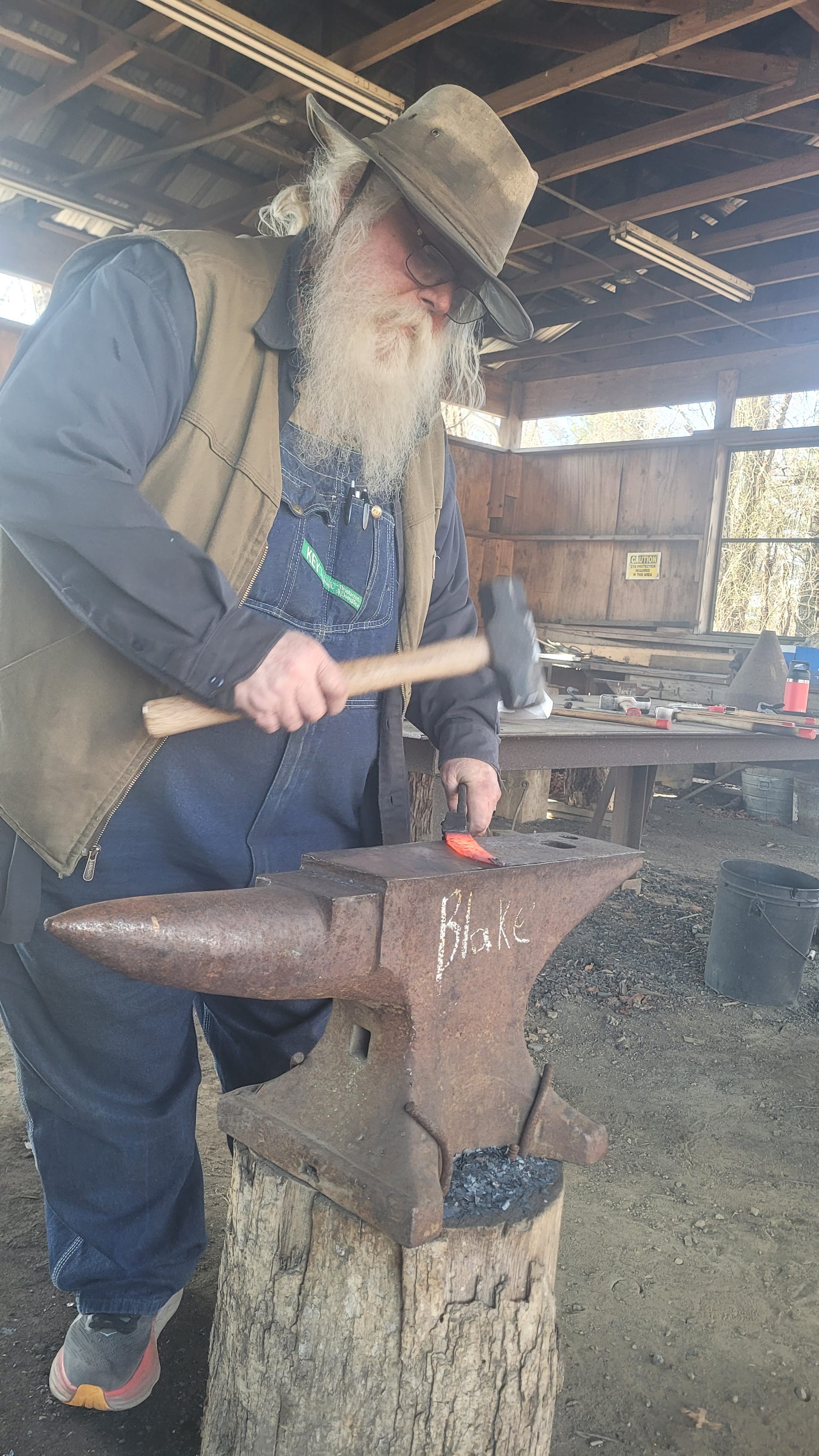
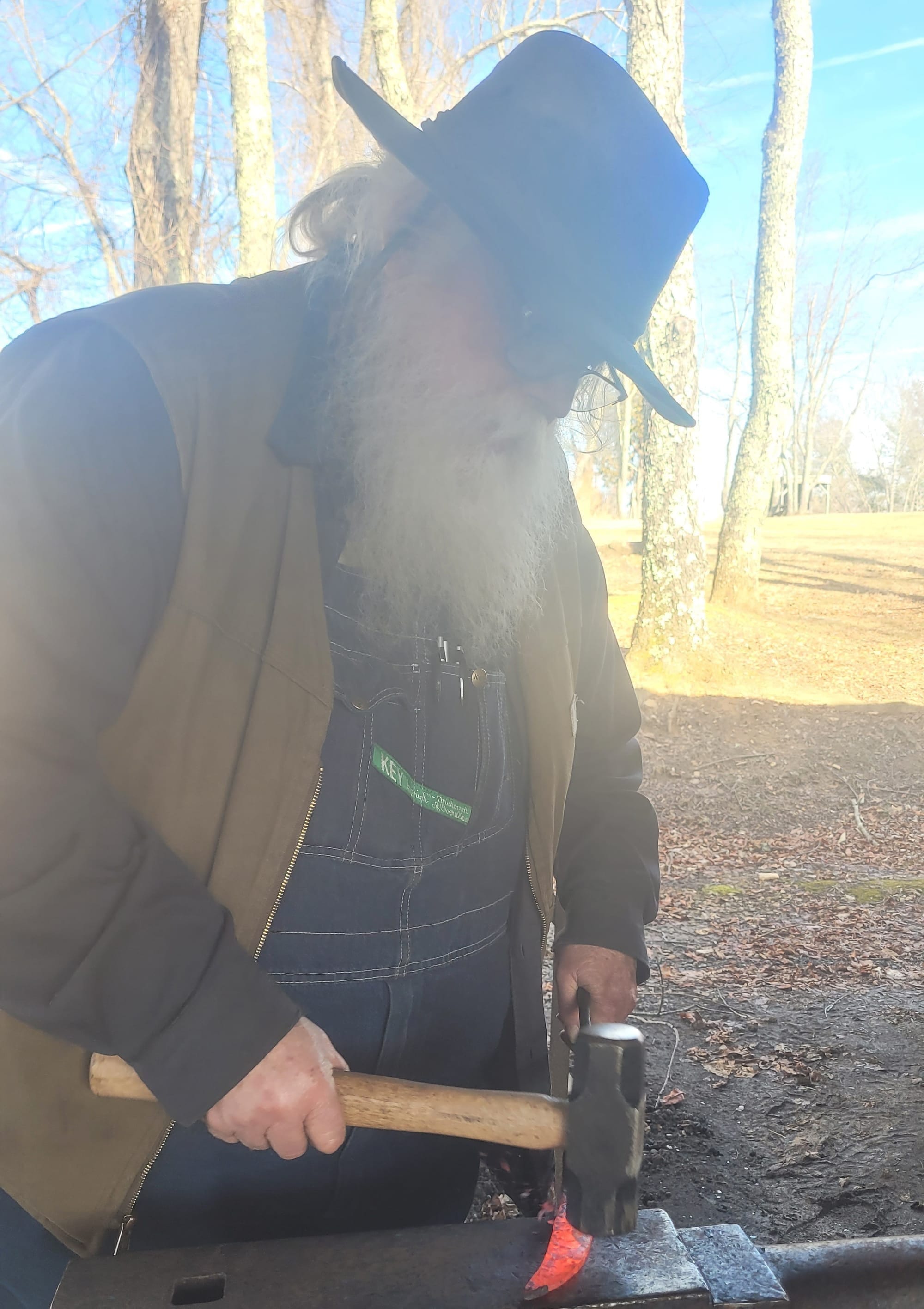
“I can hold the tongs and not have to move my arm much," he said. "It was the movement [of woodturning] that really hurt. I am able to work around my injury and hold the hammer with the other hand.”
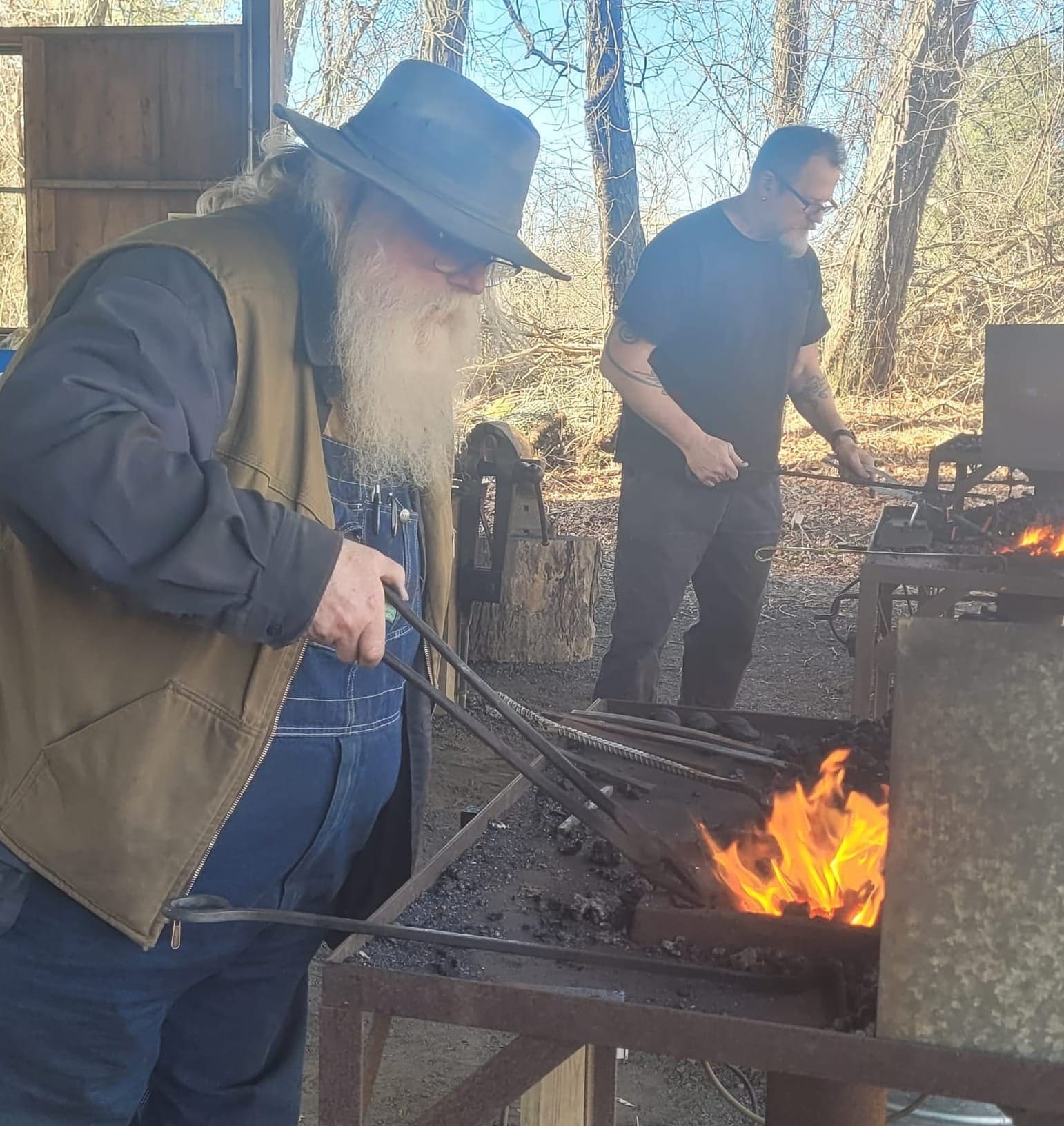
After learning how to run a forge at FCA over a year ago, Grant is now running the Open Studio Forge. “It is $25 for the day. We provide all the tools and the coal. All you have to do is bring your own steel.” Grant noted that he just acquired a specific tool to start forging axes and that ax-making classes will be available at FCA in the future.
When it comes to whether his shoulder will ever heal enough for him to work with wood again, Grant said, “I just see where life takes me. Right now, I am enjoying messing around with the steel.”
Grant currently sells his knives at the Floyd Artisan Market in downtown Floyd on Friday nights.
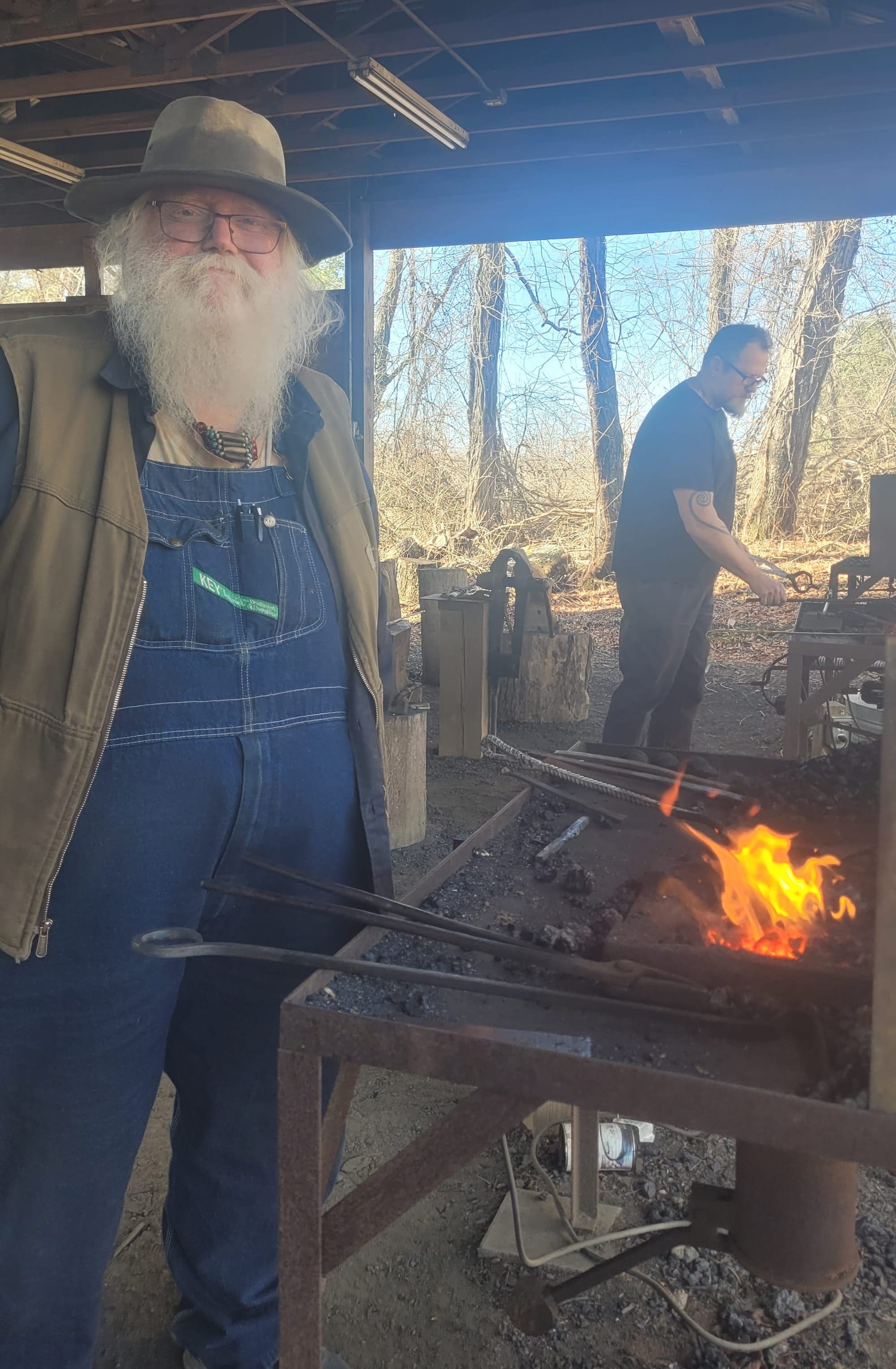
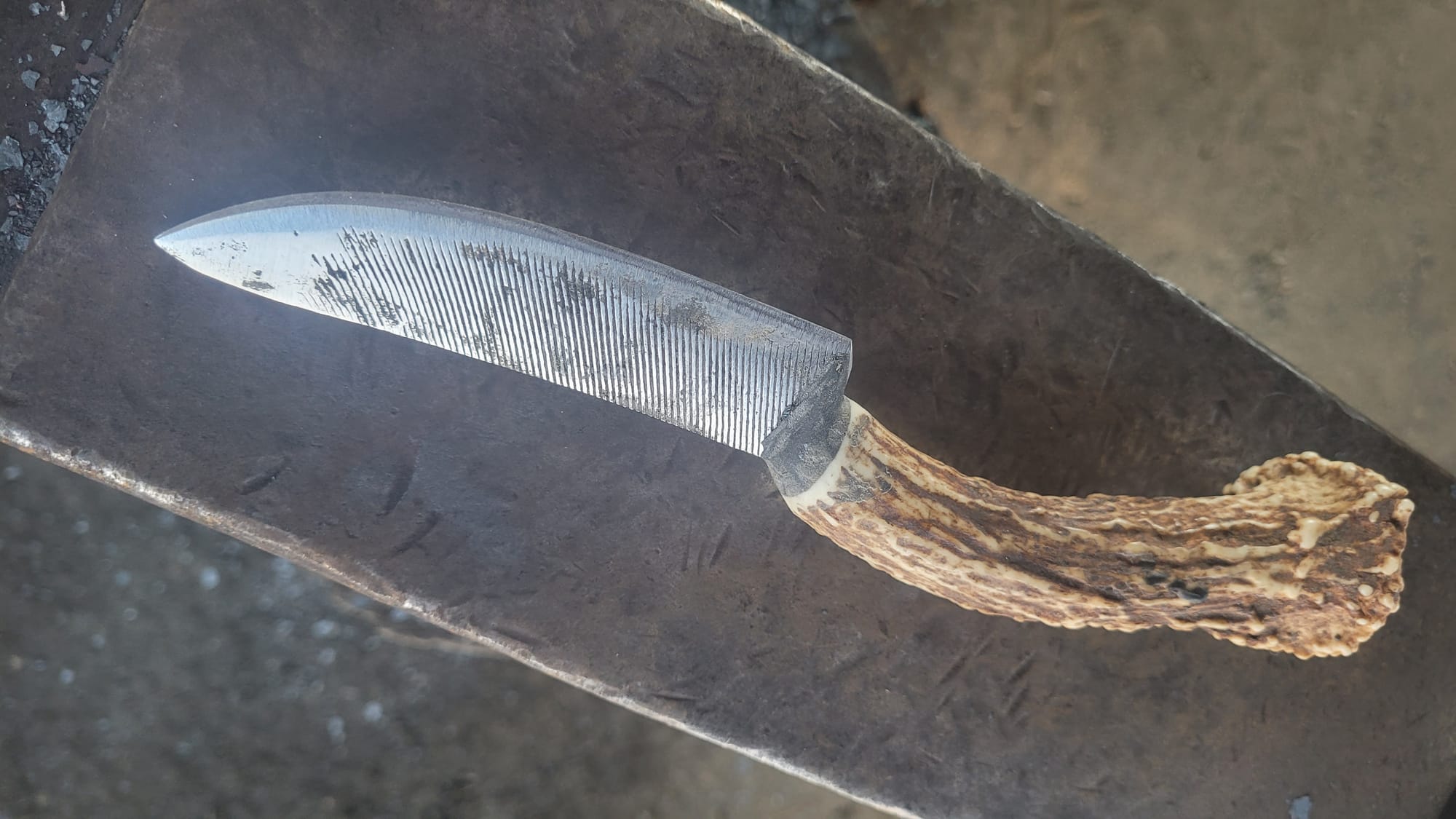
Click to enlarge images in gallery. Photos by Tanja Harmon