Backstories and Backyards: Country Dances
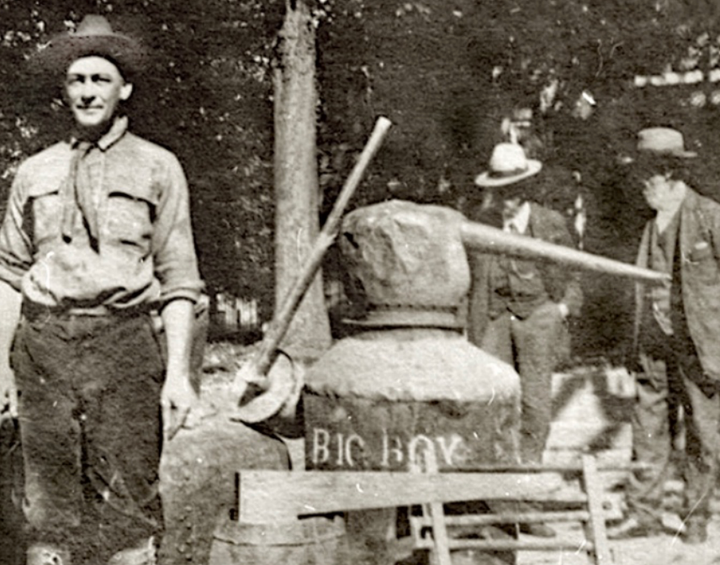
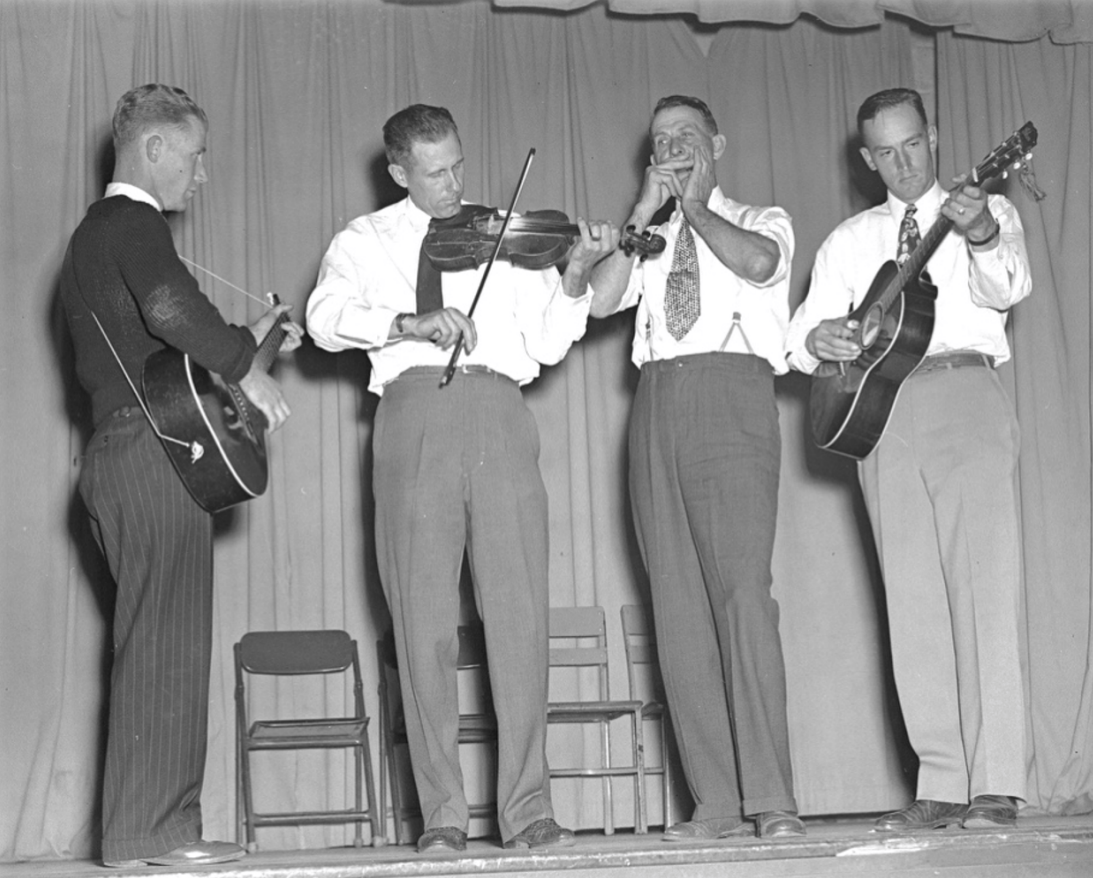
The Weddle-Slusher Band — Ab Weddle and his nephew Alton Weddle, Rom Slusher, Rom’s son Waldo Slusher, and Rom's nephew, R.O. Slusher Jr. — were regulars for late 1930s Friday night dances at Pine Tavern.
The "Backstories and Backyards" column looks back into the stories behind everyday objects, connecting each item with the people, places, and events of different eras in Floyd County history. This month's column found quite a few music and dance traditions within the pattern of a quilt square from the Old Church Gallery cultural arts collections.
It's hard to talk about Floyd County without mentioning music and dance traditions. Indeed, over the years, Floyd has developed a national reputation with the popular success of the Floyd Country Store. The Store's events continue a century of old-time music and country dance found in Floyd County homes and at earlier venues such as the Hotel Brame, Pine Tavern, and El Tenedor.
Interviews from the Floyd Story Center's archive tell of neighborhood dances, square dances, flatfooting, two-steps, play parties, hoe downs, and one particular Mayday event on the Buffalo, circa 1932, as described here by Rush Alderman in 2001 while he treated us to a banjo tune:
And back when I was a teenager, I played with a string band of my brother and myself, and a fiddler, Fred Spence. We’d go there and play music together, every first Sunday in May. On the top of the Buffalo, always come off down there and play. This pretty little spot there, they always gather around that, you know, and some would be a-dancing and yes, having a big time out there. I played there several times, and I know that old spot there, and I don’t know, I’ve not been some several years, but as would come natural for me to go there, I think. Yes.
Appropriately, it was the Virginia Reel that became the common dance thread that found its way into many of the stories. One of the earliest American country dances, it has a "reel" formation of longways lines of couples facing each other, in which the dancers at the head of the line hook right arms and swing around each other to face and arm swing another dancer in the line, alternating partner to each side person, all the way down to the end. The music is usually a jig or a reel tune.
Mark J. Harris
Floyd County Farm Bureau
(540) 745-2021
335 E. Oxford St.
Floyd VA 24091
The dance dates from colonial times, based on an early 1800s English country dance named after Sir Roger De Coverly. In England the dance began as a regimental display, danced with officers in uniform. In the late 19th century, it became popularly known in America as the Virginia Reel. This longways couples formation persisted in New England as the contra dance, becoming popular nationwide in the 1970s as part of the folk revival — interesting to note that the Virginia Reel is a contra dance!
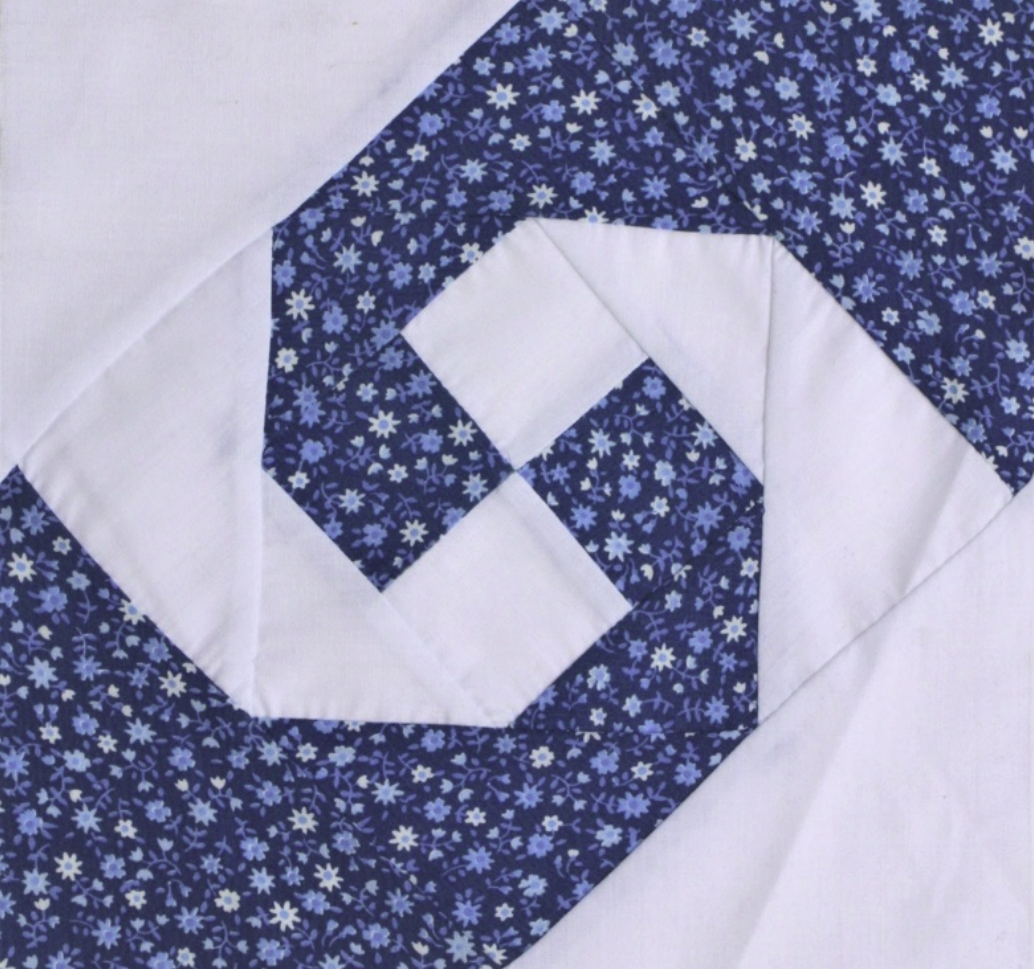
This “Pioneer Period” Virginia Reel quilt square pattern is based upon the dance by the same name. In Effie Brown’s words, “The Virginia Reel was considered the favorite; in general, it was thought to be the most beautiful and most graceful.” Mrs. Brown’s quilt block collection with histories of each pattern is on permanent display at Old Church Gallery.
When Alice West researched the history of dancing in Floyd for the Extension Homemakers Club in 1977, she wrote that 19th century neighborhood weddings or barn raisings would culminate with a fiddle tune, likely "Turkey in Straw," and much dancing. From 1900 through 1930, she noted the popularity of square dancing and "ole Virginia Reel," with some waltz, polka, two-step, flatfoot, and Irish jig mixed in. [Floyd Press, "Harvest Hoe Down," Nov. 3, 1977]
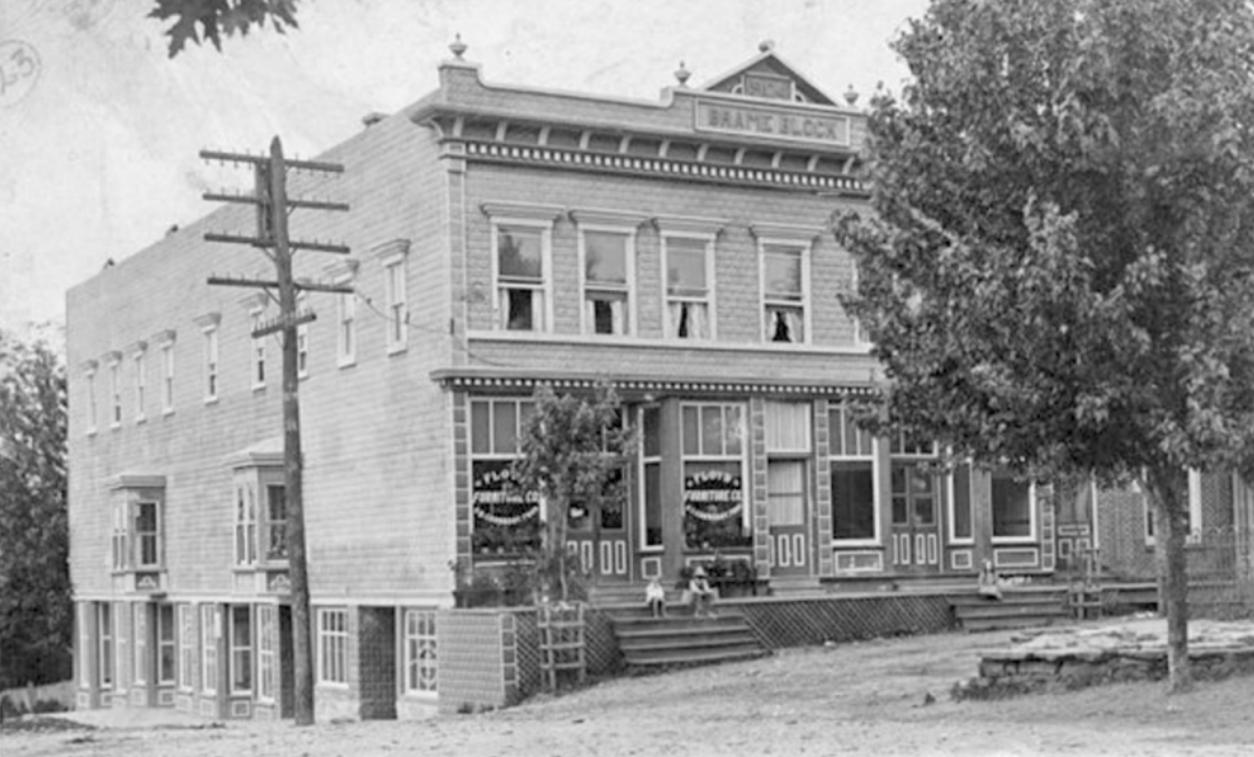
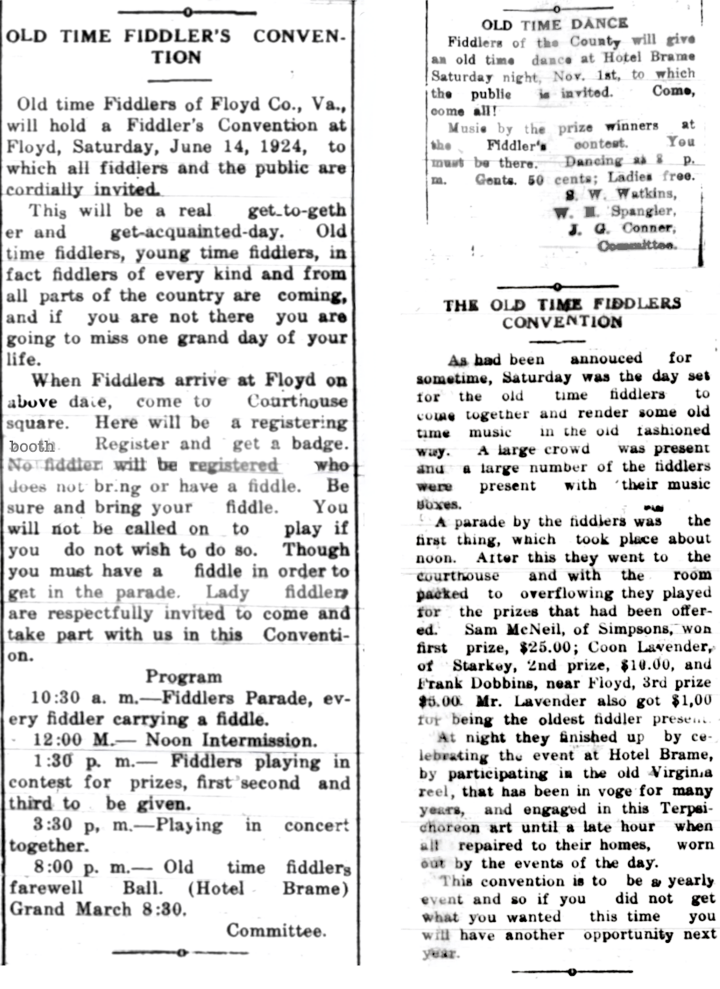
One early 1900s venue for old-time dances, fiddle conventions, and parties was the Hotel Brame, on the square in the Town of Floyd. Ora Brammer recalled lively 1920s dance parties at the Brame when I interviewed her in 2001:
One man played a violin and then another played a banjo. Always had the fiddle. Well, it is in the dining room, it's where they danced. So, they moved tables out on one side, danced in the dining room when it went to the parties.
Ole Virginia Reel. You know what that is? Where you do-si-do, the Virginia Reel, you do-si-do and twirl. That’s what we had, the Virginia Reels. Once in a while, somebody two-stepped or whatever. Yes.

Strong bodies build strong lives. At Floyd Fitness, we create a space where movement transforms confidence, health, and energy. Whether you’re starting fresh or chasing new goals, our team and community are here to support you every step. Join today and see what strength feels like!
In 2001, Catherine Nester noted that square dances continued there through the 1930s and 1940s, where her father called for the dances: "The Brame Hotel here in Floyd was really the center of all the social life of the community."
My father loved to square dance, and he loved to call the figures. Very often my mother would go with him, but then as I got older, my father would take me to the dances, too. But one night neither of us went to the Brame Hotel with my father, and he called the figures so loud and so long that he lost his voice completely. And then he didn't call for quite a long, long time. But I went to the Brame Hotel when I would come home from college in 1940. And the dining hall at that time of the hotel, the floor began to slant, and it was quite difficult with the square dancers to dance on a sliding floor, but they still had a big time!
After the Hotel Brame, dance traditions continued into the 1970s at places such as El Tenedor Roller Skating Rink (now Phoenix Hardwoods woodworking shop) and the Pine Tavern. Square dance callers included Everett Kingrea, as his son, Charles Kingrea, told his daughter Kimberly Ingram in 2019: "They had square dances at Pine Tavern. My mother and father would go square dancing and take me as a little baby and they'd put me in the baby bed and they’d square dance. My daddy called figures — that’s actually conducting the square dance."

Hardwood, LVP, Carpet, Tile & Stone. We've got it all! Floyd Floor Co. brings quality and craftsmanship to every home for every budget. From design selection to expert installation, we handle everything. Call or visit our showroom to see what's new and get your free estimate today! 540-302-2858
The Weddle-Slusher Band — Ab Weddle and his nephew Alton Weddle, Rom Slusher, Rom’s son Waldo Slusher, and Rom's nephew, R.O. Slusher Jr. — were regulars for late 1930s Friday night dances at Pine Tavern. The Tavern’s owners, Mr. and Mrs. Alvis Howery, always danced the first dance to “Shooting Creek,” and paid the band $10 for the evening’s entertainment. The band also played for dances at the Brame Hotel, standing on tables so the crowd could hear the music.
More informal dance gatherings continued at local homes. Interviewed in 2001 for the Buffalo Mountain oral history series, Dell Bolt recalled dances at the Tolbert home on Burks Fork:
And the older ones, my sister, back when they growed up, people had dances. At those dances they made music. Banjo and a fiddle. Back then, nearly all the old people could play music.
They’d dance all night long, and take the whole family along. And if every child didn't get on that floor and dance, he wouldn't go next time. You wouldn't believe it to see some of those old-timey people dance.
In his 2001 Floyd Story Center interview, Harless Wood (Meadows of Dan) also spoke of local dances:

We offer locally sourced, insect and rot resistant hemlock, and lots of other species for just about any project.
We also can provide firewood, kindling, mulch, sawdust, and shavings.
Inside we produce paneling and flooring in various, often rustic local woods.
Come by or call Stacy
276-692-8754
Well, every so often somebody in the neighborhood would have a dance in the home. And, young people would get together and play all sorts of games. Wherever you went, you walked. Now, we had a good time. Talking about dancing in people's homes, they just cleaned out a room, and we'd have a dance. An ole square dance, if that's what you want to call it.
Continuing an unbroken chain of Floyd's music and dance traditions, the Floyd Country Store got its start during the early 1980s with the beginnings of Freeman Cockram's "Friday Nite Jamboree." Many Appalachian country dances are solo dances, with freestyle clogging or Floyd County's understated flatfooting, a distinct, low to the floor shuffle step. Catherine Pauley quizzed Freeman Cockram about flatfooting during his 2016 interview:
Dancing, it's just – flatfooting is, I don’t know how to describe it. You just keep time to the music. Put one foot down to one beat, the other to another beat. Back and forth like that, and then people add to it whatever they want to.
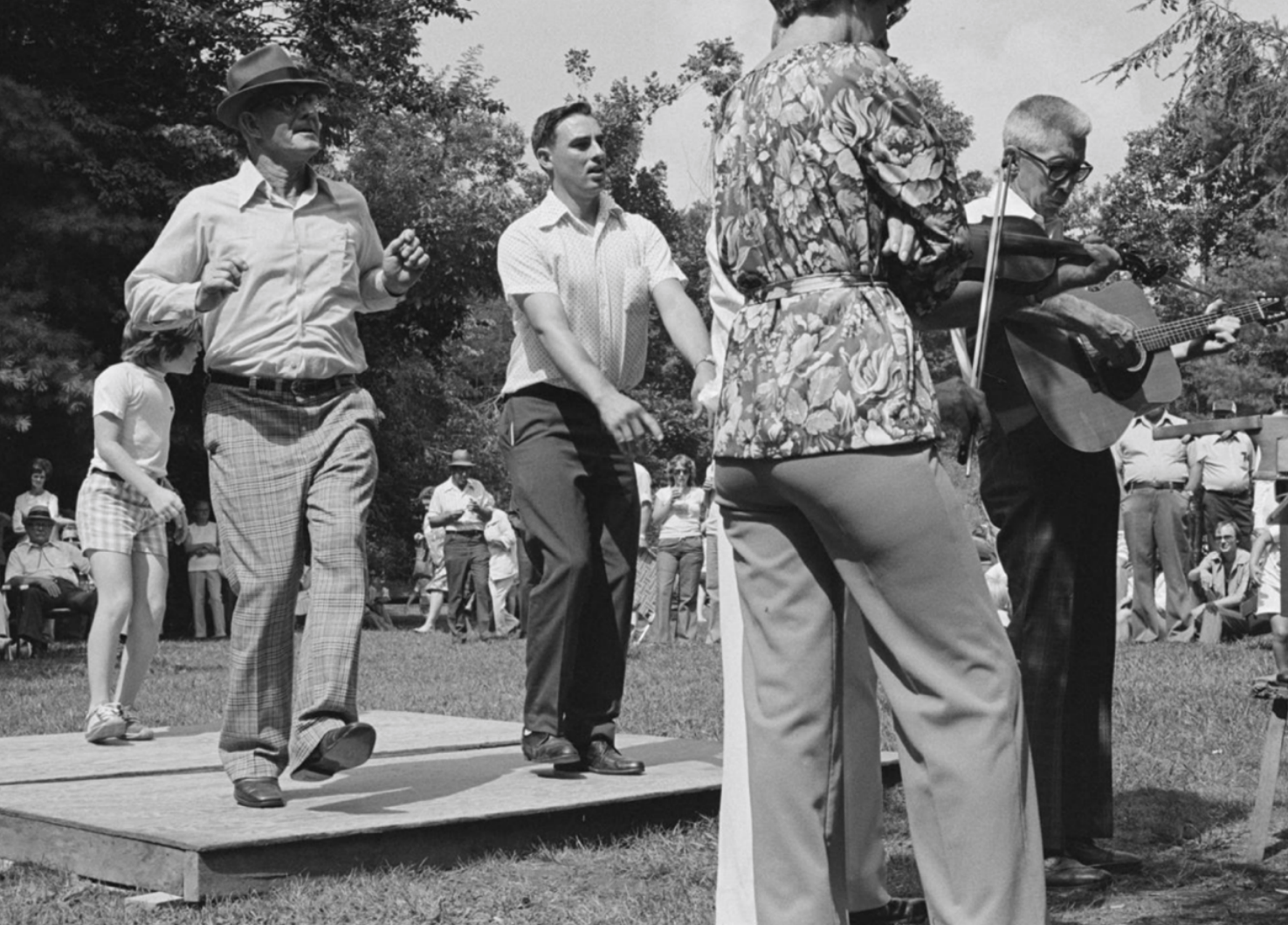
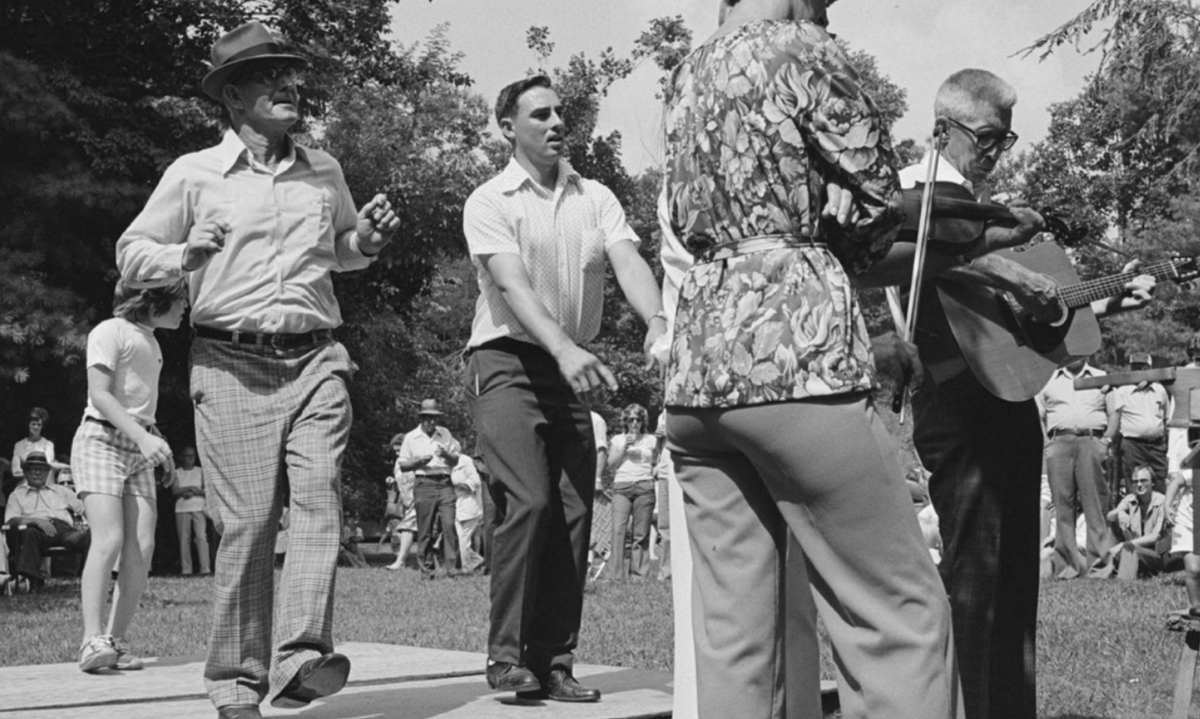
The Smithsonian photo shown above features dancer Luther Boyd (b. 1915), Meadows of Dan, in dark felt hat. Luther's skill won several regional dance contests. Mike Seeger documented Luther's old-timey flatfoot steps in his 1992 book and film on solo Southern dance styles, Talking Feet. And, using Mike's Mabry Mill video recordings, Ruth Pershing documented the dance steps and timings of Luther Boyd, Allen Spence, and Hoy Haden in charts for the book. Hoy describes what is the basic tenet of old-time flatfooting, "hold your feet to the floor, the best you can."

G.J. Ingram & Son
Fuel, Farm & Home Supplies
Proudly Serving Floyd County for 80 years!
2107 Floyd Hwy North, Floyd VA
540-745-3201
At the Floyd Country Store, during an interview for the 2014 Sound and Story project, Jane Hellman described her love of dance:
Oh, I love to dance. I’m always learning, you know, but flatfooting, clogging. Mostly, when I come here to the store, I just do what everybody else is doing, just either clogging or flatfooting. Some people call it buck dancing. And I’m always learning.
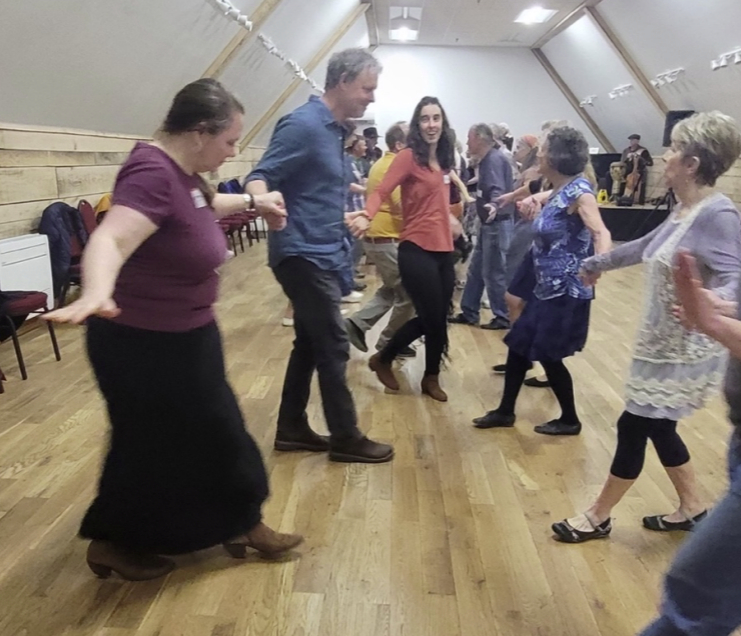
The Floyd Country Store, Wildwood Farms, Floyd Center for the Arts, and the Ferrum Folklife Festival are all places to experience traditional dance. One can also find occasional clogging workshops sponsored by the Handmade Music School. Clogging is a more percussive style, often using taps, where one's feet can reach higher off the floor in a more energetic fashion.
As a life-long dancer, I sought out area dances after moving to Floyd: the Floyd and Blacksburg Contra Dances, folk dancing at Virginia Tech, the Country Store, Grange dances, and Christiansburg English country dances. I'd also attend the Blacksburg Old-Time Square Dance, which is where I met Mike Seeger in the early 1990s. I was waltzing with him one time when I mentioned that I lived in Floyd. "Oh!" he said, "Let me show you the Floyd Waltz," and then proceeded to do just that.
The steps were nothing like any waltz I'd been used to, and I figured that he was probably fooling around. Soon after, I learned better when a waltz tune was played at the Country Store, and most everyone then proceeded to dance the two-step. Aha. There was, indeed, a Floyd Waltz, and it was lovely!
All Floyd Story Center interview excerpts are courtesy of Old Church Gallery in Floyd. The excerpts presented in this column represent a larger archive of over 120 interviews, 1980s-2024, many recorded with both audio and video.