
Beyond the Tap, Part 3: The Divide
Beyond the Tap, Part 3: “The Divide,” addresses misconceptions about who the PSA serves in Floyd County.

“Beyond the Tap” is a multi-part series by Floyd Times that breaks down the challenges facing the Floyd-Floyd County Public Service Authority. Part 3, “The Divide,” addresses misconceptions about who the PSA serves in Floyd County.
Members of the Floyd County Board of Supervisors and Floyd Town Council have emphasized the importance of the Floyd-Floyd County Public Service Authority for all county residents, not just those who live in town and its immediate proximity, and agreed that more education is needed for the public to understand the PSA’s purpose — a big hurdle in addressing the PSA’s future.
At the joint meeting regarding the PSA in December 2025, Councilman Bruce Turner, who is also a member of the PSA’s Board of Directors, said that it is the shared responsibility of current elected officials, particularly those on the Board of Supervisors who represent the Courthouse and Little River districts where the PSA operates, to help the Authority.
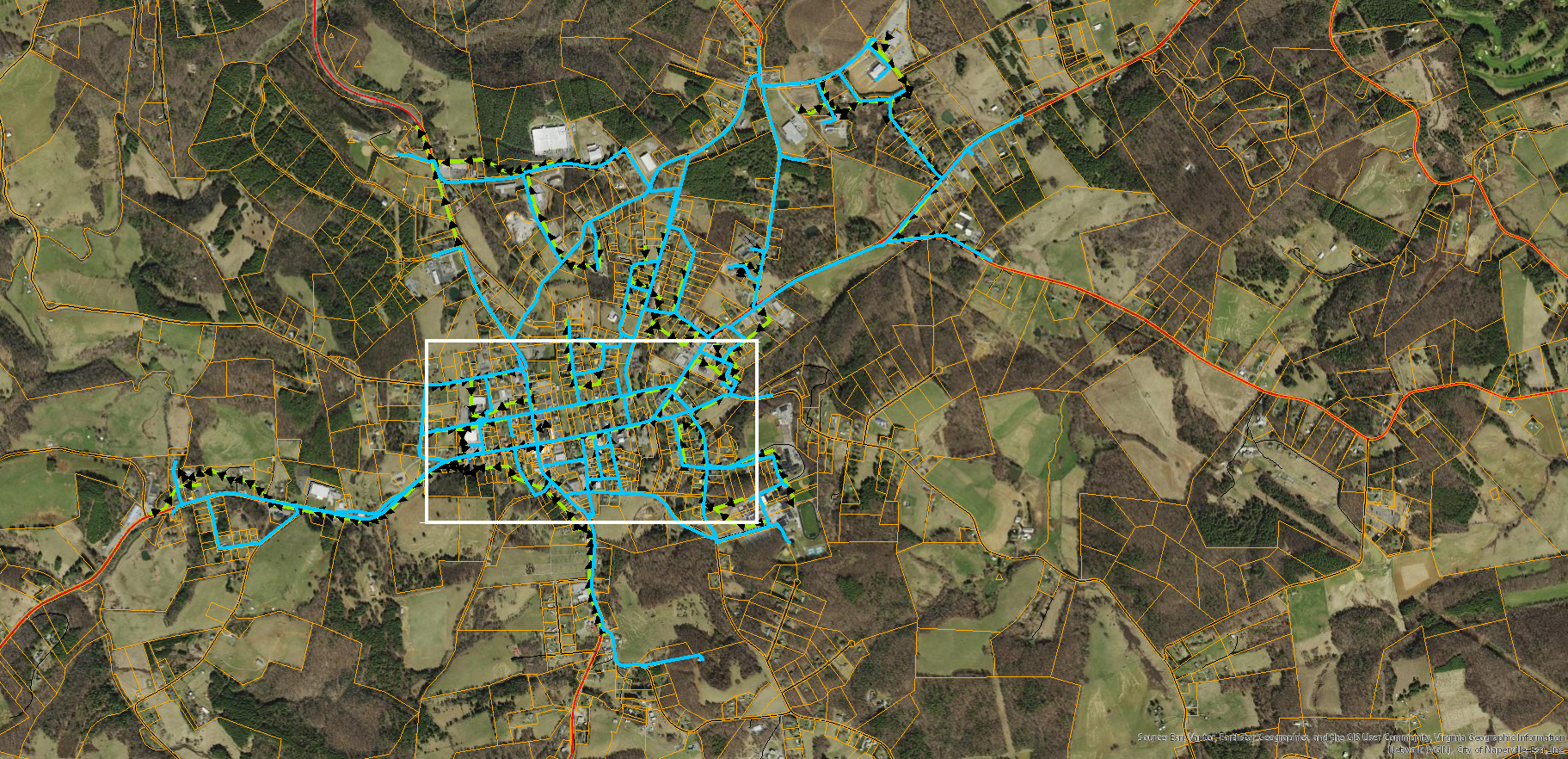
Locust Grove Supervisor Levi Cox said that still leaves three Board members, who, if they do not believe the County should contribute to the PSA, could limit funding from Floyd County. He said he’s talked to constituents who don’t initially believe their tax dollars should be used for the PSA but “come back around” when he explains what, exactly, the PSA does.

Little River Supervisor and PSA Board Chair Linda DeVito Kuchenbuch said at the meeting, “Everyone needs to understand that the PSA is not just for the town. The PSA affects every single person that resides in this county” — if you know a child in schools, you are involved with the PSA; if there’s someone you know who works at H&V, you are involved; if you go to the Country Store on a Friday night, you are involved with the PSA, DeVito Kuchenbuch said. “Everybody in one way or another is touched by the PSA,” which makes it a "county-wide responsibility.”
Town Mayor Will Griffin, who is also a PSA Director, said outside of the meeting that there seems to be “some confusion as to whether or not the PSA provides benefits to all residents of our county. Floyd County High School is on the PSA system, as is our largest elementary school.” He added that the county’s largest employers, both Slaughters and Food Lion, and most restaurants in the county are also served by the PSA.
“The future of the county as a whole is dependent on water,” Griffin said.

Citizens' SmartTown Community Wi-Fi helps EMS, Rescue, First Responders, and YOU get connected when you need it most. SmartTown is designed to provide Wi-Fi coverage in areas with poor or non-existent cellular coverage. Just another way Citizens connects people and communities!
Mike Maslaney, a long-time member of the PSA Board of Directors, said the December 2024 main break in Floyd — during which the PSA’s tanks were almost depleted and the system almost had to be shut down — could happen again.
“I feel that most people take the PSA for granted, and others think that they should not be supporting it with their taxes, but the truth is that the PSA affects the lives of all the citizens in the county,” he said.
County Administrator Kim Chiddo echoed Griffin’s and Maslaney’s sentiments that the PSA serves more than just town residences. “It serves residents of the county outside the town limits,” she said. “The PSA serves our businesses in town, EMS and fire stations, Skyline Nursing Home, and the schools — most all benefit from the services of our Public Service Authority.”
Floyd County is not alone in its aging infrastructure and its gridlock in regard to addressing weaknesses in the water system. The Conservation Foundation states that “most water infrastructure in the U.S. was built between the 1930s and 1970s” and is now contributing to cracked pipes, and outdated treatment plants and monitoring systems.
One thing productive to do as community members is to read up on what happens to communities when the public water system fails. Across the country, cities facing similar gridlock to Floyd have seen the consequences firsthand.
In Jackson, Mississippi, in 2022, about 150,000 people were without potable water for weeks after “decades of disinvestment,” according to the Natural Resources Defense Council, and floodwaters contaminated its main treatment facility. Residents are still dealing with the fallout of this failure, known as the Jackson Water Crisis, and government lawsuits led to the appointment of an interim manager, who was also granted control over the sewer system in 2023. As of December 2025, the interim manager is still in place and is working with city officials to progress long-term infrastructure needs.

Southwestern Virginia’s premier source for hemp products. From edibles and tinctures to topicals and accessories, we provide trusted, high-quality options for both wellness and relaxation. Visit our retail locations in Downtown Floyd, Roanoke (Wasena neighborhood) or shop online today!
Also in 2022, freezing temperatures in Asheville, NC, led to pipe breaks, prompting the Carolina Journal to dig into the city’s past in terms of water management. The NC General Assembly tried, unsuccessfully, in 2016 to implement an independent water system plan to address infrastructure needs and repairs, but the proposed law was killed by the Supreme Court, which called it unconstitutional. The results of the 2022 failures were Christmastime outages that left system customers with nowhere to go. Hurricane Helene’s impact on Western North Carolina in 2024 only emphasized its water system issues and customers were without running water for more than 50 days.
While a catastrophic failure in the system would likely result in the system being shut down, access to new government aid, and water being delivered to Floyd from surrounding areas, another very real threat is “receivership,” which is allowed under Virginia Code if a system can no longer reliably provide treated water, has a diminished capacity, has been abandoned, or failed to comply with state orders.
In short: If Floyd leaders can’t appropriately manage the local water system and set the path forward, the state can legally step in and make changes it considers necessary. PSA Board members have emphasized the importance of being proactive in the face of possible failures instead of reactive.
What do YOU think?
Complete this form to share your thoughts on the Floyd-Floyd County Public Service Authority with our editorial staff.