Grafting Apple Trees with the Cooperative Extension
The final Apple Tree Grafting Class of the season will be held in the VCE-Floyd County Office at 209 Fox St. NW in Floyd at noon on Saturday, April 25. Cost to attend is $25 per person, and each participant will receive three trees to take home.
Grafting apple trees is both a science and an art. The technique allows both farmers and hobbyists alike to connect a small piece of a desired variety of apple to a disease-resistant root system.
Farmers utilize this practice to preserve the identity of a tree for many reasons, including its taste, production, size, stability, or disease resistance. Learning how to graft allows farms, both large and small, to save money on establishing new orchards by either reproducing proven trees or gathering scions (a detached twig or shoot) from new varieties to test.
Jon Vest, senior agriculture agent for the Floyd County Cooperative Extension, hosts a series of Apple Tree Grafting Classes in Floyd at the beginning of each spring. He has taught the craft to hundreds of students and community members.
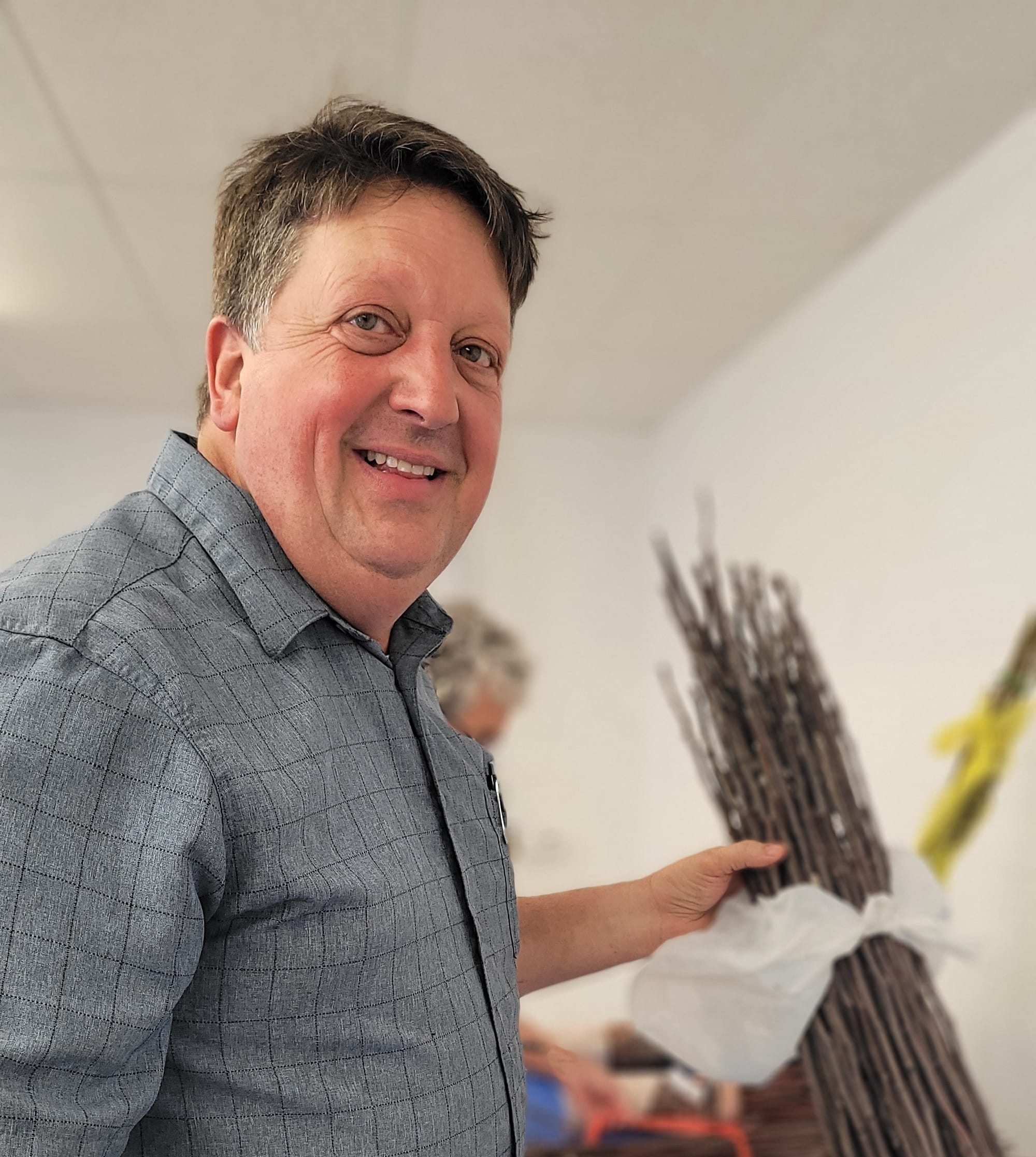
During the April 3 class, Vest explained that grafting is a horticultural technique that joins two different trees into one plant using a scion and a rootstock (the part that produces the root system). He noted that the scion largely determines fruiting characteristics while the rootstock influences the size, disease resistance, and hardiness of the resulting tree. “Rootstocks were originally designed to control insects,” Vest added. “Then we realized some of them also controlled tree size — and later, even diseases.”

Owner Lori Kuszmaul and her talented, professional floral designers would love to create something special for you.
Visit out store for readily available fresh flower arrangements, silk arrangements, plants, chimes and other fun & unique gifts.
We are located a half block from the stoplight. We are right around the corner.
Vest chooses a couple of varieties of rootstocks for the grafting classes each year, typically picking a dwarf and semi-dwarf variety. This year he has chosen to work with two common rootstocks: the MM.111 and the Geneva 41.
The MM.111 is a “semi-dwarf rootstock that grows to about two-thirds the height of a standard tree, roughly 20-25 feet," Vest said. "It’s hardy, stable, and resistant to apple woolly aphid — perfect for Virginia’s diverse terrain.”
The Geneva 41 is a “true dwarf variety that often bears fruit by the third or fourth year. It offers strong resistance to fire blight and produces trees small enough to maintain easily.” Vest explained that with this specific rootstock, and most dwarf varieties “because of its compact root system, it needs staking or trellising to support heavy fruit loads or high winds”

"Floyd Potter's Market — May 1–3, at the Floyd EcoVillage. Free admission. Make a night of it: dinner, drinks, dessert, & flowers for purchase. Staffed Children's Corner. Silent auction baskets benefit the school. Browse and buy handmade pottery directly from the makers. First 50 RSVPs receive a complimentary handmade cup!"
The first step of grafting is preparation. Scion wood is collected during the tree’s dormancy, which is typically late January through February. Vest said the pieces should be about pencil-thick, healthy, one-year-old wood with no plumping of buds. These scions then need to be stored properly until the day of grafting. Putting a damp fabric, like a sock, around the cut end and then placing the entire scion in a plastic bag to store in a refrigerator is Vest’s suggested method.
The grafting process itself can be completed from early March until the end of April. Vest said, “The goal is to align the living layer, the cambium of both, so that they can grow together and share nutrients. That green cambium layer under the bark is what must line up for a successful graft. It’s the living portion of the tree that conducts water and nutrients.”
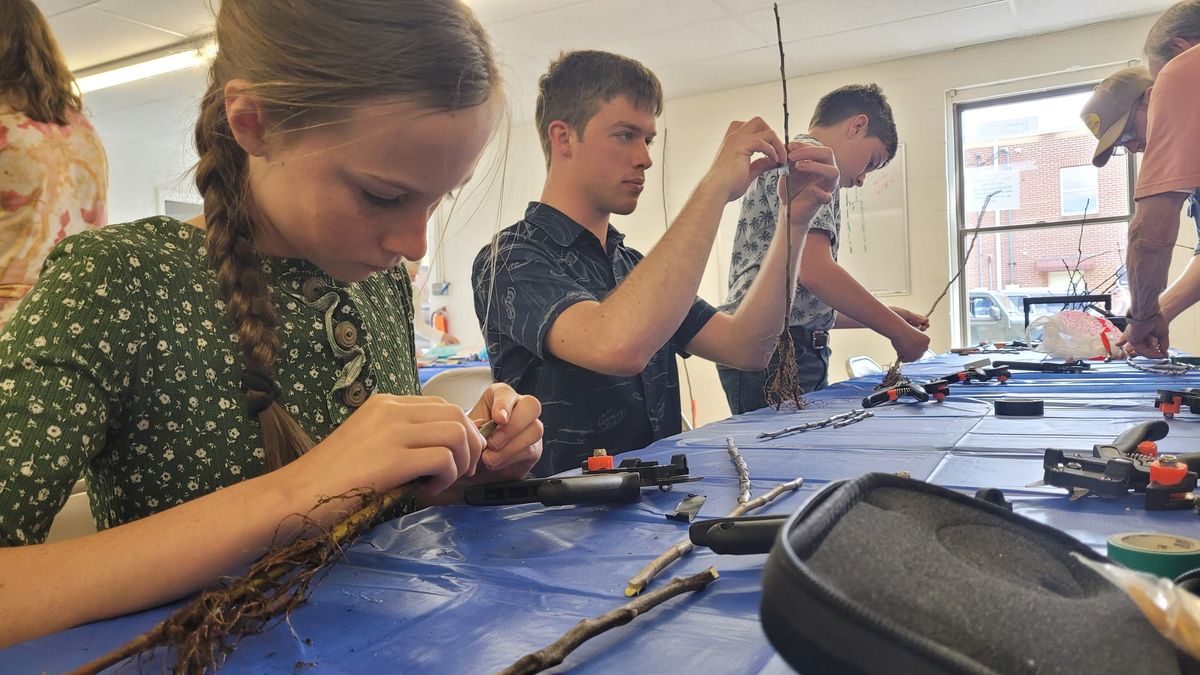
During the Extension class, each grafting participant gets a work station with grafting pliers, and electrical tape. Vest demonstrates the process, and explains the varieties of each apple scion and rootstock, then the students work with one tree at a time, matching the diameter of both scion and rootstock as closely as possible.
Vest noted that you only need one or two buds on each piece of scion. If you include too much scion, the amount of energy needed to join together and feed the new added material is overwhelming to the rootstock, and the new plant has a higher chance of failure.
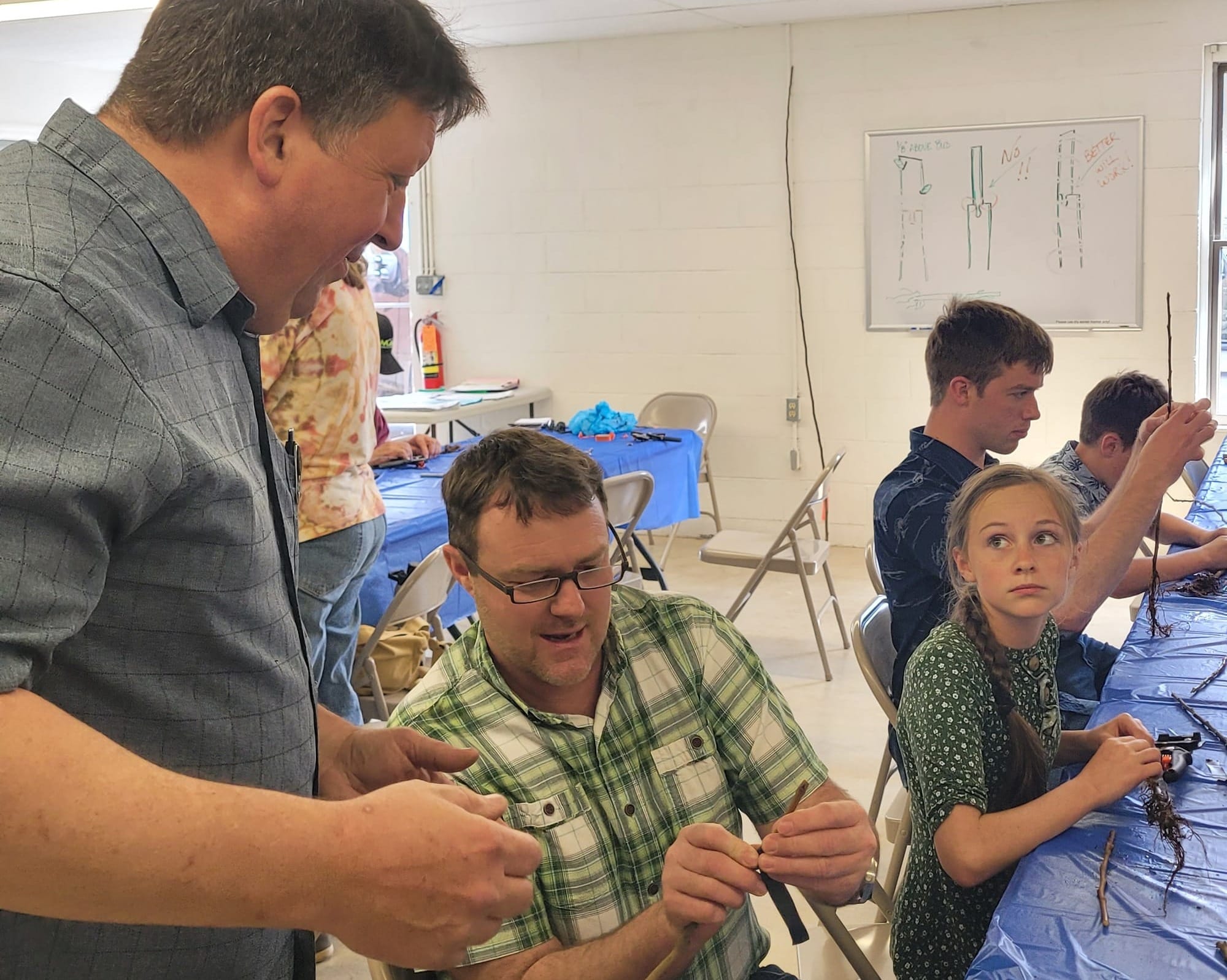
Using grafting pliers, students make an interlocking “puzzle-piece” cut, creating a male and female end. Vest said that you do not “push” the pieces together in order to avoid damaging the pieces. Instead, you should "slide them together, like you would a puzzle piece.”
Once the pieces are lined up, the graft should be secured with a four-inch piece of electrical tape. Starting from the bottom, students create a tightly wrapped union, which will then be covered with melted wax to seal out air and prevent drying. Vest explained that both grafting wax and toilet bowl wax works the same, except “one is $20 and one is less than $2.”
After the grafts are successfully taped and waxed, students label each tree with its variety, wrap the roots with a wet paper towel and wrap in a plastic bag.
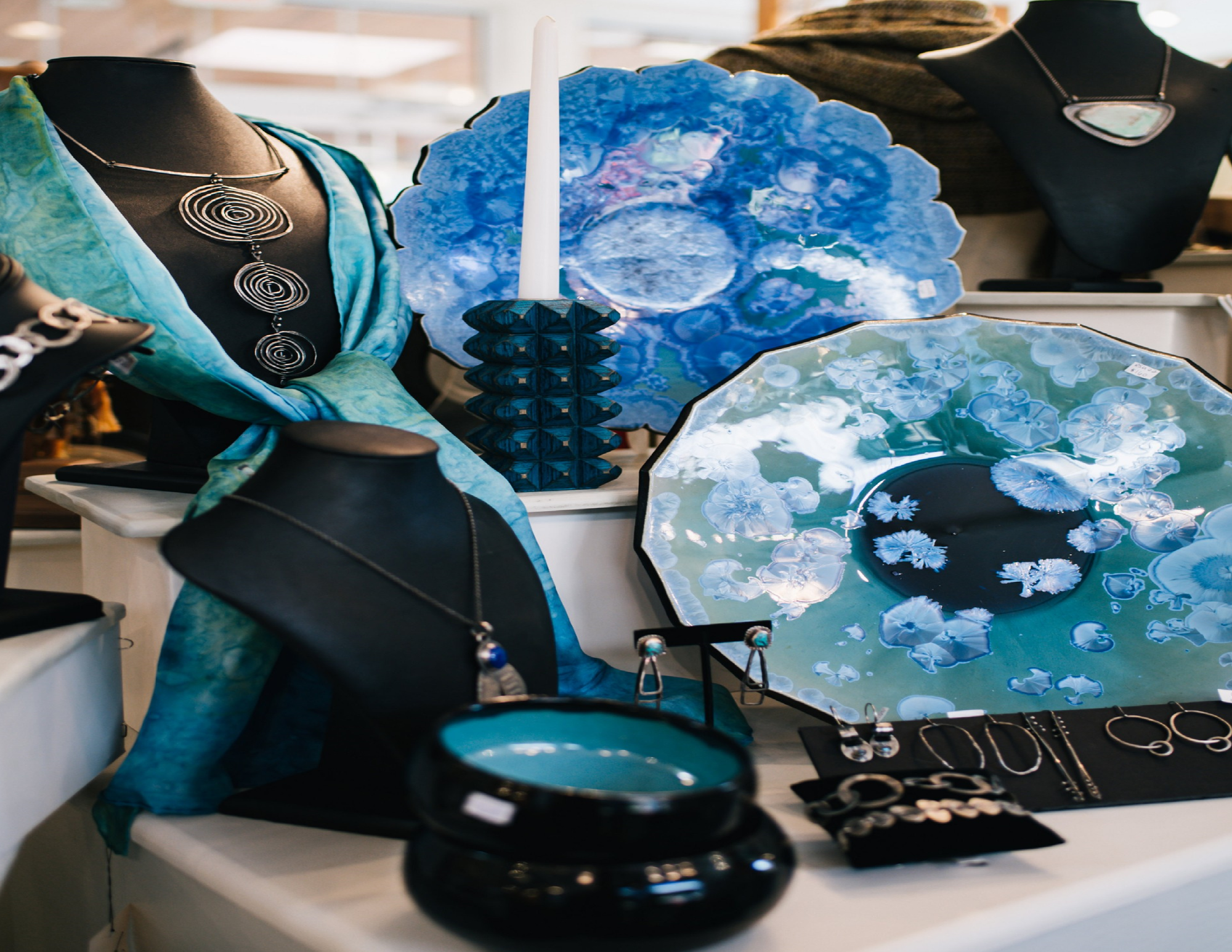
Troika Crafts is Southwest Virginia’s premier showcase of local and regional fine craft.
Find us at 203 S. Locust Street in The Station.
Learn more www.troikacrafts.com.
The trees are then placed in damp soil and stored in a dark location. The trees' caretakers need to make sure to remove any green growth from the dirt to the grafting tape. This is rootstock growth, and you want to take that off so that all the energy is directed past the new connection, and straight to the scion of the chosen variety.
Once grafted, the tree begins “knitting together immediately. The clock starts ticking,” Vest said. “In about 30 days, that graft union will be tight and fully established.” After those 30 days, Vest explained that you can put your tree out to an indirect light source to help prepare it for its new life outdoors.
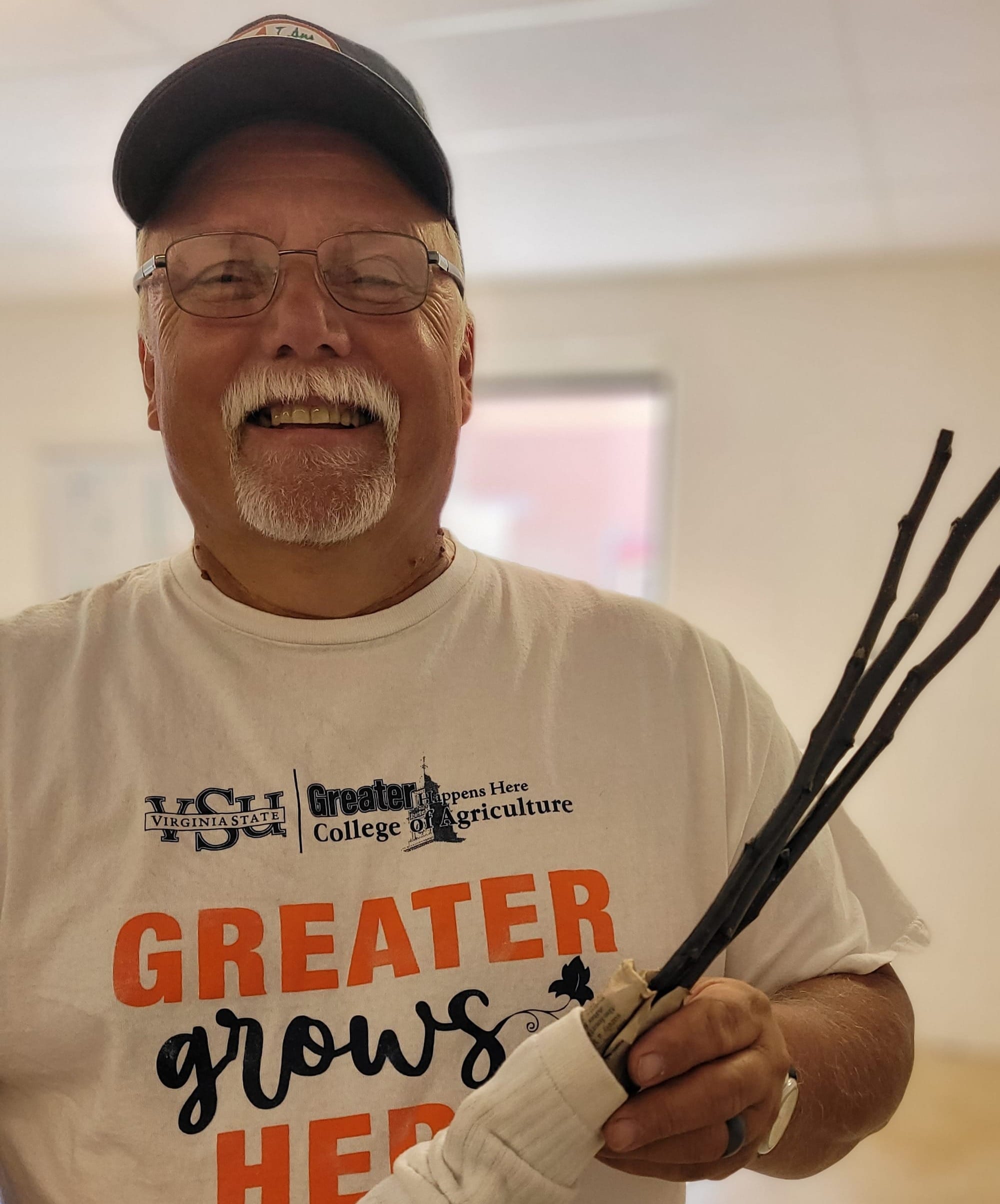
One motivation behind Vest’s workshops is sentimental preservation: allowing families to keep alive the apples from their childhood farms or heirloom varieties from local orchards. “By taking a cutting from that old tree and grafting it onto a healthy rootstock,” Vest says, “you’re keeping that tree alive for generations to come.”
Brent Noell from the Virginia State University Small Farm Outreach program brought a handful of apple cuttings to the April 3 class with hopes of grafting them. He said that some of the pieces were a part of a friend's tree, which his friend thinks is dying, and other pieces were from a tree gifted to his brother. "When he and his wife got married 45 years ago, my deceased father and my mother gave him the apple tree, and they planted it at their house. Now the apple tree is dying.” Noell brought the scions to the class to learn how to preserve these trees for his friends and family.
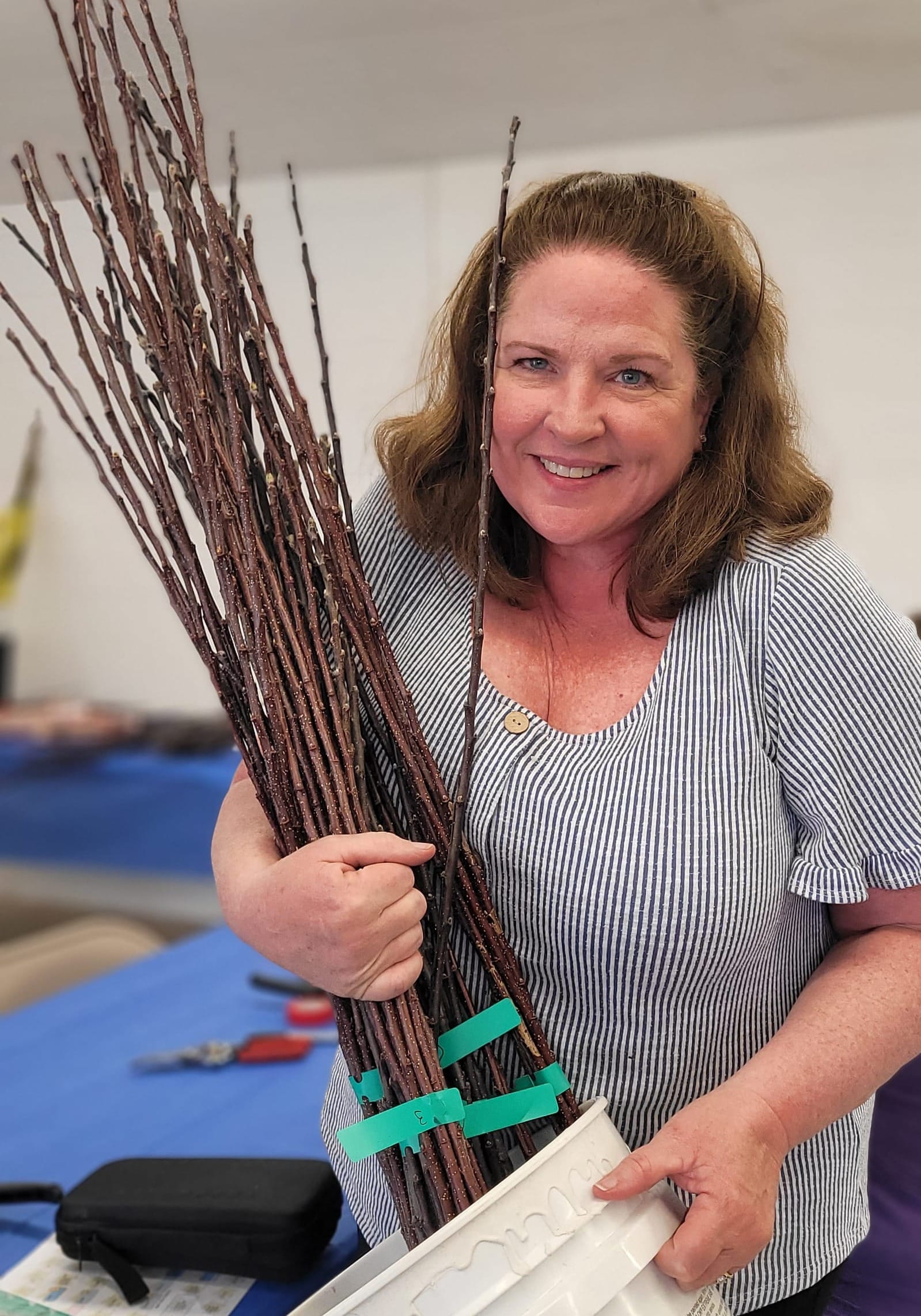
Christine Porterfield also brought her own scions to the workshop after inheriting a family farm and losing some trees to disease and age. She traveled from out-of-county with seven bunches of scions in the hope of cloning the failing trees.
Vest’s teachings through the Cooperative Extension also helps ensure that this knowledge and skill does not disappear. As he puts it, “If someone can take a small grafting skill home and grow food for their family and community, then we’ve accomplished something.”
Combat food insecurity in our community! Plenty! Farm and Food Bank provides fresh produce and pantry staples to those in need.
Learn more at www.plentyfoodpantry.org.
The final Apple Tree Grafting Class of the season will be held in the VCE-Floyd County Office at 209 Fox St. NW in Floyd at noon on Saturday, April 25. Cost to attend is $25 per person, and each participant will receive three trees to take home. Space is limited. Pre-register by calling (540) 745-9307 by April 23.