Warmer temperatures deliver the start of foraging season: Common local mushrooms
Foraging for wild mushrooms is not a rare hobby in Floyd. With many edible species that are abundant here, a knowledgeable person just has to keep an eye open while outdoors during the warmer seasons.
Emily Waddell Francisco remembers wandering the woods for Morel and Oyster mushrooms throughout her childhood. She eventually learned about the commonly foraged species found throughout Appalachia. She purchased a field guide from a local book store after having her first child in 2012. Waddell Francisco soon made it a “goal to start checking off every single mushroom that was local to us, edible or not. I wanted to meet them all.”
Waddell Francisco explained that she is self taught and peer reinforced. “When I began I always checked in with trusted resources and people when I was unsure, and I made plenty of wrong assumptions, like any beginner.”
Although many people say that there are tricks if you are hunting specific types of mushrooms, Waddell Francisco points out that “fungi are not shy. Though each type has a preference for how, where, and when the develop. You could find Turkey Tail in the woodpile, hunt Morels in the mulch of downtown Floyd, and spot Chicken of the Woods as you drive down U.S. 221 in multiple places most years. Getting yourself physically outside is a guaranteed good place to start.”
Here at the Bread Basket we are here for all your baked goods for the Holiday season: Pies, Sweet Bread, Cakes, Cookies and Sourdough Bread, Trays of Meat & Cheese, Cookies, and Sandwiches are prepared fresh made-to-order for each party. Bring this Ad in for a free loaf of bread for each 2 lb of deli products you buy. Call 540-745-5382 to place specials and orders-to-go.
With winter behind us, and the universe giving us some sunshine, the mushrooms have started to peek up from last autumn’s leaf litter. Francisco said that “right now we are seeing the first Morels of the season pop up.”
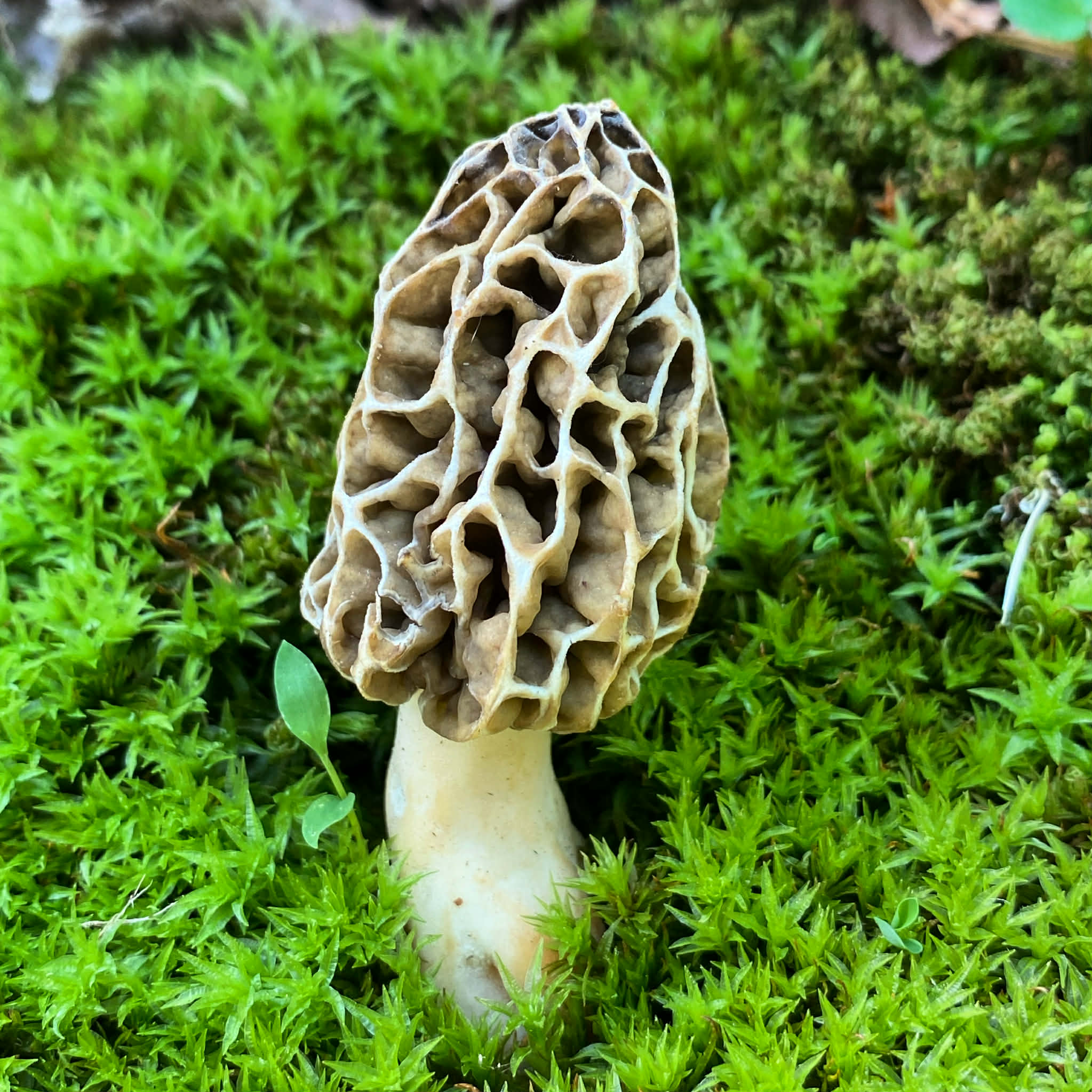
One website about Morel mushroom identification states, "the two most important features to examine when trying to identify a morel mushroom are the cap shape and whether the interior is hollow.” They note that “Morels have a very distinct cap. Fairly uniform, they appear ridged and pitted inwards. ”
Morels have been included in recipes from cream sauces to stir-fried asparagus dishes, but the majority of foragers who prepare them agree that they are delicious simply fried in butter.
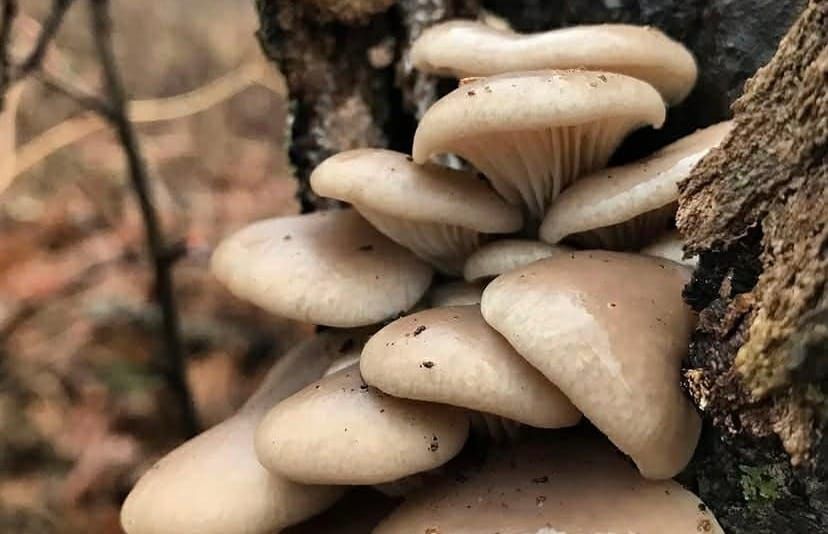
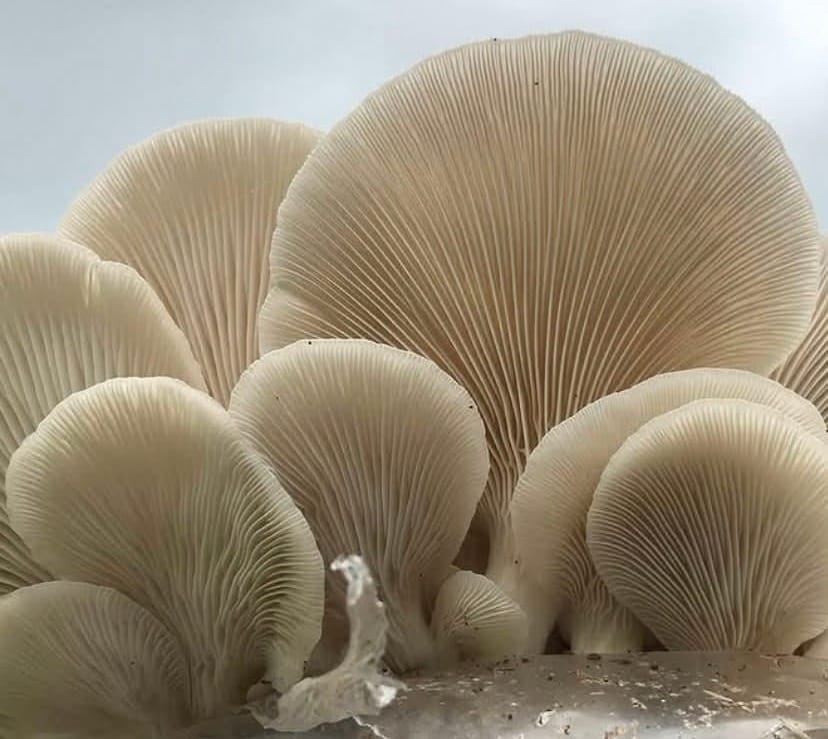
Oyster mushrooms can be identified as fan-shaped, grey, white, or beige in color and can be up to 10 inches across. They can be found growing in a shelf-like form with overlapping clusters of many smooth capped, gilled mushrooms emerging from one spot on dead or dying trees. Waddell Francisco said that her Oysters mushrooms have been doing well all winter. Coriander Woodruff said her favorite way of cooking these mushrooms is crispy skewers with Bok Choy.
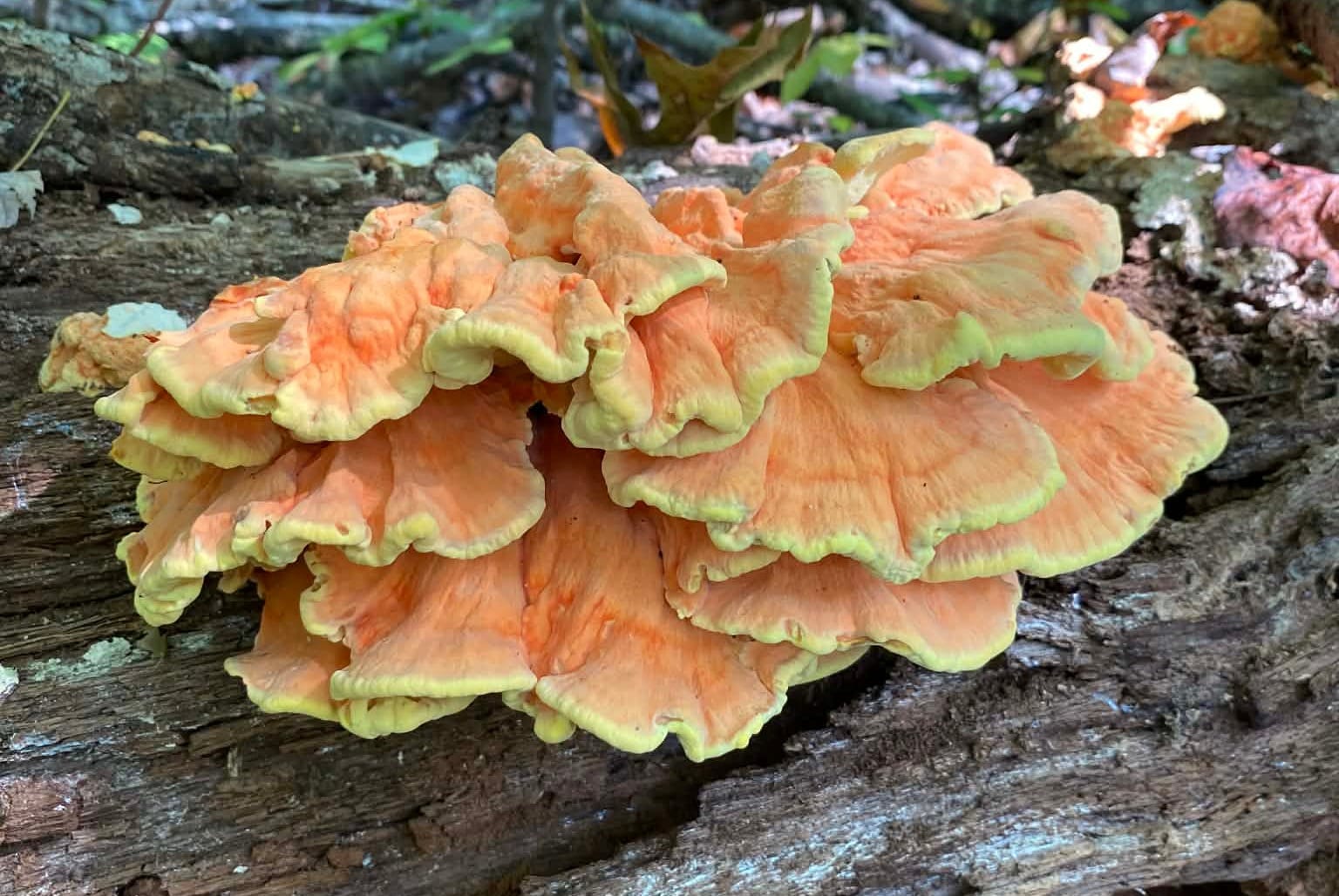
Local mushroom enthusiast Marcus Sowder said that his favorite edible mushroom to forage is Chicken of the Woods (COW). “It’s perhaps one of the more popular edible mushrooms due to its easily identifiable nature. They’re a polypore mushroom, meaning that instead of gills on the underside of the cap, they have pores. They also grow in a shelf-like manner, usually found on dying hardwoods. There are two types: cincinnatus and sulphureus. Laetiporus cincinnatus will be orange/yellow on the top and white undersides. Laetiporus sulphureus will be orange yellow on top and bright yellow underneath."

The old school building converted into three floors of almost all types of fabrics available, and craft supplies! Plus - an extra building of upholstery fabrics and supplies!
220 N. Locust St., Floyd VA
(540) 745-4561
sfabrics@swva.net
Sowder emphasized, "Caution should be taken when harvesting because when they grow on hemlock trees, they can absorb some of the toxins in the tree and will make you ill if consumed. Also most people confuse COW with the toxic Jack-o-lantern mushroom, which grows in clusters and has gills.”
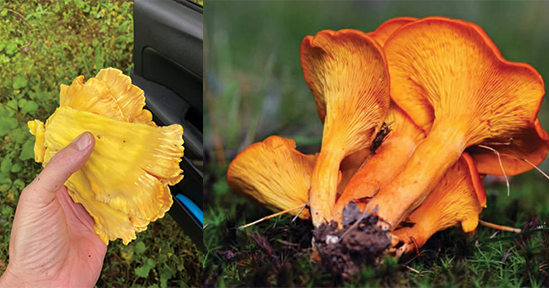
Learning how to identify polypore versus gilled mushrooms is one of the first very important steps of mushroom identification. The toxic Jack-o-lantern mushroom is sometimes misidentified as COW, but can differentiated because the toxic Jacks have gills that run from the stem to the outer edge of the bottom of the mushroom cap, and have multiple mushrooms growing from one spot. True COWs have small pin-like holes along the bottom of the cap that looks like pores of skin as you can see in the left image below.
Sowder's favorite way of preparing COW to eat is by “using it as a chicken substitute. It can be breaded and fried” which he prefers to "parboil for a few minutes before frying." He said it is "also delicious cut into strips and sautéd!"
Local mushroom hunter Katie Burke agreed that COW is a local favorite wild mushroom to cook with. She also said that it is a good mushroom to start foraging for as a beginner.

Call us today to schedule (540) 235-3095
"It's a big, orange shelf fungus, with a bright yellow spongy underside. If it looks like a classic mushroom with a stalk, it's not Laetiporus. If it has gills on the underside like a classic mushroom, it's not it either." In regard to preparation, Burke said, "I like to break into bite size pieces and sauté it in butter with a little salt. It has such a good flavor that that's all you need. Make sure to cook it plenty long, so that it's browned a bit on each side and tender inside. This is true of most mushrooms, and this one is no exception: they are easier to digest and less likely to cause digestive upset if cooked well. Serve with rice and greens and you've got a full meal."
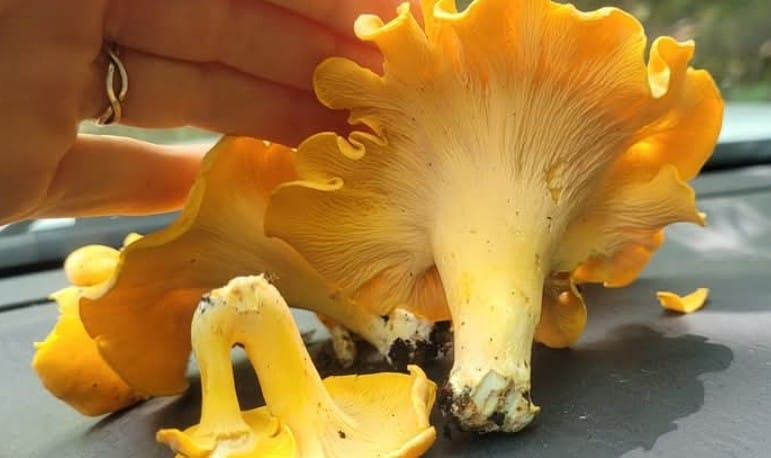
Chanterelle mushrooms are another bright orange edible mushroom that can be found on the shaded forest floors, and they tend to pop up close together but not touching. Often being less than two inches in diameter, this bright orange, false-gilled mushroom that smells faintly like apricots, and have been known to make a great addition to a cream sauce over pasta.
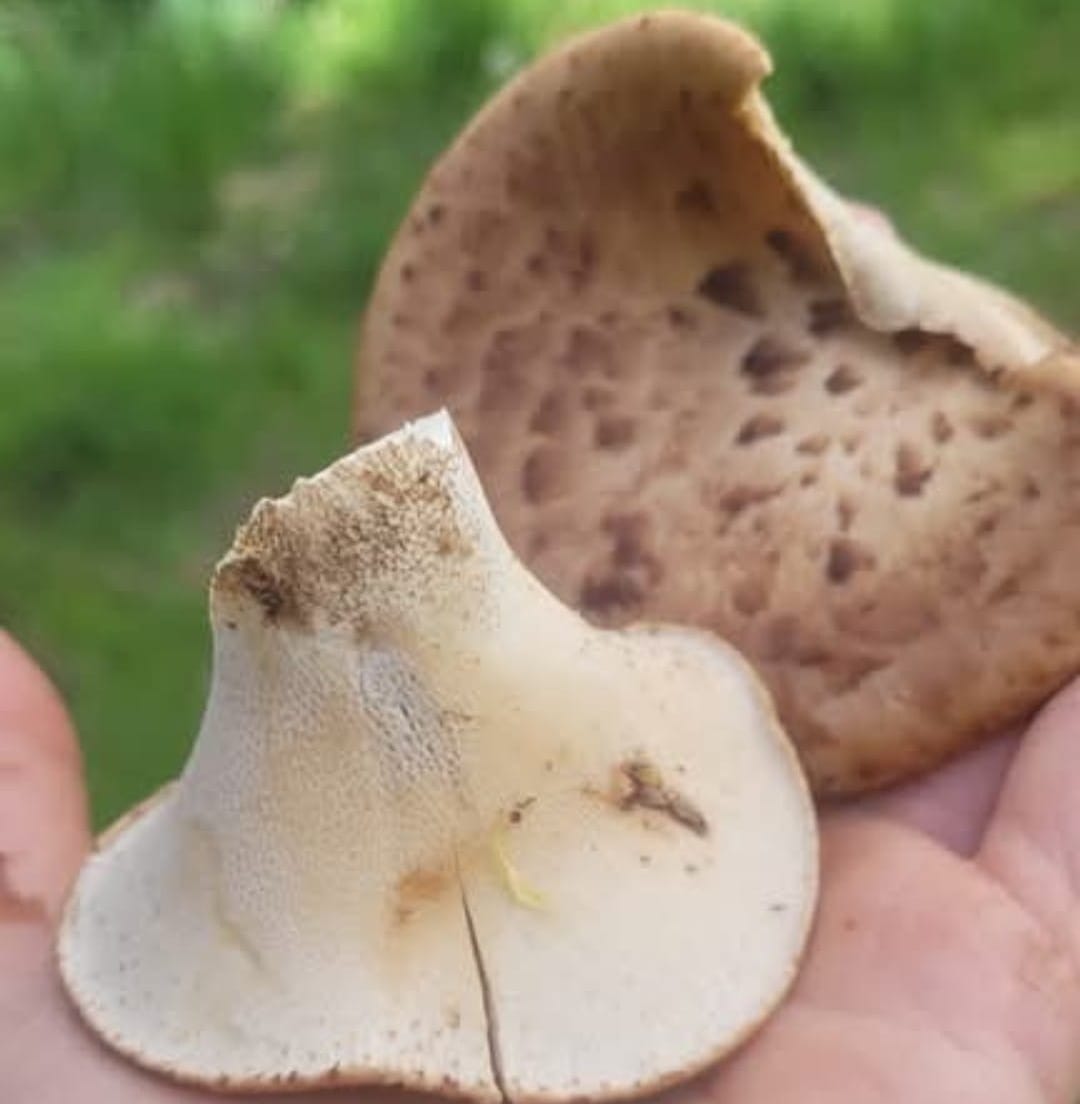
Dryad's Saddle, also called Pheasant Back mushrooms, are often out at the same time as Morels. They are an easily identifiable mushroom in both appearance and scent. Its smell is often described as cucumber and watermelon rind, which disappears quickly after cooking. This shelf polypore has a light beige base color with darker markings which look like the feathers of a pheasant. When preparing to eat, you want to use younger mushrooms, as this species gets tough with age and size. Cut into slices no larger than a quarter inch and sauté.
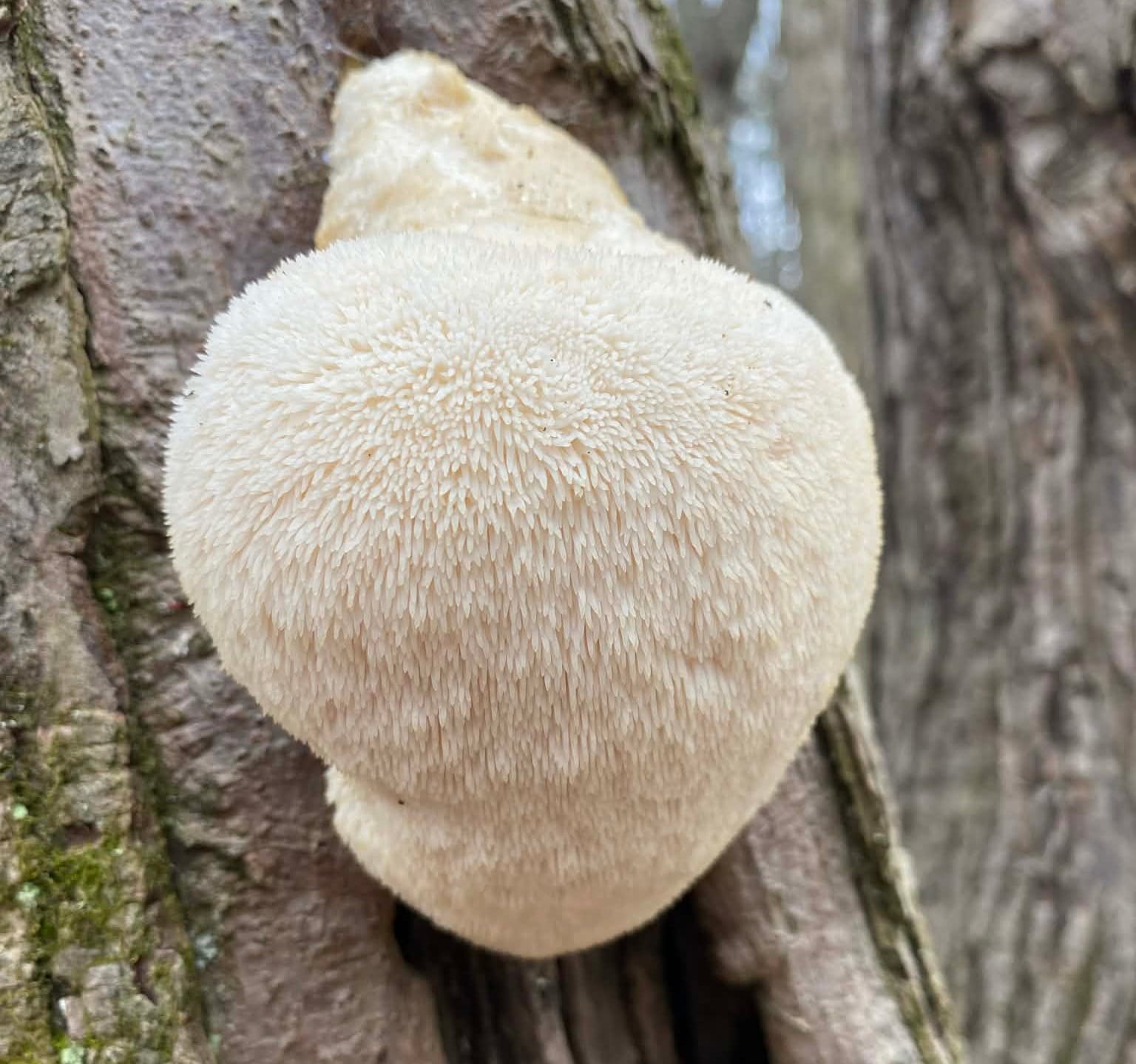
You can occasionally find a Lions Mane growing out of the side of a tree. The spherical "pom-pom" shape with downward drooping cones gives the appearance of short, spikey hair. This variety is not only edible but medicinal. Sowder said that these mushrooms like to "grow from hardwoods, mostly maple trees."
Identifying a Lions Mane mushroom is different then the previously mentioned ones because, according to Sowder, "instead of pores or gills they have what are called teeth. The clusters of teeth are a great way to identify them. They range in size from a baseball size to even as large as a basketball."
Sowder noted that Lions Mane is a "prime edible, meaning it’s one that is coveted and sought after. It’s illegal to forage for them in England due to being endangered but in America it’s fair game. It makes a great substitute for seafood (namely crab) and meat," he said.
Foraging for wild mushrooms is not a rare hobby in Floyd. With many edible species that are abundant here, a knowledgeable person just has to keep an eye open while outdoors during the warmer seasons.
When asked why is it important to only eat mushrooms that have been properly identified and cooked, Waddell Francisco said, “We generally like living, and staying that way, as humans. Death is a possible consequence of being uneducated about mushroom *or any foraging. You could also become best friends with your toilet.”
There are many deadly mushrooms, and ALL mushrooms must be cooked properly before ingesting. Floyd County Mushroom Hunters is a great way for beginners to learn to properly identify what edible mushrooms might be growing in their neck of the woods.
Never eat a mushroom that has not been properly identified and cooked. Even when a mushroom has been properly identified and cooked, some people report still having negative reactions to foraged mushrooms.
Waddell Francisco noted that there is “a lot of AI content that has hit the foraging scene right now with dangerous, inaccurate information.” She recommends buying a trusted book, and said to “always confirm through multiple avenues before you make dinner.”
If you like the flavor of a wild mushroom, but foraging is not for you, Matthew from Gnomestead Hollow both forages and grows Grey Oyster and Lions Mane. Gnomestead Hollow can be found at the Floyd Farmers Market each Saturday, under the Community Pavilion on South Locust Street starting at 9 a.m.