Historical Society program highlights 'Untold Stories of African American History'
“Some [enslaved] people who learned a trade were able to hire themselves out or be hired by their masters to do special projects... Black people did everything – they piloted cargo on boats, built railroads, worked in factories, made wine, whiskey and beer.”
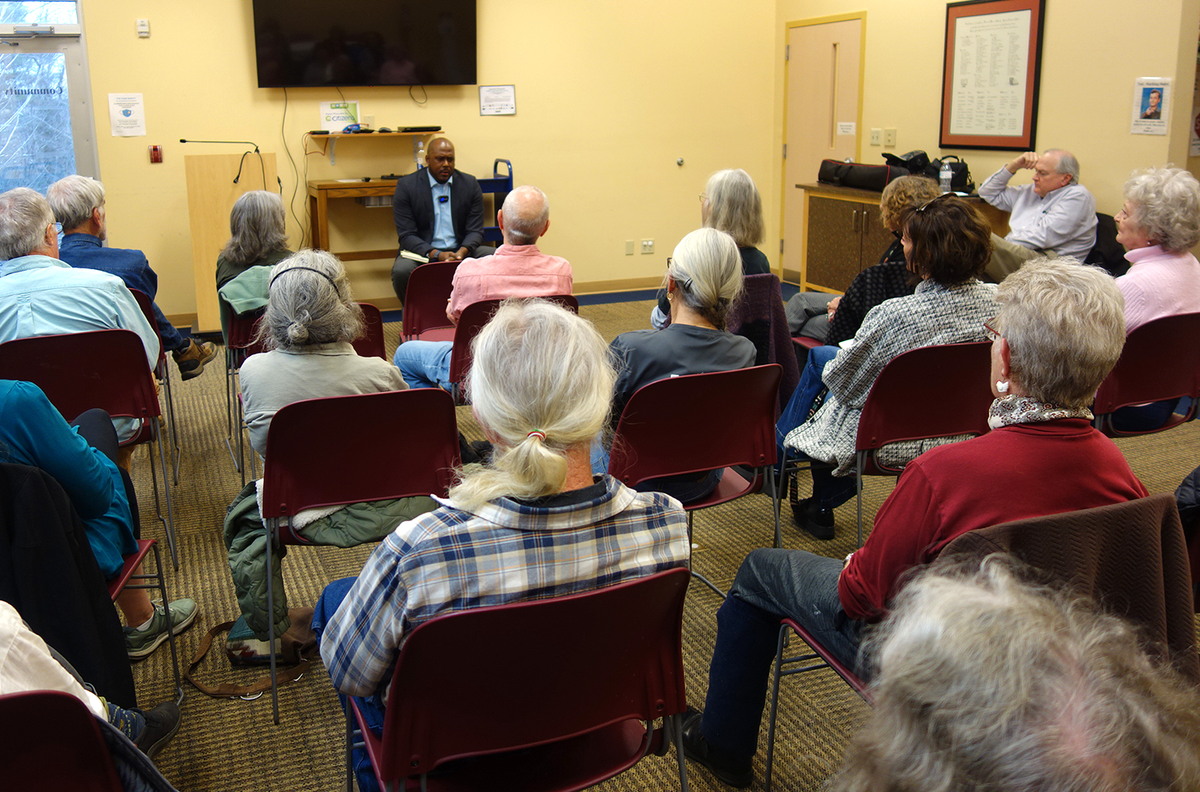
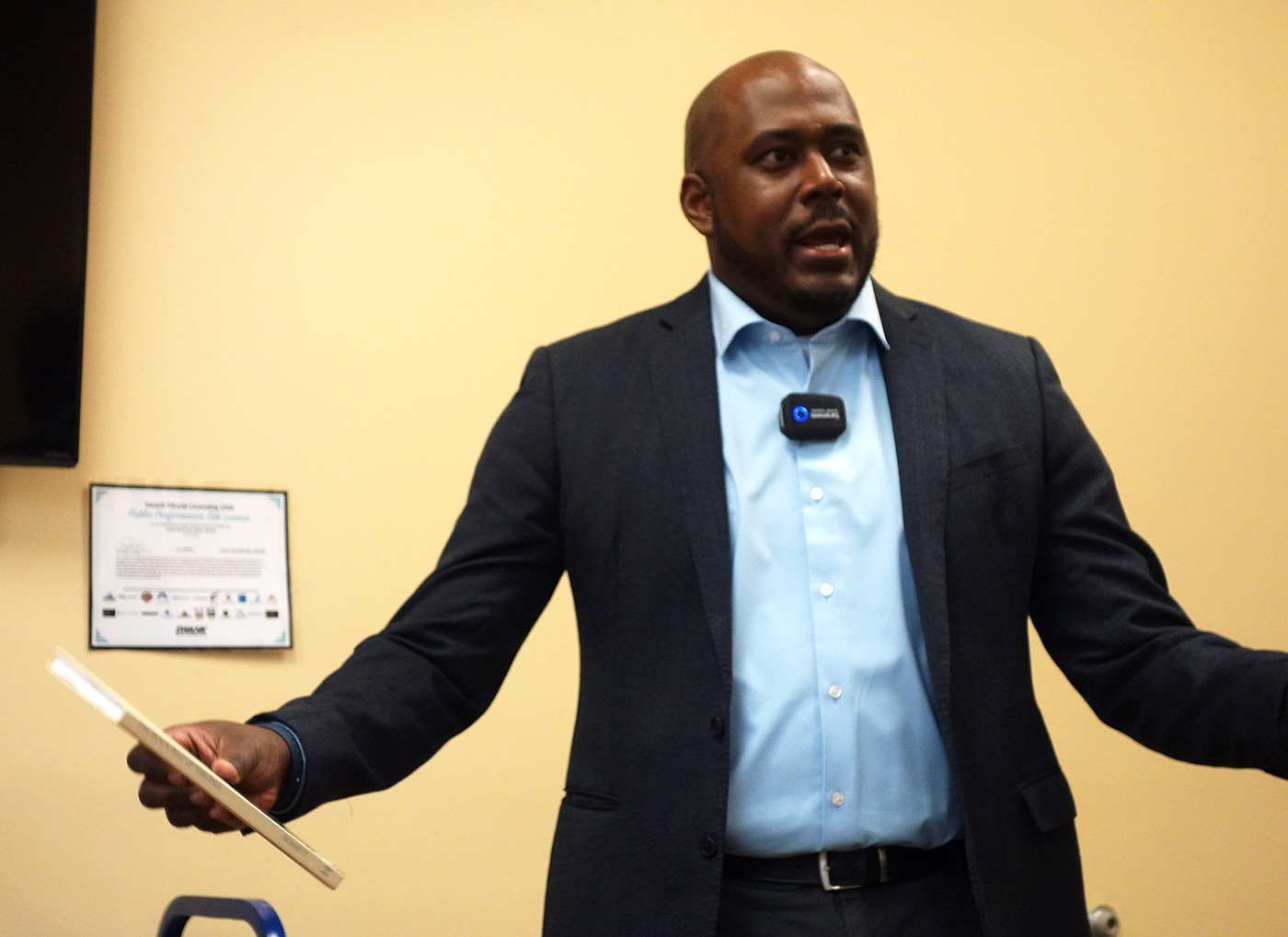
Author Jeffery Bennett was hosted by The Floyd County Historical Society for an Author Talk and book signing at the Jessie Peterman Memorial Library on Saturday. Bennett’s book, "The Black Belt of Virginia: Untold Stories of African American History," details the little-known history and contributions of Black Virginians.
Bennett, who holds degrees from Virginia Military Institute and Texas A&M University, grew up in Danville and currently lives in Alexandria. His writing has appeared in the Washington Post, the Baltimore Sun, the Virginian Pilot, Cardinal News, and the Danville Register and Bee. He was introduced to a full community room of attendees by Floyd County Historical Society president Gino Williams for the book talk on Feb. 21.
Before researching and writing his book, Bennett shared that his previous knowledge of Black people’s story in America started with slavery and emancipation and went through Jim Crow and the civil rights era to today. He didn’t know that from 1865 to 1877 there were more than 80 Black politicians throughout the state or that there were communities of free Black people living in Virginia during slavery. He didn’t learn that in school.
“Some Black people in the central and southwestern mountainous areas of Virginia formed free black communities during slavery. In rural Wise County a Black community of about 46 free people formed Black Mountain," which was informally known as Dan Fields. "Despite what may seem to be challenging circumstances, they were still able to farm and live abundantly. The leader of the community, Dan Richmond, previously enslaved by Jonathan Richmond in Southwest Virginia, was able to acquire 985 acres in Virginia and Kentucky,” Bennett said.

Owner Lori Kuszmaul and her talented, professional floral designers would love to create something special for you.
Visit out store for readily available fresh flower arrangements, silk arrangements, plants, chimes and other fun & unique gifts.
We are located a half block from the stoplight. We are right around the corner.
“The most common thing people conjure with slavery is Black people working in the fields and singing hymns. However, this wasn’t always the case,” he continued. “Some [enslaved] people who learned a trade, such as carpentry, masonry, or blacksmithing, were able to hire themselves out or be hired by their masters to do special projects,” Bennett said. Readings from his book outlined further skilled accomplishments. “Black people did everything – they piloted cargo on boats, built railroads, worked in factories, made wine, whiskey and beer.”
Someone in the audience asked about the meaning of the title of Bennett’s book, "The Black Belt." Bennett said that the term was popularized in the 1800s and early 1900s to describe areas with high Black population. He read an excerpt from Booker T. Washington’s book, "Up From Slavery," about the term. The famed educator and founder of the historic Tuskegee University, who was born into slavery in 1856 on a tobacco farm in Franklin County, wrote: “It was first used to designate a part of the country which was distinguished by the color of the soil. The part of the country possessing thick, dark and naturally rich soil was, of course, the part of the South where slaves were most profitable, and consequently they were taken there in the largest numbers.”
Bennett, who stands at 6 feet 3 inches, shared some family stories, including one about his enslaved third great-grandfather who was 7 feet tall, and who, because of his physical build, was used as a “stock man” to breed with women, an inhumane practice of the times that was imposed on Black women and men. Bennett figures that one of his African ancestral lines, discovered through an Ancestry DNA test, in the Senegambia region (Senegal and Gambia) is likely responsible for his family’s tendency to be tall. He has cousins who are 7 feet.

Providing a welcoming space where patients feel heard, valued and receive the care they deserve. Our combined services are customized to meet various health needs, whether it's an urgent care visit, a routine check-up, or specialized wound care, all while honoring the concepts that WIN Care stands for - Wholistic Integrative Networked Care.
Questions and comments were freely expressed during the hour-long talk. Many included regional and local references on Black schools, Black community displacement (including his father’s community in the Bellevue Hill area of Danville), segregation, integration, and shared ancestry. Bennett spoke of large regional family reunions attended by both Black and white people.
Some of the chapter titles in the 126-page book (with photos) include: "The Black Ancestor of Europe’s Kings and the First Twelve Enslaved Africans," "The Black Church and its Significance," "War," and "After the War," which reports that “Black people are noted as fighting in every war in American history.”
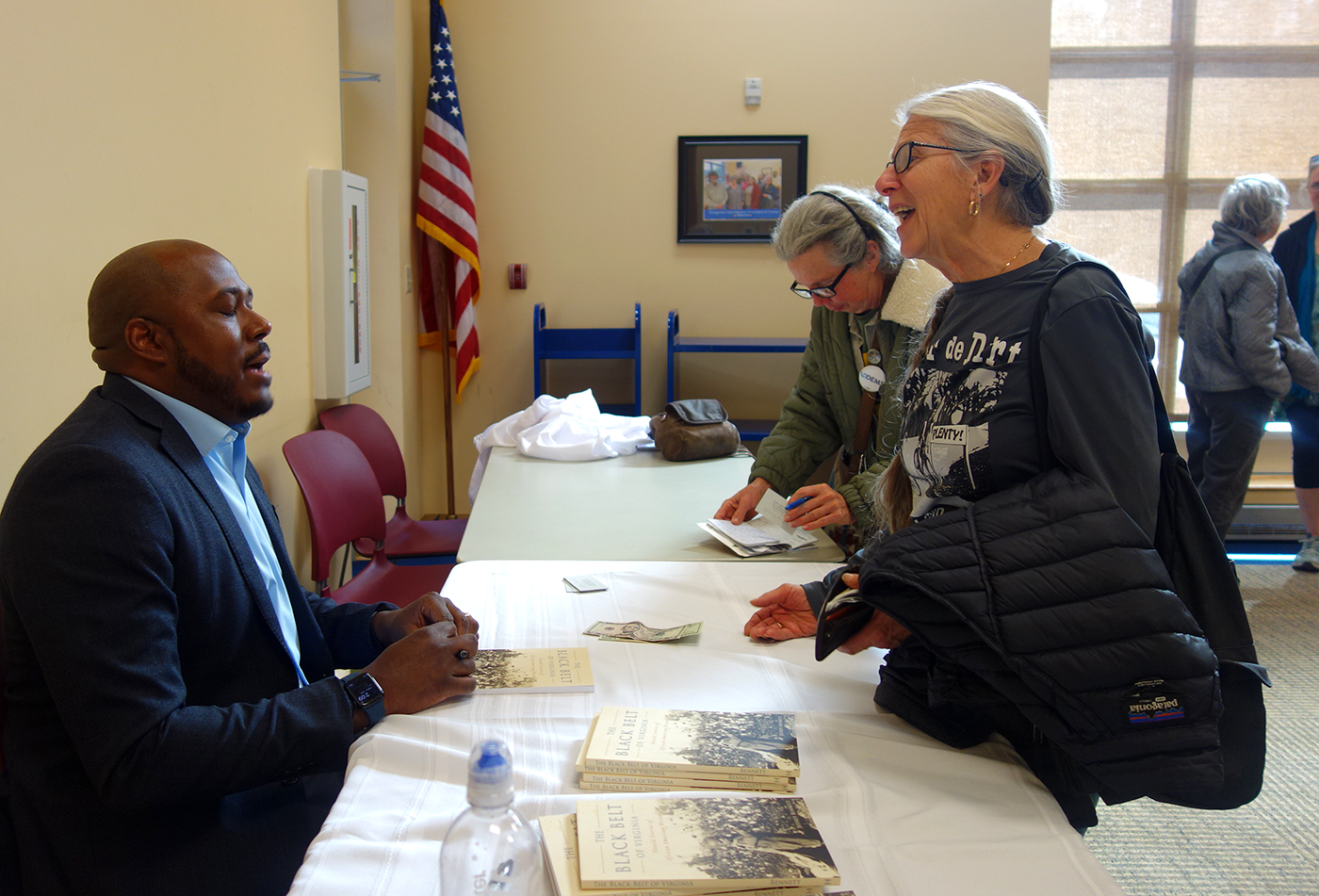
Bennett closed with an inspiring family story taken from one of the essays in the second part of his book, "The Land My Mother Left Me." His maternal second great-grandfather, who was born a slave, first purchased a 22-acre tract of land in 1904 and over time acquired a total of 160 acres. When he died in 1941, he owed creditors and could have sold part of his land to pay off his debts, but the land was sold in its entirety without his family’s consent. Although up to 98% of Black landowners were divested of their land, in 1943, the Bennett family appealed to the Virginia Supreme Court and was able to win back a 50-acre tract of their land, with the rest of the acreage being sold to satisfy the creditors.

At Edward Jones, we deliver candid guidance and personalized investment strategies to help you plan for and realize the possibilities of your future — for you, your family and generations to follow.
Bennett writes that the land is priceless to him. “My family planted corn, kale (which they called creasy salad), green beans, turnips, tomatoes, and potatoes. They packed preserves. They harvested tobacco. They had pig roasts and shared food with the entire community. My mother gathered apples from the apple tree and made my favorite breakfast, fried apples… I thought every kid had a grandma and grandpa with a farm oasis for them to run around.”
Bennett's book is available for purchase on Amazon, most bookstores, and can be checked out at the Jessie Peterman Memorial Library in Floyd.