Spring is Hatching Season for Spotted Lanternflies
Adult SLFs "are roughly one-inch long and half-inch wide with large, visually striking wings," USDA said. They have "brown forewings with black spots at the front and a speckled band at the rear. Their hind wings are scarlet with black spots at the front and white and black bars at the rear."
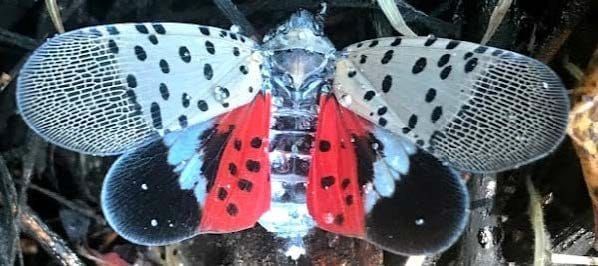
This spring, keep an eye out for the Spotted lanternfly (SLF) in Floyd. SLF is an invasive insect pest in Virginia that damages grape vines, fruit trees, maples, and a wide variety of other plants by feeding on sap.
Spotted lanternfly was originally found in Virginia in 2018 and has now been found in more than half of Virginia’s counties, including Floyd, according to the Virginia Department of Agriculture and Consumer Services.
Spotted lanternfly spreads primarily by hitchhiking — laying egg masses on vehicles, trains, and outdoor materials. This unintentional movement allows it to rapidly expand into new areas.

From custom homes and renovations to decks and additions, Esensten Construction delivers dependable craftsmanship across Floyd and the surrounding areas. Locally owned, Class A licensed, and built on integrity—every project is done right, start to finish. Call today to discuss your project.
540-232-9534
Residents can help slow the spread of spotted lanternfly by:
- Checking vehicles and outdoor items before leaving infested areas
- Killing any spotted lanternfly life stages (eggs, nymphs, adults) found
- Managing infestations on their property
- Reporting this pest to VDACS using the Invasive Species Reporting Tool
"Since SLF is highly mobile and can easily move from tree to tree, or from ground level to up into trees, it is important to monitor SLF populations on a repeated basis during the year. Do not move any infested materials to limit the spread of this pest. Be aware that SLF will likely move from unsprayed areas into treated areas after treatments dissipate," VCE states.

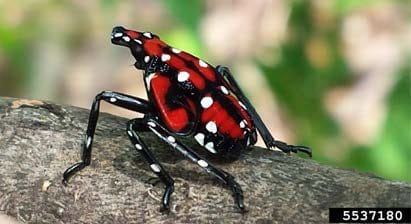
SLF egg masses can be found on branches and trunks of plants from November to April before they hatch into nymphs, which are black with white spots. In late June to early July, nymphs adopt a red coloration in addition to black, maintaining their white spots. Mid-July sees the return of adult SLFs, which are identifiable by their grayish-tan coloring with black spots.
The U.S. Department of Agriculture (USDA) said newly laid egg masses, which hold 30-50 eggs, as "wet, gray putty before turning dull and brown, mirroring a smear of cracked mud. The one-inch long egg masses can be seen in fall, winter, and spring on a variety of smooth surfaces, such as trees, bricks, stones, fences, grills, equipment, and vehicles."
Adult SLFs "are roughly one-inch long and half-inch wide with large, visually striking wings," USDA said. They have "brown forewings with black spots at the front and a speckled band at the rear. Their hind wings are scarlet with black spots at the front and white and black bars at the rear. Their abdomen is yellow with black bars."

Citizens' SmartTown Community Wi-Fi helps EMS, Rescue, First Responders, and YOU get connected when you need it most. SmartTown is designed to provide Wi-Fi coverage in areas with poor or non-existent cellular coverage. Just another way Citizens connects people and communities!
Management Tips from VCE
SLF can be successfully controlled in yards, landscapes, and other public areas with Best Management Practices from the Virginia Cooperative Extension (VCE). The key for success depends on the proper timing of applications and the use of effective chemicals or biological controls. Destroy egg masses during winter to reduce the number of nymphs in spring.
- Contact and systemic insecticides are not effective against egg masses. Use dormant oil as a spot spray on egg masses in late winter and before bud break in the spring. Dormant oil will not prevent egg laying by SLF.
- Use contact insecticides such as bifenthrin, zeta- cypermethrin, carbaryl, and malathion as spot sprays on nymphs and adults seen on the trunk, branches, and foliage of plants. Repeat spot sprays as needed.
- Use neem oil, insecticidal soap, or pyrethrin sprays for organic control against nymphs and adults, but these will likely need to be repeated throughout the season.
- The systemic insecticides dinotefuran and imidacloprid can be used as trunk sprays, trunk injections, or soil drenches, depending on the label.
- Protect pollinators. Do not use oil drenches if trees and shrubs are in flower or if flowering plants are planted at the base of the tree or shrub.
- Some horticultural and paraffinic oils can be used on egg masses during the growing season. Test on a few branches first to make sure they do not harm the tree. Treat the entire tree if no damage is observed after two weeks.