The History of One of Floyd's Century Farms
Only 10 farms in Floyd County are currently registered as “Century Farms,” but many others may be eligible. Farm families receiving the designation are awarded a certificate signed by the Governor and an outdoor display sign.
When Janet Slusher Keith shared information about Virginia Century Farms at a Floyd County Historical Society meeting, she also shared her family’s strong attachment to life on a family farm.
Her family’s farm on Laurel Branch Road — The "S" Farm — has been passed down in the family for seven generations. Descendants of Christopher Slusher (originally Christophel Schlosser) have farmed it continuously since 1802. As a Revolutionary War veteran, he received a grant to survey and purchase land west of the Proclamation Line of 1763. Janet’s son, Kevin Keith, currently owns and runs the family farm that was part of Christopher’s original 600-acre purchase.

602 East Main Street
Floyd Virginia
540-745-8686
Any Virginia farm which has been continuously farmed for at least 100 years by the same family may be registered as a “Virginia Century Farm” in recognition of “the hard work and dedication of generations of Virginia farm families who have sustained their land, provided food for their communities, and contributed to the Commonwealth’s economy.”
Janet noted that only 10 farms in Floyd County are registered as “Century Farms,” but she believes that many others may be eligible. Farm families receiving the designation are awarded a certificate signed by the Governor and an outdoor display sign.
Information about the “Virginia Century Farm” program may be obtained by contacting the Office of Agriculture and Forestry Development, Virginia Dept. of Agricultural and Consumer Services, 102 Governor St., Richmond, VA 23219. The application form may be downloaded by contacting joyce.blankenship@vdacs.virginia.gov subject line: Century Farm Application.
Like most farm children of the 1900s, Janet, her sister and brother helped out daily with whatever was needed. Since their parents, Freeman and Ruth Gardner Slusher, ran a dairy farm, that meant milking cows, cleaning the Grade-A dairy barn, and doing any chores related to producing food for the family and feed for the cattle. Janet readily admitted that her least favorite jobs were hauling up rocks from newly plowed cropland, chopping thistles in pasture, and hoeing long rows of field corn.

Strong bodies build strong lives. At Floyd Fitness, we create a space where movement transforms confidence, health, and energy. Whether you’re starting fresh or chasing new goals, our team and community are here to support you every step. Join today and see what strength feels like!
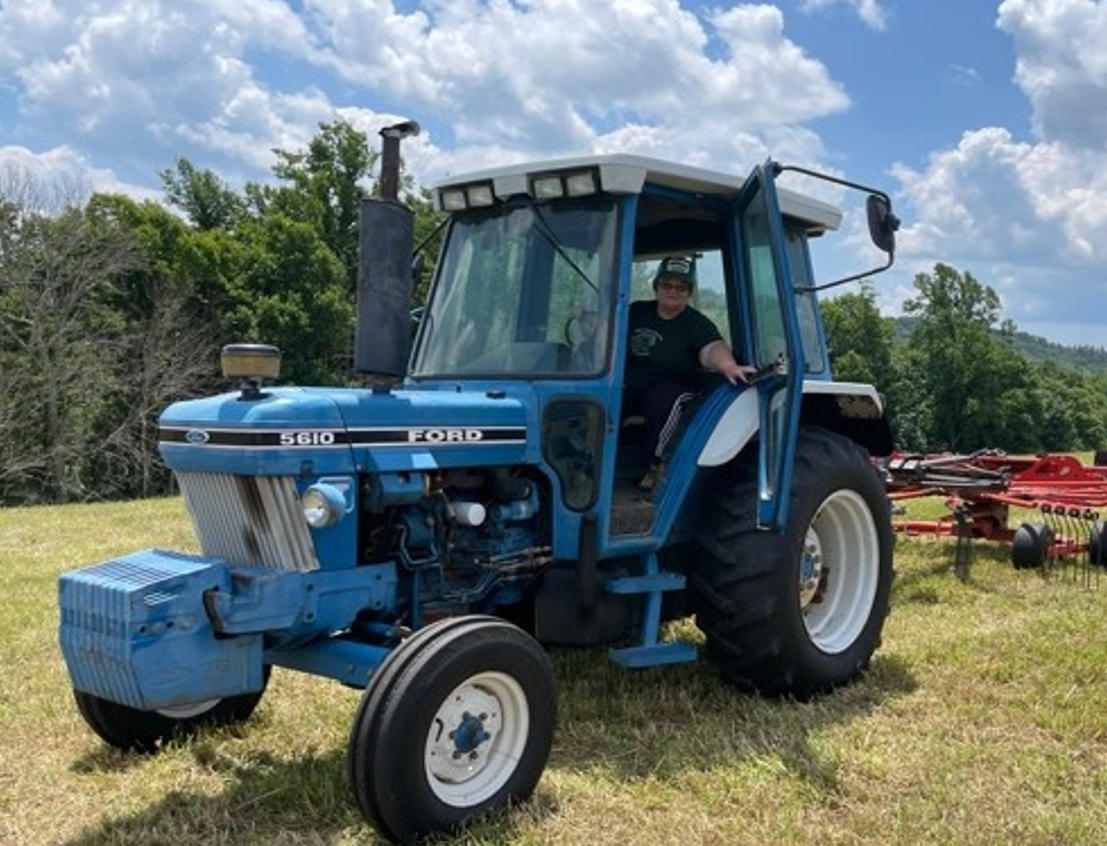
By age six, Janet was on Freeman’s new Ferguson tractor, slowly guiding it in hay meadows as Freeman loaded hay bales onto a trailer. She recalls, “That was before I could reach the clutch and brake pedals without having to stand up.” By the age of 10, she was raking hay — something she has continued to do for seventy years. In the years since Kevin purchased for her a cab-over tractor with power steering and air conditioning, she contends that “raking is not as hard a job as it used to be.”
Both sets of Janet’s grandparents were born in the decade after the Civil War, and her parents were young adults during the Great Depression. Her paternal great-grandfather, Oliver Perry Slusher, was a Civil War veteran who returned to the farm and developed procedures which helped other Floyd County farmers. He experimented with wheat and developed a superior variety which he sold to other farmers to help them improve yields. He grafted apple shoots onto crabapple rootstock and used plentiful locust trees for long-lasting fence posts.
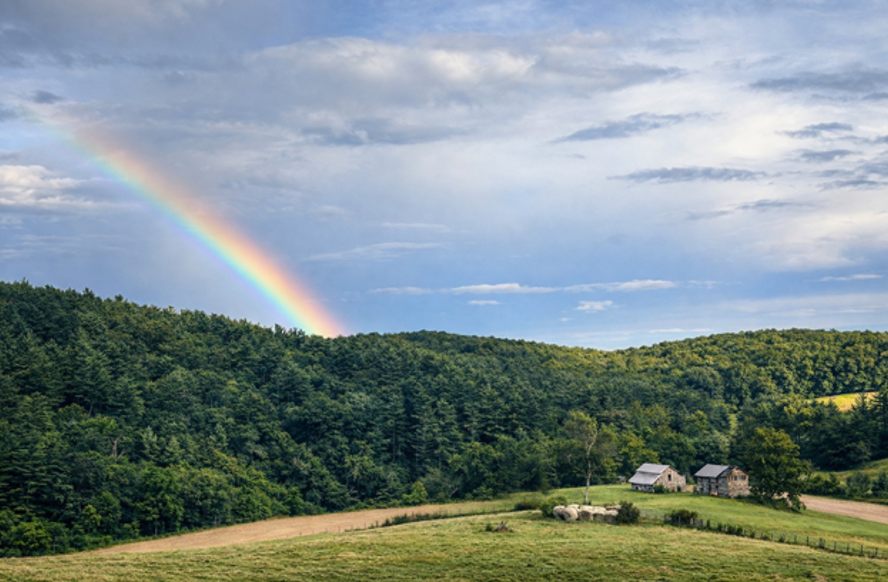
Links to Oliver Perry Slusher’s time still stand: his barn and the tall 150-year-old oak trees which now provide shade for Kevin’s beef cattle — as they did for cattle belonging to Janet, her father Freeman, his father George William, his father Oliver Perry, and his father Jacob who was deeded the acreage from Christopher in 1837.

We offer locally sourced, insect and rot resistant hemlock, and lots of other species for just about any project.
We also can provide firewood, kindling, mulch, sawdust, and shavings.
Inside we produce paneling and flooring in various, often rustic local woods.
Come by or call Stacy
276-692-8754
Janet’s maternal grandparents, Albert and Lillie Helms Gardner, farmed and ran a boarding house for Willis Agricultural High School students in the 1920s through 1930s. Many consider their barn to be the oldest surviving structure in Willis. Albert raised hay and grain which he stored in the barn to feed his own cattle and horses as well as the horses of their ten teen-aged boarders.
Ruth Gardner’s chores included feeding the chickens, bringing in the eggs, gathering vegetables from their large garden, carrying perishables to and from the springhouse, and replacing the straw in their numerous beds’ straw-filled ticks (fabric bags). She would carry each tick to the barn loft, empty the flattened straw (which would become feed or bedding for cattle) and fill each with fresh straw. Janet recalled hearing Ruth often say that her “best night’s sleep was on a freshly filled straw tick.”
Following their marriage in 1937, Freeman and Ruth lived on Penn Avenue in the Town of Floyd but continued small-scale farming. Ruth raised chickens, and they milked a few cows. Freeman eventually became assistant postmaster of Town of Floyd Post Office. He worked 10-12 hours per day, six days a week and saved his salary of $95 per month to buy his father’s portion of Jacob’s acreage. Ruth sold eggs and butter to meet their living expenses. In 1943, Freeman decided to farm full time, and they moved to the 1818 Jacob Slusher house on the farm.
Ruth continued to sell eggs and butter to buy necessities and meet expenses. Janet was born while they lived in this home. They both milked cows in an open lot and saved their “milk money” to build the 1949 cinderblock dairy barn and brick house that is now home to their grandson Kevin Keith’s family.
In addition to The "S" Farm, the following farms are also designated Century Farms:
- Akers Family Farm
- Boothe Family Farm
- Greasy Creek Farm
- Huckleberry Dairy
- John F. Smith Farm
- Meadow Creek Farm
- Palmetto Glen Farm
- Slusher Valley Farms
- Happy Hills Farm