Traditional Floyd coverlets showcased during 'Woven Legacies' presentation
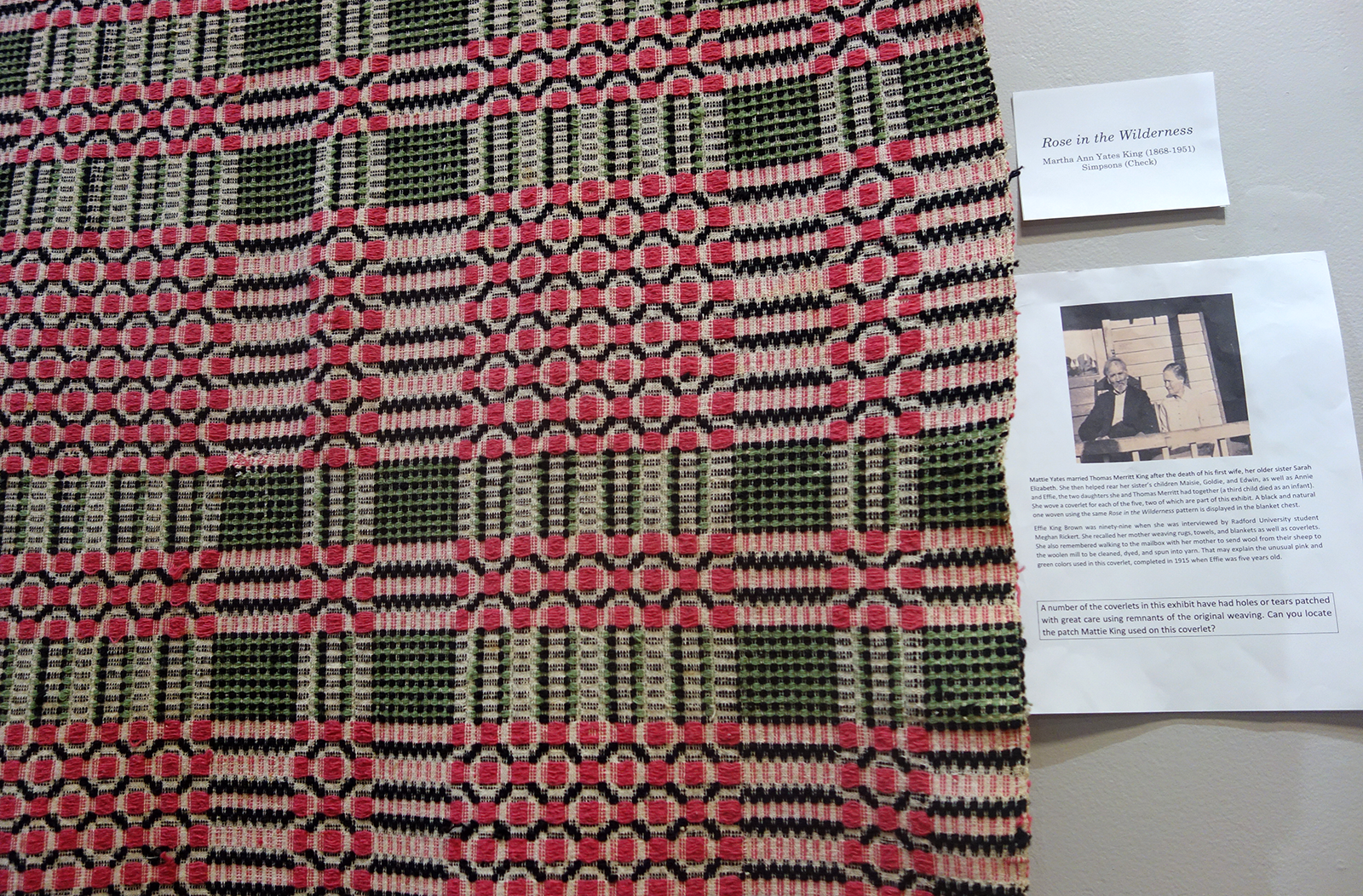
One of the coverlets highlighted from the Old Church Gallery’s "Strings Attached" exhibit was a colorful Rose of Wilderness pattern made by Mattie King, the mother of the renowned Floyd educator and quilter, Effie King Brown, who passed away at the age 101 in 2012.
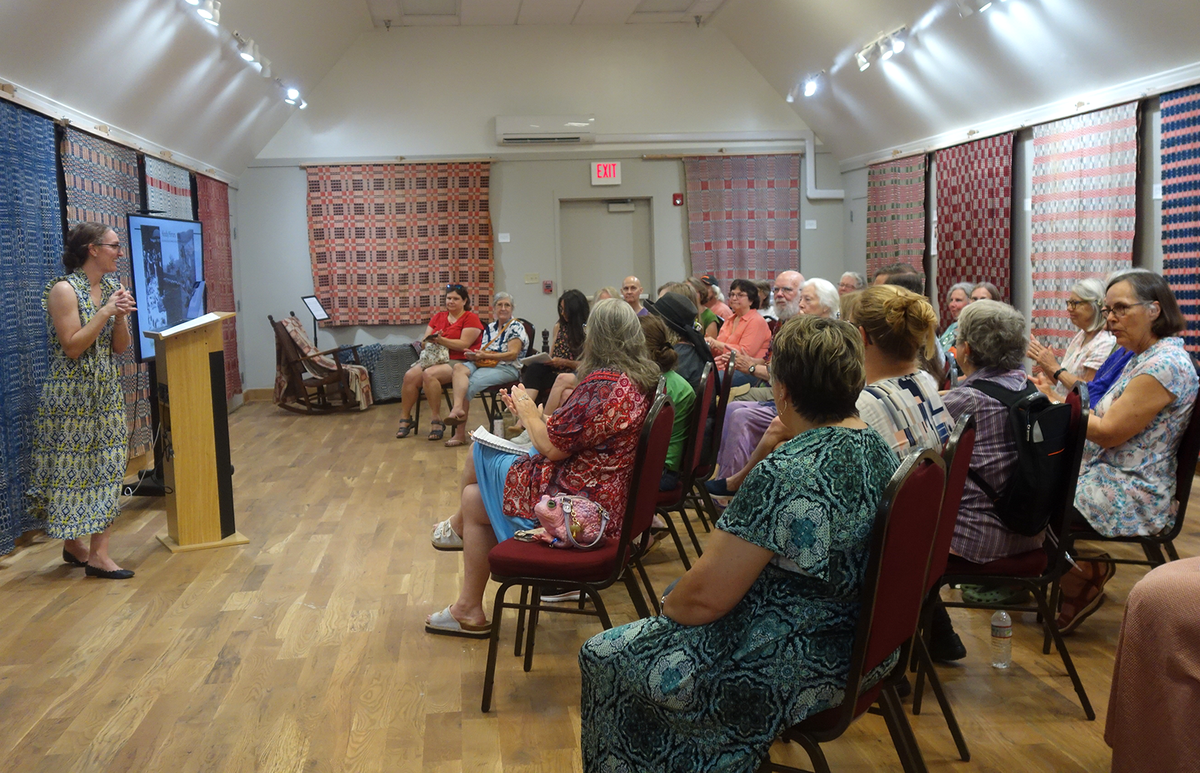
The Floyd Center for the Arts hosted Ashley Webb, executive director and curator of collections and exhibitions for the Historical Society of Western Virginia, to present a lecture titled, "Woven Legacies: Stories, Traditions, and the Material Culture of Appalachian Overshot Coverlets."
The free public lecture took place on Sept. 2 in the Hayloft Gallery where the Old Church Gallery’s historic coverlets exhibit, "Strings Attached: The Enduring Appeal of Overshot Coverlets," was on display.

Join our team of vendors every Saturday from April through November from 9am – 1pm. You’ll find delicious treats, unique crafts, lovely music, sweet conversations, and more. Let us come together in our vibrant small-town farmers market with the opportunity to mingle with neighbors and friends, old and new.
Webb spoke of the geometric patterns and techniques used in home weaving decorative woven bedcovers. "Mill-powered looms came into existence in the 1850s and ‘60s with the Civil War, but not in Appalachia," Webb said. She explained that the tradition of home weaving held strong in this area and throughout Kentucky, North Carolina, and Tennessee. "The tradition passed from mother to daughter, even into the 1900s," she said.
Webb presented a digital slide show of photographs that included types of looms used for home weaving, which were generally referred to as barn looms because of their large size. She explained the meaning of overshot, which "uses a cotton or linen warp, or the threads that run vertical, with a colored wool weft that overshoots several warp threads to create a specific pattern."
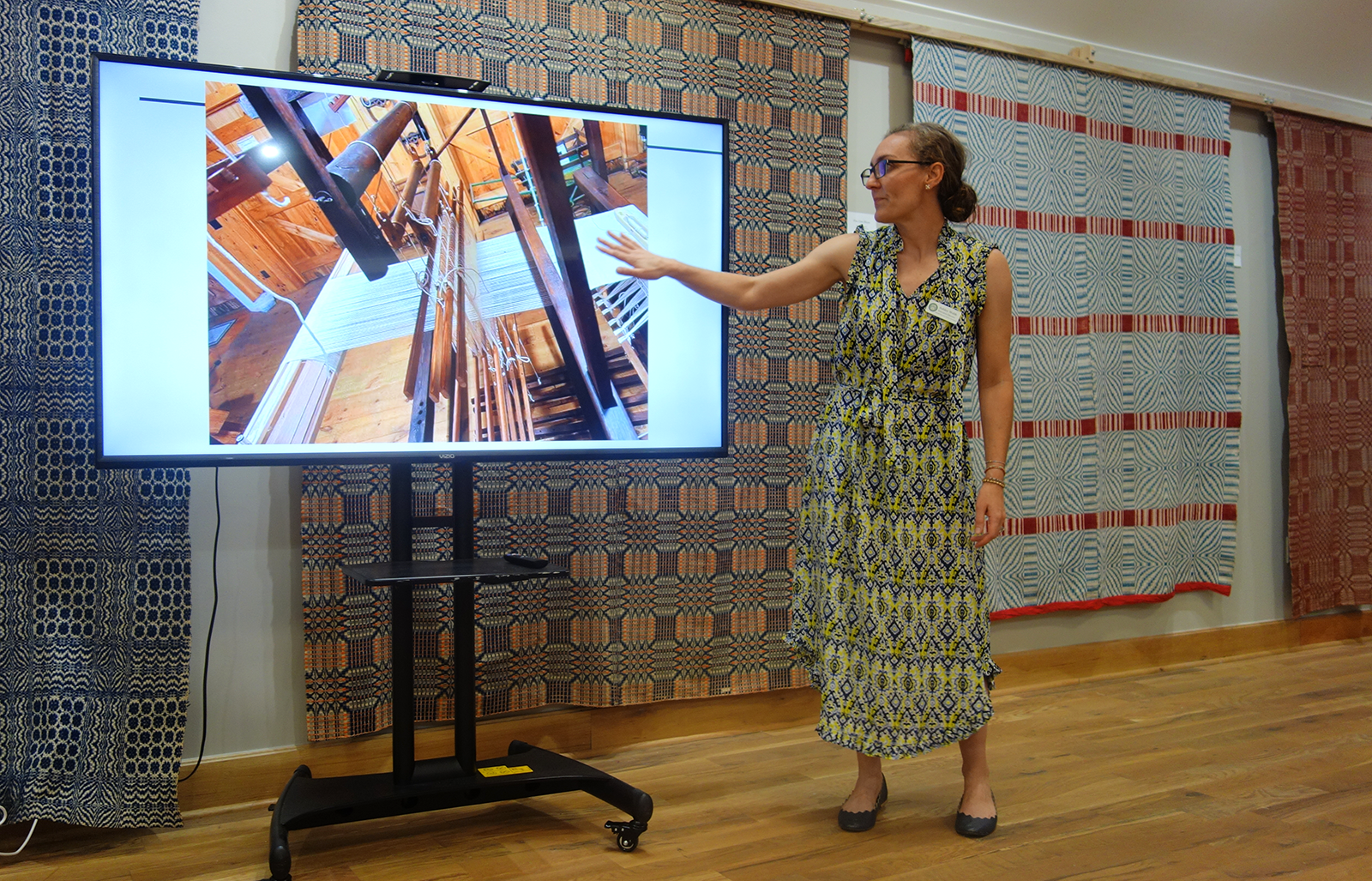
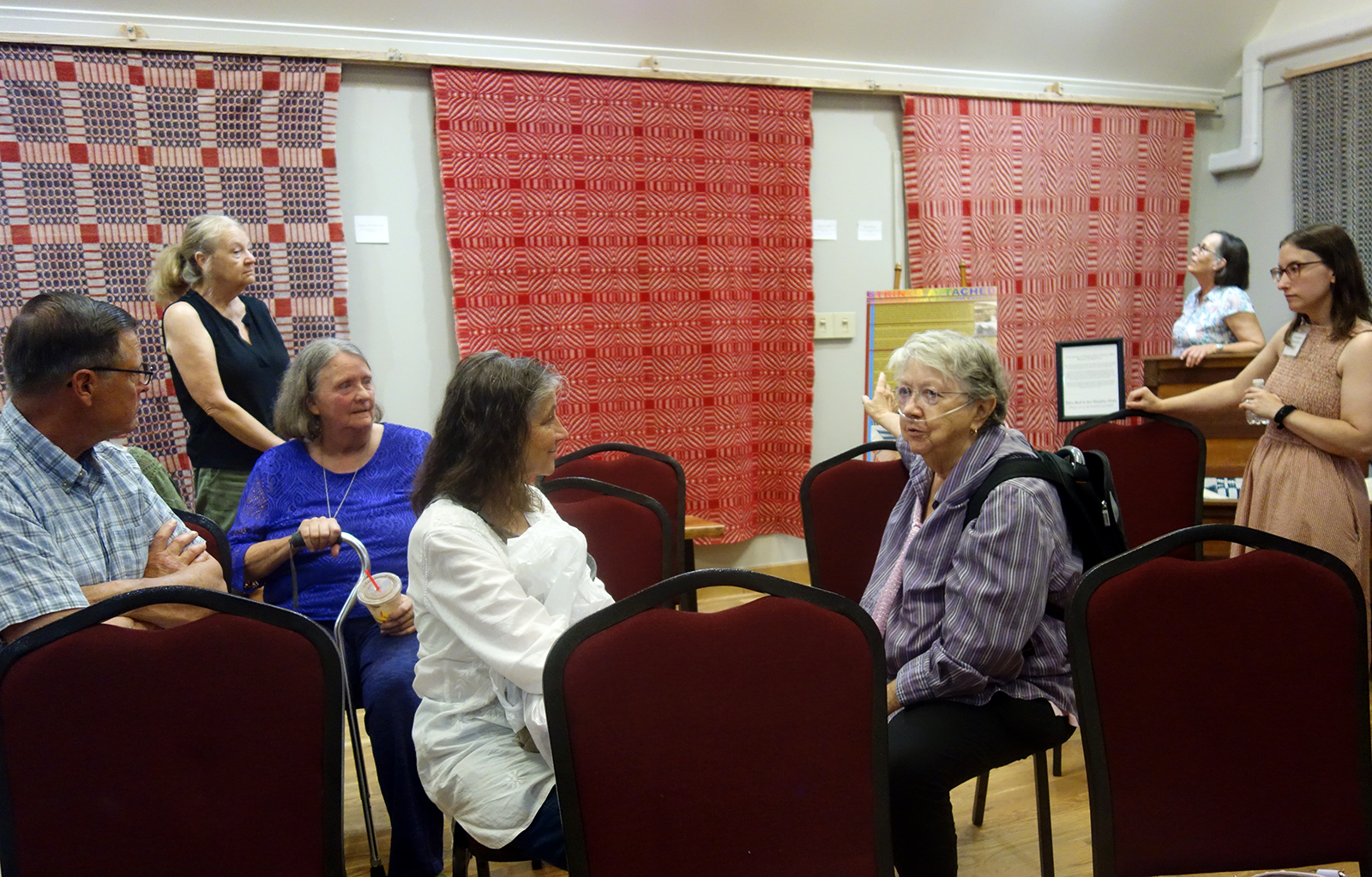
(Left) Webb shows photographs of various looms to the audience. (Right) Catherine Pauley (right) points out the display of Vaughn-Dunn mill coverlets and blankets. Photos by Colleen Redman
The names of the coverlet patterns depended on the community in which they were woven and the names that were handed down, Webb said. A single geometric weaving pattern could go by dozens of different regional names. Some of the pattern names included "Pine Cone Blooms," "Governor’s Garden," "Double Bow Knot and Table," "Lady’s Fancy," and "Rocky Mountain Cucumber."
Coverlet weaving with hand spun yard began with a written draft pattern that was passed between family members. Webb showed an image of a yellow-colored coverlet that was said to be dyed with onion skins. Dark blue coverlets were dyed with indigo. Black walnuts were used for darker browns, and reds were obtained using cochineal (a natural dye derived from the dried bodies of scale insects).

Featuring jewelry by Pat Sharkey, cool rocks & gem specimens, and select rock/ gem jewelry and art from around the earth.
203 S. Locust St. Suite L
in The Station
540-230-7955
earthdancejewelrygems@gmail.com
“With all of these coverlets, the makers took the time to draft the pattern, weave the pattern, choose the colors — sometimes spinning and hand dying their own yarn — setting up the loom, weaving each panel, and then sewing them together. They’re not only testaments to keeping these traditions alive, but they are powerful legacies in family heritage and telling the story of a community,” Webb said.

Your trusted Floyd County real estate experts. Visit our downtown Floyd office adjacent to the stoplight or browse our current listings online. Representing both residential and commercial buyers and sellers with integrity and always working to get YOU the best deal!
One of the coverlets Webb highlighted from the Old Church Gallery’s "Strings Attached" exhibit was a colorful Rose of Wilderness pattern made by Mattie King, the mother of the renowned Floyd educator and quilter, Effie King Brown, who passed away at the age 101 in 2012. A gallery label posted next to King’s coverlet reported that Brown was 99 when she was interviewed by Radford University student Meghan Rickert and recalled her mother weaving rugs, towels, blankets, and coverlets. She also remembered walking to the mailbox with her mother to send wool from their sheep to the woolen mill to be cleaned, dyed, and spun into yarn. The coverlet on display by Mattie King was completed in 1915 when Effie was five years old. King made coverlets for each of her children (and her sister’s children after her sister passed on at a young age), crafting a total of seven.
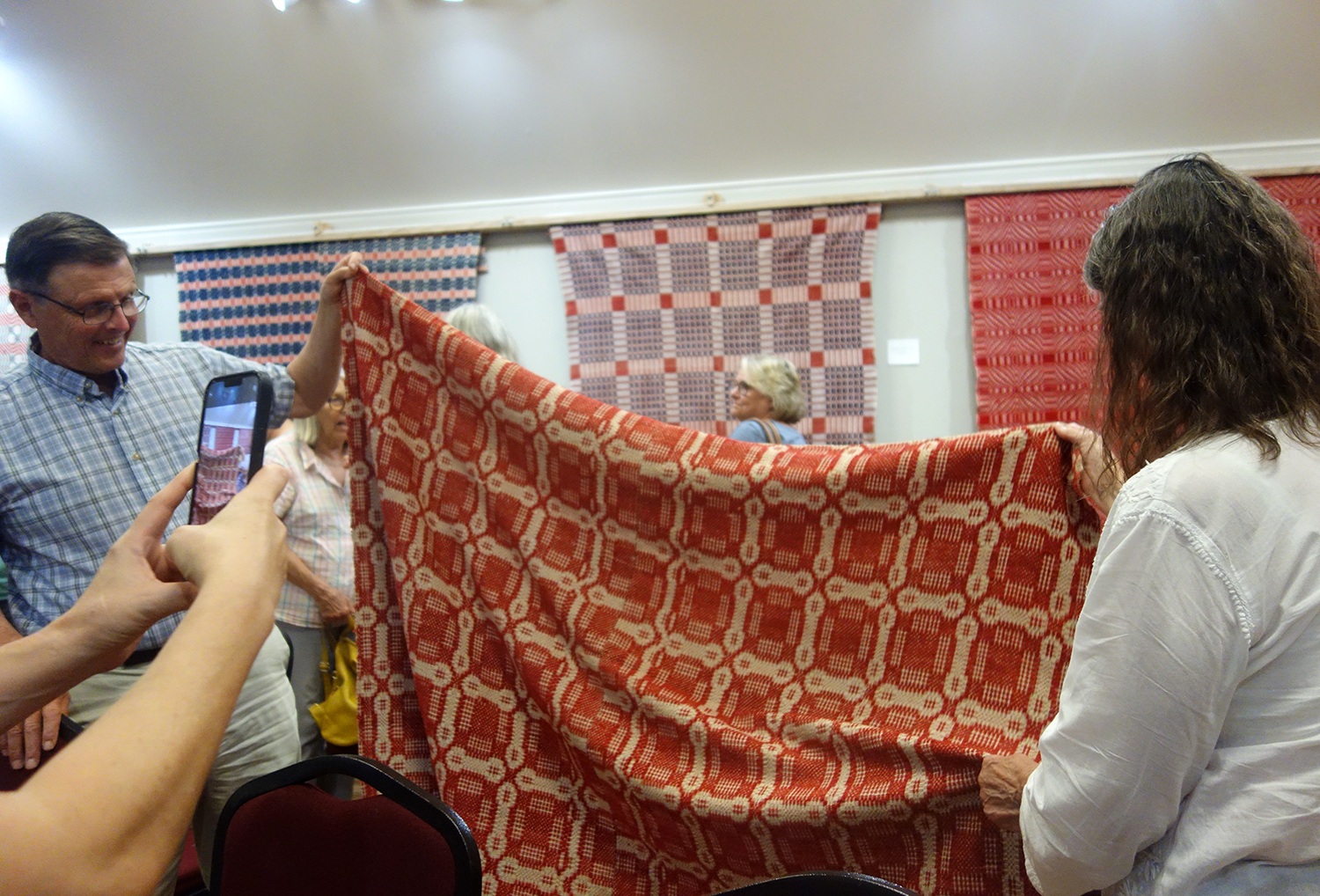
The audience gave Webb a round of applause at the close of her presentation. Applause was also offered to The Old Church Gallery for their efforts in collecting and exhibiting the Floyd County coverlets. An attendee brought a coverlet from her home, wanting to identify the pattern name.
We pride ourselves on providing quality legal representation with a small-town feel. Offering legal services in the areas of Real Estate, Estate Planning, Corporation and LLC setup, Uncontested Divorces, and minor traffic violations. Give us a call if we can assist you (540)745-3131 https://Floyd-law.com/
Old Church Gallery director and former art teacher at Floyd County High School, Catherine Pauley told a few attendees a story of how she rescued a coverlet from Angels in the Attic drop off. "I was talking to the girl at the door, and I looked down into the trash and saw it. ‘What are you going to do with it?’ I asked, and she said she would throw it away." Pauley took the coverlet, which was infested with bugs and covered in sticky syrup, home. She wrapped it tightly in a trash bag with insecticide for two weeks, machine washed it in cold water twice, and then spread it out and let it dry in the sun. “It was too precious to let go,” she said about the rescued coverlet, which was included in the "Strings Attached" exhibit.
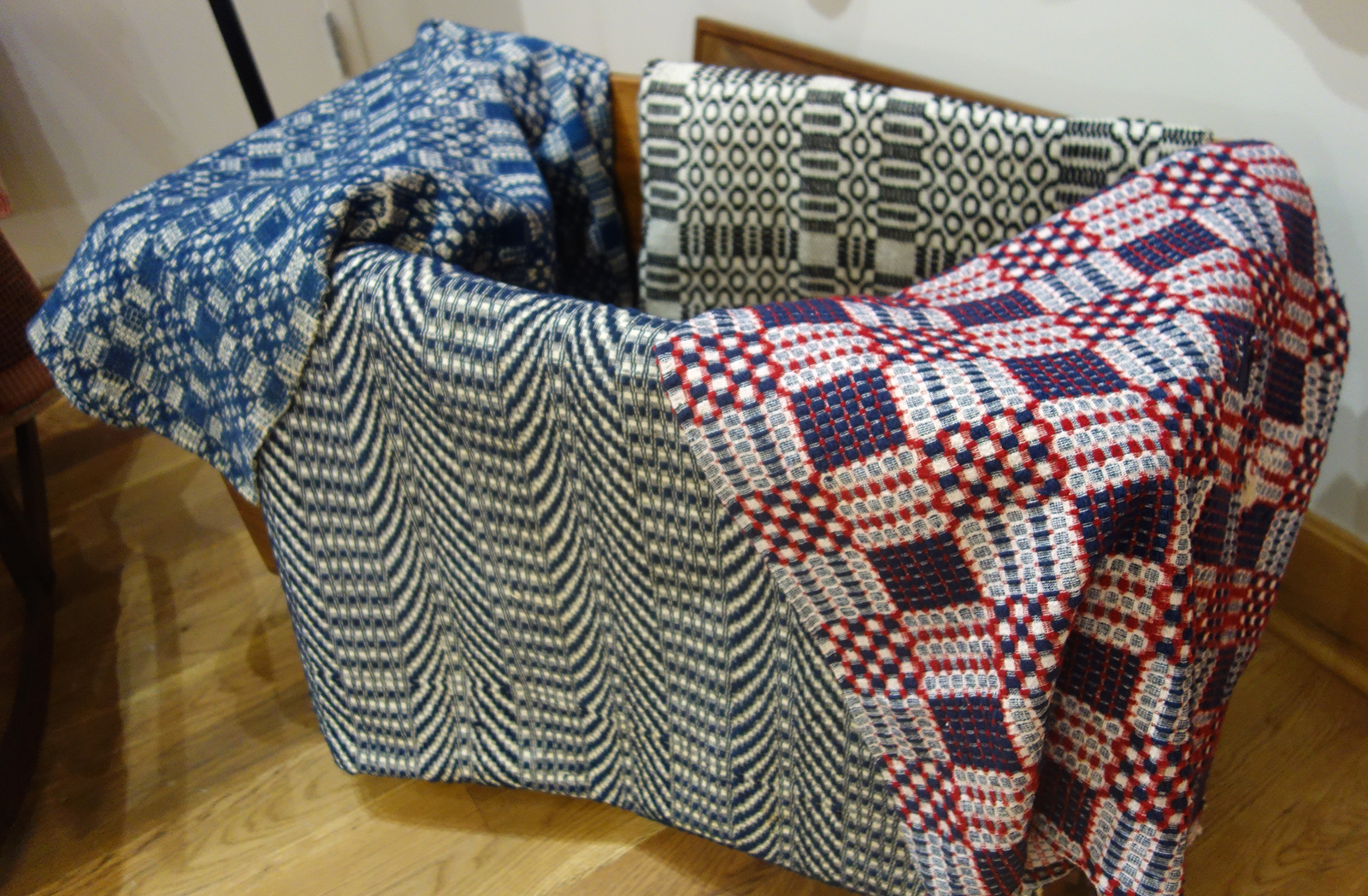
Catherine Vaughn Pauley is a descendant of Wilson T. Vaughn, who after the Civil War started a commercial wool carding business near Buffalo Mountain. The business was expanded with his sons and later co-run by Tom Dunn. “In 1901 Vaughn Dunn Woolen Mill added looms and hired weavers to make coverlets and blankets in a factory setting. A water-powered turbine drove the carding machines, yarn spinners and looms which produced coverlets, woolen blankets, and shirt flannel,” an exhibit placard read.
I am no longer practicing optometry, but I'm still selling frames at discounted prices, and selling and servicing glasses.
Any questions, feel free to call Blake Mitnick
Commonwealth Eye Center
540-745-8733
211 W. Main St.
Pauley’s mother’s family raised sheep, sheared them, and hauled the wool down to the mill where it was cleaned, spun into shanks of wool thread and made into plain, woven-wool blankets with series of red stripes at the top edge. Her mother, Ruby Alderman Vaughn, kept her simple Vaughn-Dunn woolen blanket in a chest for safekeeping. Pauley knew the stories of the coverlets but only acquired one in her early 30s when she purchased two at an estate sale. She treasured them until she donated them to the community through the care of the Old Church Gallery. The Vaughn-Dunn Mill coverlets and blankets were also displayed in the "Strings Attached" exhibit, which closed at the Floyd Center for the Arts on Sept. 5.
Learn about the current exhibits at The Floyd Center for the Arts here, and learn more about the Old Church Gallery and its offerings here.
UPCOMING: Catherine Pauley, Ricky Cox, and Alice Slusher of the Old Church Gallery will be speaking at the O. Winston Link Museum (operated by the Historical Society of Western Virginia) in Roanoke from 6-8 p.m. on Sept. 19 regarding the gallery's "Kindly Mirrors" traveling exhibit, which features the photographs of the Vest and Shank families that depict life in Floyd County from 1912-1917.