
Backstories and Backyards: Buttermilk, Biscuits, and Butter
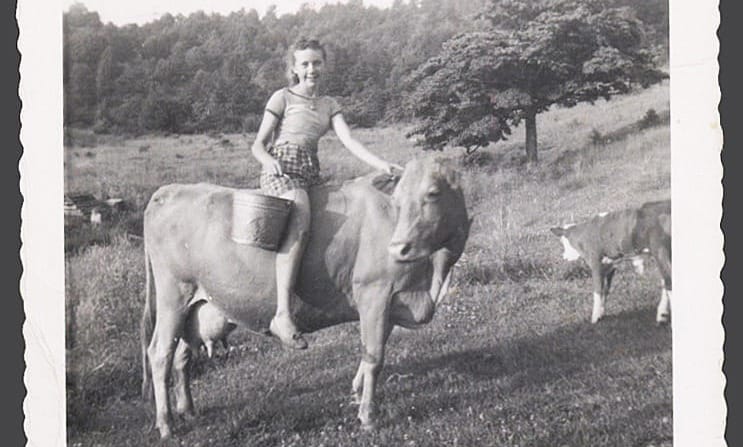
The "Backstories and Backyards" column looks back into the stories behind everyday objects, connecting each item with the people, places, and events of different eras in Floyd County history. This month's column churned up stories behind a century-old butter mold and print.
When asked, "Do you like butter?" with a buttercup flower held under one's chin, the answer is always "yes" because a buttery yellow reflection always shows up there. Butter has a very long history, dating back thousands of years, and homemade butter long held an important place in Floyd County farm life.
Today, we might buy butter in sticks or in a container, but there was once a time when butter was hand-churned from cream, incorporated into biscuits every morning, traded for store-bought goods, and often embellished with designs carved into a wooden butter mold's print insert.
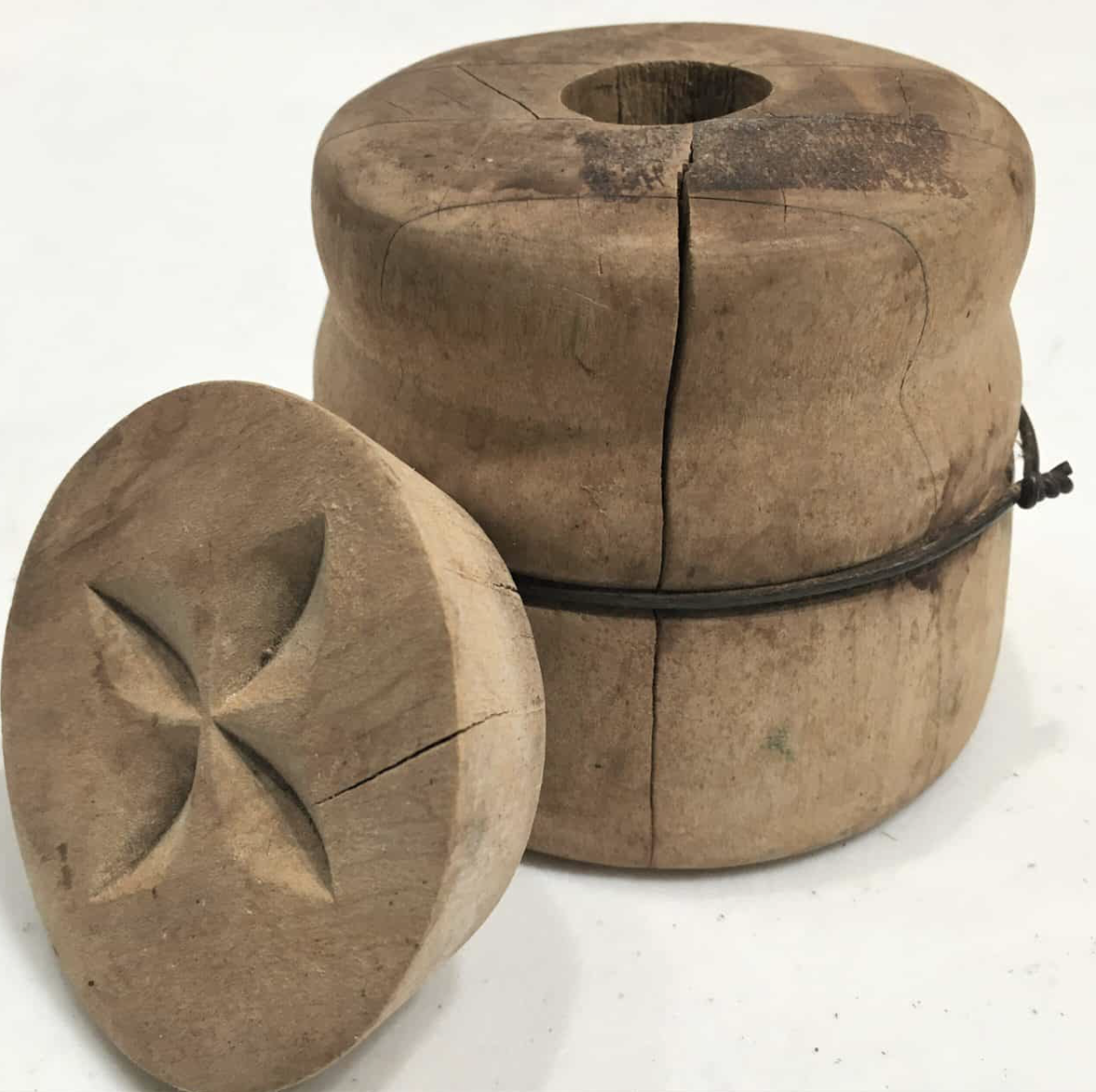
And what an impression it made, shown here in Mattie Yates King's hand-carved butter mold and print. Made of poplar wood, a wood known to hold up in moist conditions (the molds were soaked in water first for easier release), Mrs. King could press out a simple design with four petals into the butter. The carved print with its handle (missing here) would be inserted into the tapered hollow mold before the butter was packed in. Then, using the handle, one would push the chilled block of butter out of the open bottom to display a pleasing design. Mattie and Thomas King owned a farm in the Check area, and both were highly skilled in a number of crafts.
Carl Cox of Indian Valley, in a 2019 Floyd Story Center interview, told interviewer Molly Cox about some of the ways he helped his mother, including steps of butter-making:
Carl Cox: She had a lot to do. She had to help take care of the cows, milk and stuff. Us children would go, and we would have to go up into the fields and drive the cows back down here to the house where we could milk them, take care of them. We sold some milk to help pay the bills too, you know. And we churned the butter; she skimmed the milk and we churned the cream that she got off the milk and made butter. So, we always had our homemade butter.
Butter sales offered income for farm women, and a well-formed block of butter with an attractive print pressed into it held a higher value or might identify a trusted maker's mark. Early butter molds, with pound and half-pound sizes, were turned on lathes and carved by hand; by the 1900s, commercially produced molds became available.

Hardwood, LVP, Carpet, Tile & Stone. We've got it all! Floyd Floor Co. brings quality and craftsmanship to every home for every budget. From design selection to expert installation, we handle everything. Call or visit our showroom to see what's new and get your free estimate today! 540-302-2858
In a 2017 interview, Lucille Nolen described her memory of butter prints to Catherine Pauley.
Catherine Pauley: Would you explain what a print of butter is?
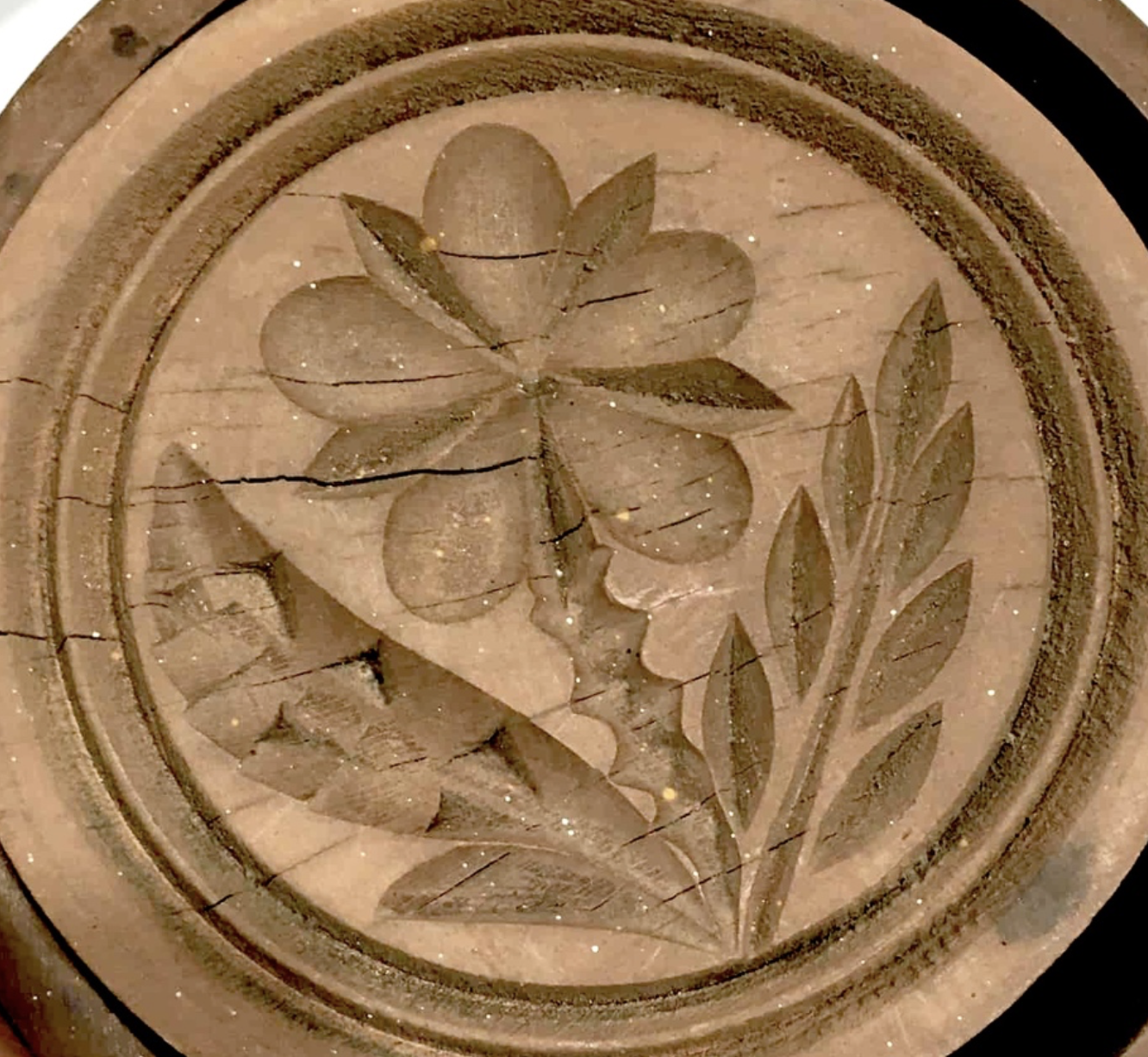
Lucille Nolen: It was round; it would hold a pound of butter, and you'd put it, kind of ball it up and put it down in that printer. And it had a design in the top of it and when the butter come out it would come out in that little round shape, but you know it was in a prettier shape, and it had that design on top of it. It was real pretty, a wheat design on the top of the butter print. It's the milk that we milked and we save it, the cream too. Then that cream’s what made the butter from the milk. You had to churn it, we had a churn that you had to go up and down — like that — it had a dasher in it. A wooden churn, ours was, it made that butter and print. And the clabbered part down under the cream would make buttermilk — that’s how you got buttermilk.We used the butter for food and Mama had extra prints of butter she would sell it. Sometimes neighbors would want to buy the butter; and sometimes we'd bring it to town to the grocery store.

From custom homes and renovations to decks and additions, Esensten Construction delivers dependable craftsmanship across Floyd and the surrounding areas. Locally owned, Class A licensed, and built on integrity—every project is done right, start to finish. Call today to discuss your project.
540-232-9534
Diana Wimmer's mother would churn butter in the springhouse, as she explained to Judy Hylton in her 2021 interview:
Diana Wimmer: Yes, I remember mother churning. The house we lived in had this wonderful spring in it; it was a big round thing, and that was the coldest spring. Mother would go down there and churn.
While churning the cream into butter, Ruby Alderman Vaughn Lorton (1919-2010) would recite a version of an old English rhyme, also found in many 19th century Mother Goose collections. Churning was sometimes a lengthy process, typically taking anywhere from 20 minutes to over an hour.
Come, butter, come;
Come, butter, come,
Peter's at the gate
Waiting for his buttered cake;
Come, butter, come.
(Verse called "Essex Charm for a Churn, 1650 A.D." in A History of Nursery Rhymes, Percy B. Green (1899).)

At Edward Jones, we deliver candid guidance and personalized investment strategies to help you plan for and realize the possibilities of your future — for you, your family and generations to follow.
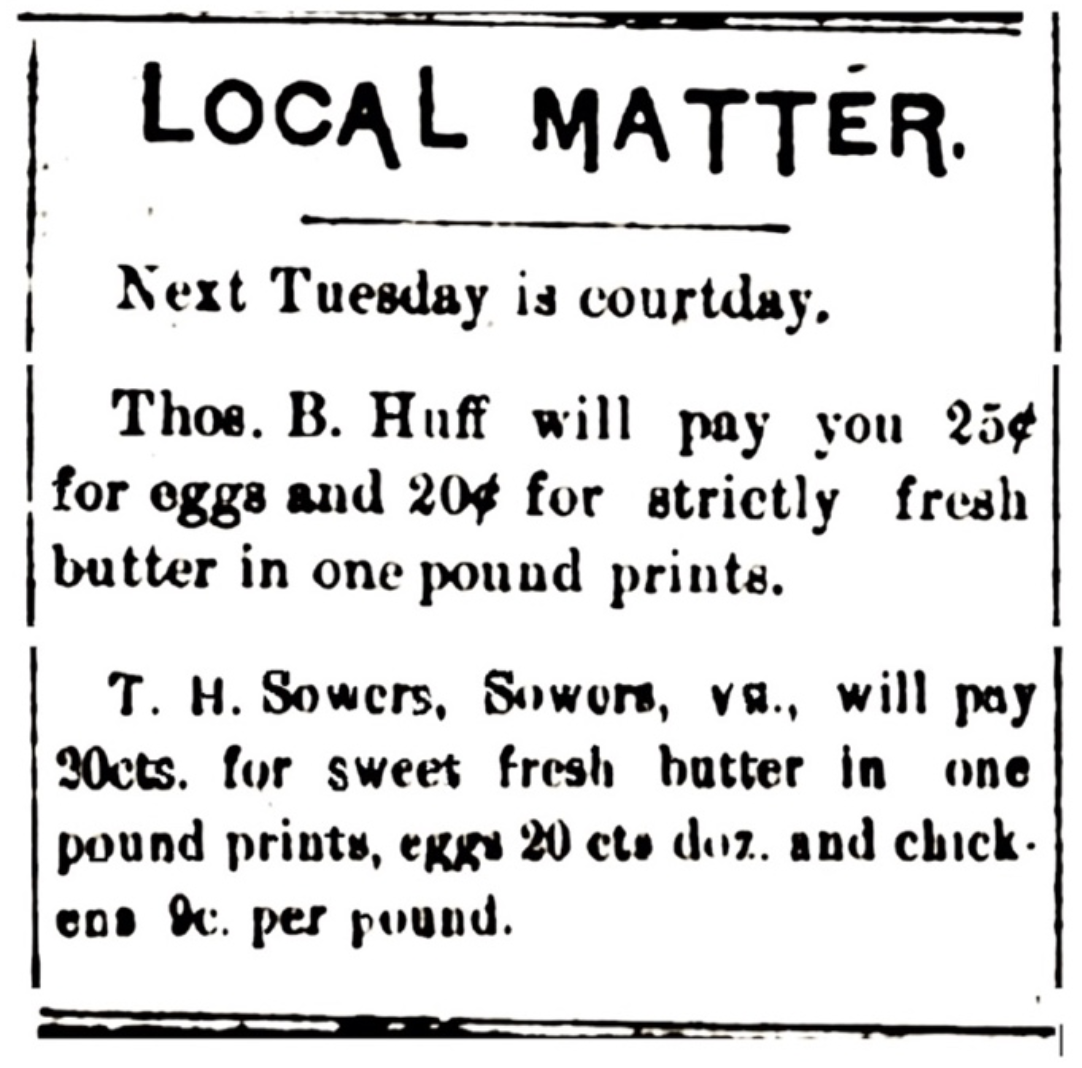
And a pound of butter might just pay for a visit to the doctor, as Joseph Rutrough (1923-2004) explained about his father's medical practice in Willis during a 1999 interview, part of the Old Church Gallery's Buffalo Mountain Series.
Since Dr. Rutrough had no office hours, people visited him at any time, especially during epidemics such as measles and diphtheria. Some of his patients lacked money, so they often paid him in food goods, such as eggs or butter. Joe said, “He’d take hams, or side meats, or butter, or eggs, or chickens.”
Butter was a tradable commodity. According to church deacon records, prior to the annual 1918 Homecoming at Laurel Branch Church of the Brethren, church members' free-will offering by single women or widows could be satisfied by supplying a one-pound print of butter.
In another 2001 Buffalo Mountain series interview, J.E. Bolt (1936-2015) recalled a time when the huckster or traveling salesman made the rounds to purchase homemade butter:

Citizens' SmartTown Community Wi-Fi helps EMS, Rescue, First Responders, and YOU get connected when you need it most. SmartTown is designed to provide Wi-Fi coverage in areas with poor or non-existent cellular coverage. Just another way Citizens connects people and communities!
J.E. Bolt: Almost every family would have milk cows for their own milk and butter, chickens for their own eggs, and would raise enough hogs for the pork that they would need. And anything left over, they would sell it for money to buy coffee, flour, salt, and sugar.
We had a traveling merchant that cut through the community in a truck, and he had all his stuff was on the truck. He had soft drinks, he had coffee, sugar, all of those things you had to have, and they would swap him butter and eggs for what they needed. So, it was just a trade — bartering or selling. He would just take it to Roanoke to the farmers’ market and sell it.
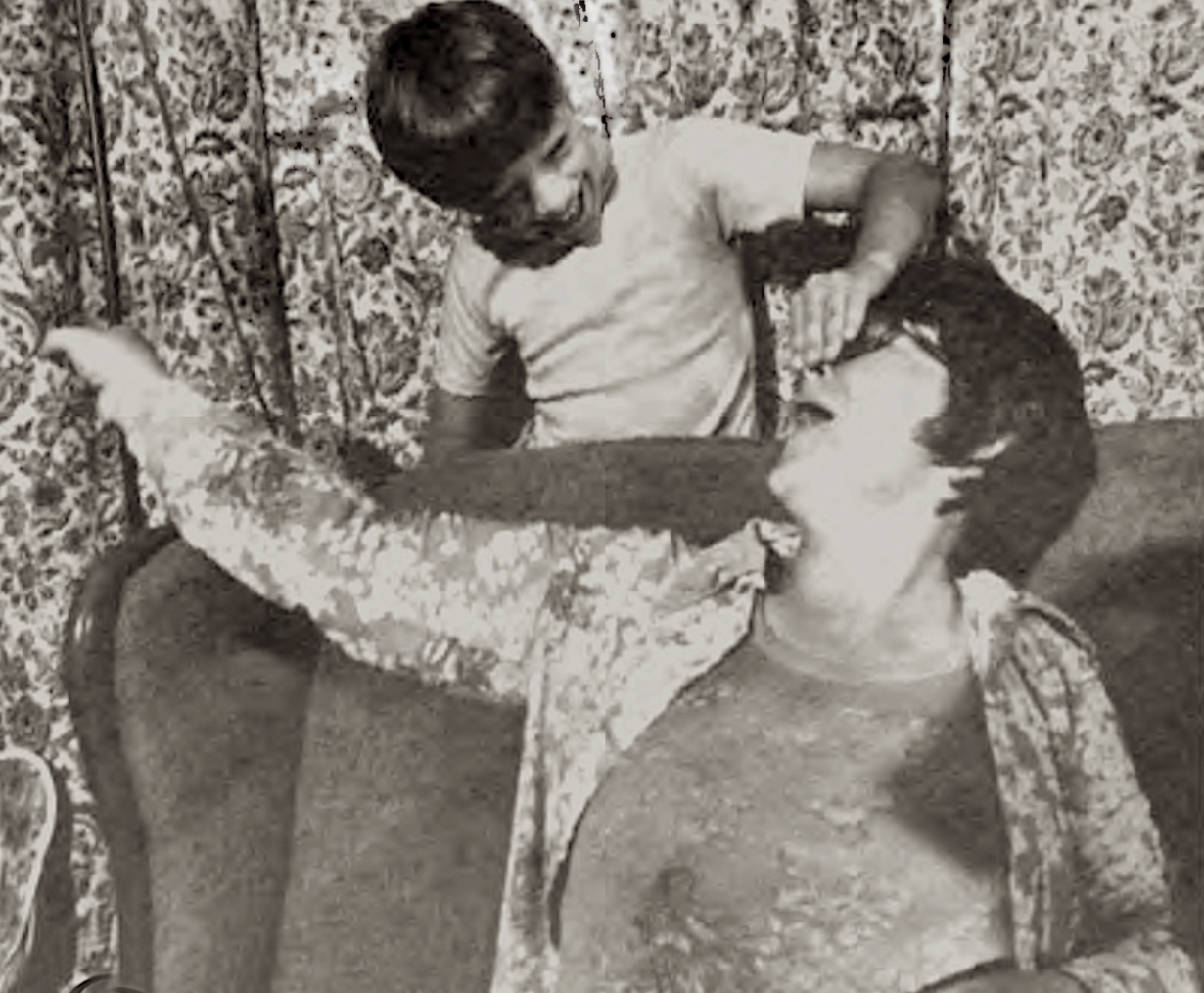
*Over centuries, butter has found its way into many traditions--religious, cultural, whimsical, and practical. It can symbolize nourishment and abundance, indicate characteristics of someone's personality, inspire a nursery rhyme, or perhaps even guarantee good fortune. If you lived in Floyd County and it was your birthday, you could expect someone to try to sneak up and ‘butter’ or ‘grease’ your nose. Traditional lore suggests that if your nose is greased, any bad luck that comes around will simply slide right off.
Dairy operations are now graded, and only Grade A dairies are eligible for milk production. In my 2014 interview with Jane Hellman for the "Sound & Story" Project, Jane told me about Hanatuskee, a self-sufficient dairy farm project in Check, where she worked in the late 1970s.
Jane Hellman: Well, it was the Allen family dairy. It was right next to the [Kerry] Whitlocks; they had a great big dairy operation. We were very small. The average number of cows we milked was maybe, 20? You know, 13 to 20, depending. And we were a Grade C dairy, which I don’t think it’s changed. At the time, it meant that all the milk went for cheese.

Blue Mountain School is now accepting enrollment in our Early Childhood classes, ages 2 1/2 through first grade! To schedule a tour visit our website or contact the school at contact@bluemountainschool.net or by phone: 540-745-4234
Today, only six Grade A dairies are producing in the county, but at one time most farms had at least one milk-producing cow or perhaps a small herd.
Jean Thomas Schaeffer's family made butter, and she noted, "We had white-faced brown Hereford cows and sometimes mixed breeds."
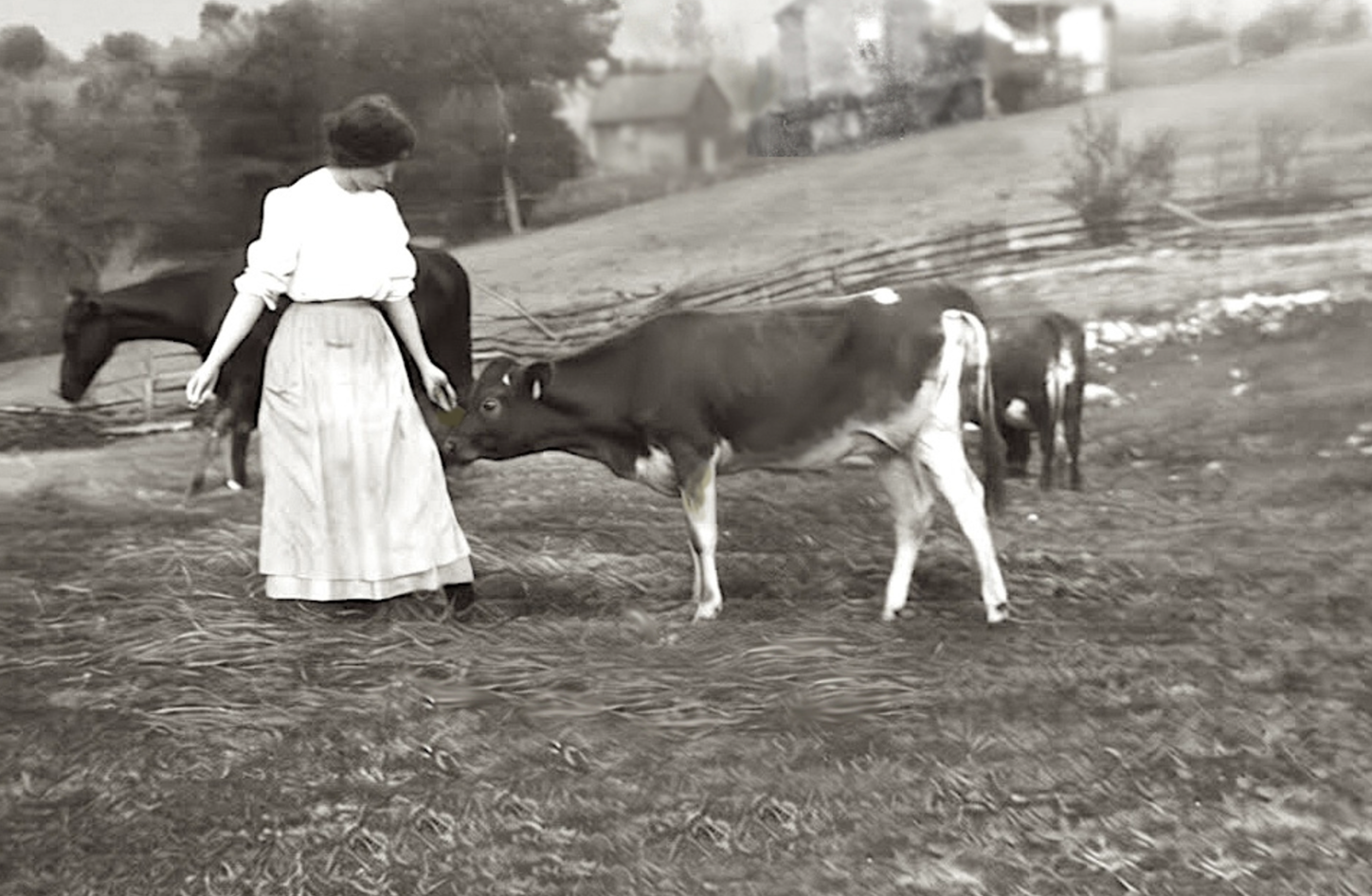
Janet Slusher Keith's family farm had Guernsey cows, which produced higher fat content in a golden-hued milk high in vitamin A (best for butter) but less quantity, 2.75 or so gallons per milking, and also kept Holsteins for the greater milking volume of three to four gallons. The measure of fat was simply called “test.” The higher the test, which was checked at the processing plant, the more you got paid for a pound of milk, which was sold by weight. Milk trucks made the rounds for Kraft, whose milk went to Independence for cheese, and Carnation, whose milk went to a small plant in Riner.
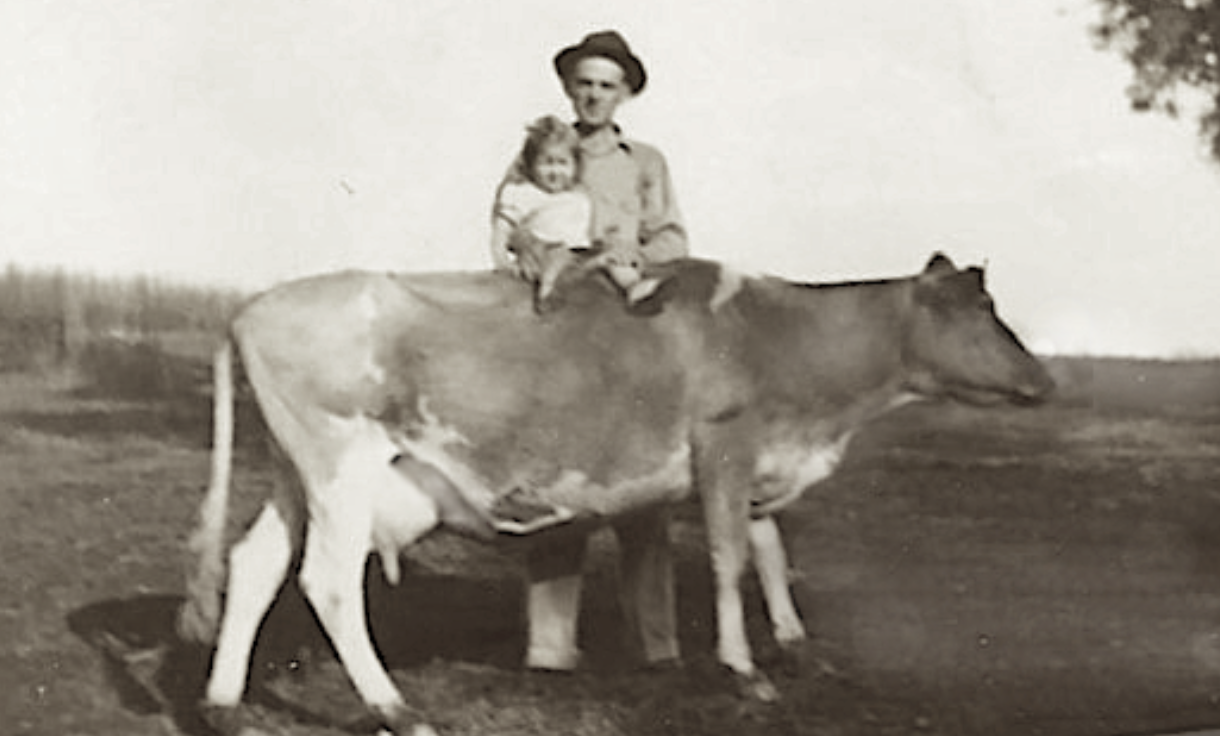
Vada Vaughn Hylton (1911-2008) confirmed the benefits of milk from a Guernsey cow in her 1999 Buffalo Mountain Series interview with Radford University student interviewer Peg Wimmer:
Vada Hylton: Yes, milk cows, and I churned and sold milk and butter. They were Guernsey cows. The best cows anybody ever could’ve had. The one that bought them later says, “Well, you told us they were good, but you didn’t tell us how good.” They were good cows, and we sold milk at that time, too. And I sold butter. Everybody in Floyd kept a finding out about the butter. And everybody wanted butter, but I just couldn’t help them but so much. But one man would come up here and get it, Mr. Sumpter at Floyd.

The Schroeder Law Firm is dedicated to helping individuals, families, and small businesses plan for the future and achieve their goals. We focus our practice on real estate closings, business law matters, estate and trust planning, probate and estate administration, elder law and special needs planning, and uncontested divorces.
And one of the best things to do with fresh butter is to slide it between the top and bottom of hot biscuits as they made their way out of the wood-fired oven. Arva Conner Coleman (1921-2017), as many Floyd farm wives did, made fresh biscuits every morning. Here, Arva describes her daily chores to Floyd County High School student Ryleigh Avancini in her 2016 interview:
Arva Coleman: Well, I helped milk cows. When I started having a second child, I started working regularly at the shirt factory. Well, I’d get up the in the morning at four o’clock, start a fire in the wood cook stove, put some meat on for breakfast. And go to the barn and help milk cows, and then I would go back to the house and put wood in the stove to get it hot to make biscuits and finish frying the meat, and got the milking almost done. I would have to go to the house and finish breakfast, and then get cleaned up and go to work and be there at 7:30.
Weda Boothe would use a specific size bowl to measure her biscuit ingredients by eye, letting a lifetime of experience be her guide every morning. Ruby Vaughn Lorton's recipe for biscuits used a zinc canning lid as a round cutter, or she might roll out the dough flat, slip it into a hot wood-fire oven, and when it came out, the family could just break off chunks to their liking.
The old school building converted into three floors of almost all types of fabrics available, and craft supplies! Plus - an extra building of upholstery fabrics and supplies!
220 N. Locust St., Floyd VA
(540) 745-4561
sfabrics@swva.net
Ruby's son Tom Vaughn shared her recipe:
- Mix 2 Cups flour, 1 Tbs. baking powder, 1 tsp. salt
- Cut or finger mix 1/3 C butter (or lard or Crisco)
- Add enough cold milk or buttermilk to just hold the dough together
- Knead gently, and pat or roll to 1/2" thickness. cut in rounds or leave flat
- Bake in a hot oven until golden
Susan Thigpen, Meadows of Dan, loved her grandmother's biscuits, and wrote about her biscuit making in a June 1992 Mountain Laurel article. She thought that buttermilk was one of those secrets for good biscuits, making them rise better, noting that, "The true test of a good mountain or country cook is biscuits. The higher, lighter, fluffier they are, the better the cook."
Indeed, there are many common sayings that include butter, but "bread and butter" certainly sums up the place that this farm commodity held for past life in Floyd County. If it needs any confirmation, at least from the interview selections posted here, it appears that people in Floyd County knew well how to butter their biscuits, and no one really need ask, "Do you like butter?"