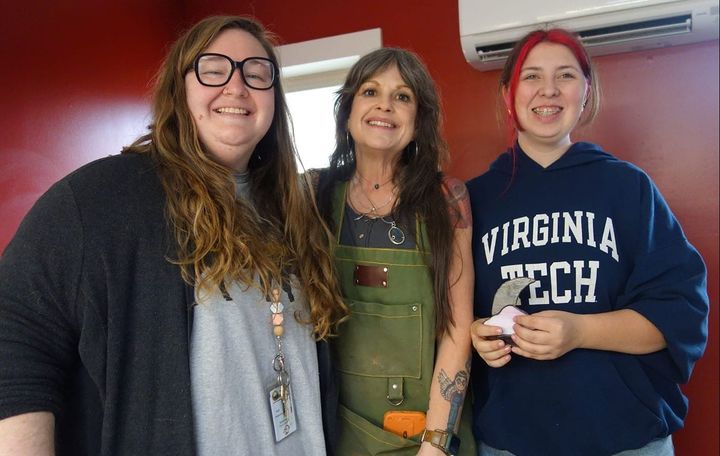
Library program highlights tips for fighting the winter blues
Scientists have discovered that lack of daylight changes our hormones. The effect of sunlight on our bodies causes the brain to produce serotonin for mood regulation.

New River Medical Reserve Corps (MRC) volunteer and Licensed Professional Counselor Paula Markham gave an informational presentation Saturday at the Jessie Peterman Library about how to take care of your mental health during the winter months.
Markham was introduced on Feb. 14 by MRC Coordinator of Volunteers Susanna Marley who explained that the MRC is an extension of the Virginia Health Department that organizes medical and non-medical volunteers to support community health initiatives and public health emergencies. It’s a federal organization that began in 2002 as a response to 9/11.
As an LPC with more than 30 years of experience, Markham said that she has always taken a holistic approach to health and regularly asks her counseling clients about their lifestyle, physical health, diet, and sleep habits. “You can’t really have a healthy mind if you don’t have a healthy body,” she said, adding that her tips to cope with winter blues focus on promoting whole body, mind, and spirit health.

Blue Mountain School is now accepting enrollment in our Early Childhood classes, ages 2 1/2 through first grade! To schedule a tour visit our website or contact the school at contact@bluemountainschool.net or by phone: 540-745-4234
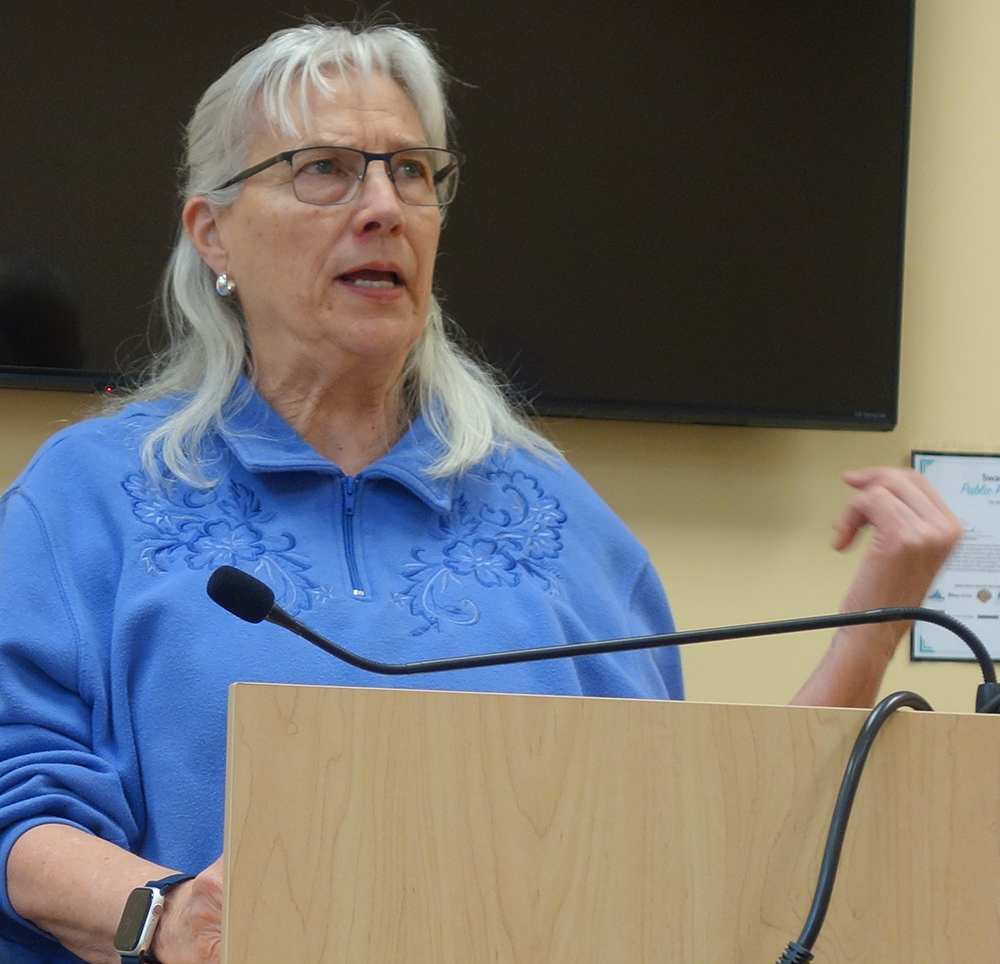
“Statistically, in the U.S. about 40% of people report feeling a bit down in the winter, experiencing low energy, loss of enthusiasm, difficulty concentrating, anxiety, sadness, sleep disturbances, sugar cravings, and social withdrawal,” Markham said. “Scrolling your phone rather than getting out to do stuff — does that sound familiar? Why do you think that is?” she asked.
Several audience members said, “lack of sunlight,” and Markham affirmed that getting more sunlight is one of the best things we can do to curb the blues in the winter when the days are shorter and clouds can block out what little daylight there is. Sunlight exposure triggers the skin to produce Vitamin D, which more people are deficient in during wintertime.
Scientists have discovered that lack of daylight changes our hormones. The effect of sunlight on our bodies causes the brain to produce serotonin for mood regulation. It inhibits melatonin (which signals that it’s time to sleep) and reduces fatigue, directly affecting the part of the brain that regulates mood and cognitive function, Markham stated.

Citizens' SmartTown Community Wi-Fi helps EMS, Rescue, First Responders, and YOU get connected when you need it most. SmartTown is designed to provide Wi-Fi coverage in areas with poor or non-existent cellular coverage. Just another way Citizens connects people and communities!
Speaking on the importance of getting quality sleep for improving mental and physical health, Markham said that melatonin is suppressed by sunlight and blue light spectrum, which is emitted from digital screens (smartphones, tablets, and TVs). She recommended using night mode filters, avoiding devices for an hour or two before bedtime, and maintaining a regular sleep schedule.
She reviewed diet tips for mental health — getting more fiber and avoiding processed foods, sugar, and simple carbohydrates — and emphasized the importance of exercise, recommending 20-30 minutes a day of vigorous exercise, and getting up and moving every hour or so.
“Moving the body improves mood. Outdoor movement is better because of the sunlight and the exposure to nature. The more we can be in nature the better for mental health,” Markham said, noting that being in nature soothes the nervous system.
Social connection, which tends to decrease in the winter when it’s hard to get around, is crucial for mental health, Markham said. This might include spending time with family and friends, doing acts of service and sharing meals. “It’s easy to get isolated, especially because we have screens, and the Internet that makes us feel like we’re interacting, but it’s different in-person. It has a different effect on us neurologically, especially if we’re passively receiving and watching things online rather than actively interacting with people.”

From custom homes and renovations to decks and additions, Esensten Construction delivers dependable craftsmanship across Floyd and the surrounding areas. Locally owned, Class A licensed, and built on integrity—every project is done right, start to finish. Call today to discuss your project.
540-232-9534
Markham spoke about the importance of neuro-regulation, which enhances the brain’s natural self-regulation and can include creative expression, making art, journaling, and meditation. Meditation can be as simple as taking a minute to turn your awareness inward and feeling your breath. She suggested the idea of keeping a gratitude journal, where you take a few minutes at the end of the day to list three things that you’re thankful for.
When winter doldrums go beyond the blues, it could be Seasonal Affective Disorder (SAD), a more full-blown depression that involves feelings of helplessness and hopelessness. “If your mental state progresses to SAD, you should get some professional help,” Markham said. “There are medications and therapies that can be pretty effective.”
Markham closed the hour-long program with what she called “a three-minute experiment.” She guided the group to focus on their breathing and then envision something that brings feelings of affection and gratitude. “When your mind wanders, just bring it back to breathing in and breathing out,” she said, adding that when we can focus on anything that’s happening right now in the sensory realm, it tends to calm the mind and helps the system to reset.
For immediate mental health help, call the Suicide and Crisis Lifeline by dialing 988 or calling 911.