The Price of Education, Part 2: Board of Supervisors, School Board discuss importance of realigning salaries
The county’s portion of funding is estimated to be about $9.5 million of the total $28.9 million.

“The Price of Education” is a Floyd Times series following the annual budgeting process of Floyd County Public Schools. Budget talks for the upcoming school year started officially on Feb. 9 and will continue throughout the spring. Fiscal year 2027 begins July 1.
Terms to Know:
- Required Local Effort (RLE) — The minimum amount of funding that localities are required to contribute to its public schools.
- Required Local Match (RLM) — Opportunities for the schools to receive match funding for programs (At-Risk Funding, preschool operations, Class Size Reduction, etc.); every $1 from the county equals $1.34 in state funding,
- Local Composite Index (LCI) — Determines how much the state will contribute based on the wealth of the community; takes into consideration true value of real estate, adjusted gross income, and taxable retail sales
- Rebenchmarking — The process that updates both state and local costs in public education; completed every two years
Main priorities of the fiscal year 2027 budget for Floyd County Public Schools were discussed at a joint meeting of the School Board and Floyd County Board of Supervisors on Feb. 24.
As they talked about realigning the salary scales and investing in new buses for the aging fleet, members of both groups said they were happy to have a joint meeting at this point in the budget process rather than waiting until the approval deadline is looming.
The initial budget estimate for FY27, which was presented to the School Board last month, totals about $28.9 million, an increase of about $2.2 million from last year. Boothe said the increase is due to Rebenchmarking, which is a 28-step process completed by the state, and increases to the Local Composite Index, which is also a state metric.
The county’s portion of funding is estimated to be about $9.5 million of the total $28.9 million. Categories in the estimated draft budget include Instructional ($18.5 million); Operation and Maintenance ($3.4 million); Transportation ($2.8 million); Administration, Attendance, and Health ($1.1 million);School Food ($1.6 million); and Technology ($1.5 million).
Mark J. Harris
Floyd County Farm Bureau
(540) 745-2021
335 E. Oxford St.
Floyd VA 24091
Finance Director Darin Boothe said this is his 11th budget cycle with FCPS and explained key terms used to determine the annual cost of school operations. He noted that he sees this year’s budget as an opportunity for both Floyd schools and the community, which will benefit from addressing both top priorities.
Superintendent Jessica Cromer said, being the county’s largest employer with 330 workers, realigning starting salaries and raises will directly impact the lives of many county residents who may be having to closely watch their expenses.
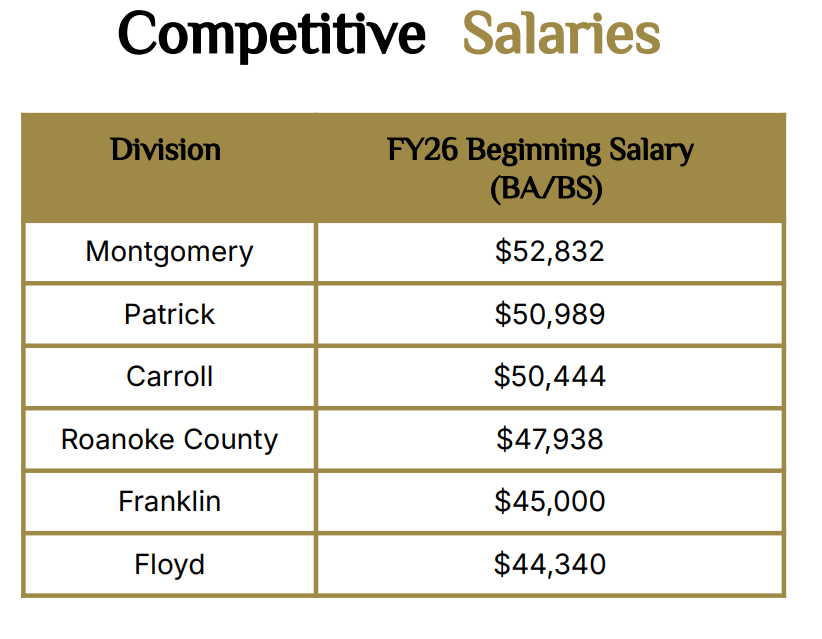
Cromer said Floyd is currently in the bottom 9% for starting salaries for teachers and support staff but ranks in the top third of the state for student performance. She said teachers are largely motivated by the students to stay in Floyd, but “that’s not going to sustain them,” she said, when they can move to a neighboring division and increase their salary by at least $6,000 per year.
She noted that there are salary gaps across the board, including in administration. She said that there was one particular instance of a prospective employee with assistant principal experience who would have taken a pay cut to become an administrative director at FCPS.
Chairman James Ingram (School Board, Little River) echoed Cromer. He said that employees are “staying here because of the kids” and that they should be receiving “a fair salary like their colleagues in other counties.”

Strong bodies build strong lives. At Floyd Fitness, we create a space where movement transforms confidence, health, and energy. Whether you’re starting fresh or chasing new goals, our team and community are here to support you every step. Join today and see what strength feels like!
The initial budget estimate includes funding to make salaries competitive, which is more than a 3-5% raise. Cromer and Boothe said this week, “At this stage, we have made the strategic decision not to publish the proposed salary scales. Our priority is maintaining a positive work environment, and until funding is finalized by the state and the county, we want to avoid sharing specific scales that may have to be adjusted downward, which would understandably negatively impact staff morale.”
Cromer said during the meeting that the funding included for the updated salary scale would put Floyd County second, above Patrick. “We realize we’re not going to beat Montgomery County, we just want to be closer,” she added.
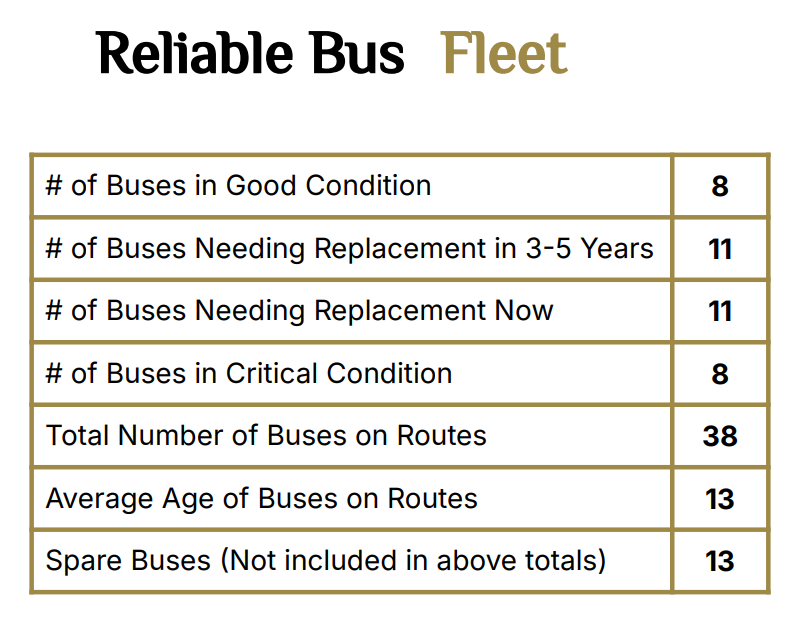
Cromer noted that the estimated budget “doesn’t put a dent” in FCPS infrastructure needs, such as elevator updates, air conditioner upgrades, asphalt patches, kitchen upgrades, and more, but, she said, “it does include significant forward progress,” including the purchase of three buses.
Of FCPS’ 38 buses on routes, only eight of them are in “good condition.” Eleven are in need of replacing now. School Board Chairman Ingram said it’s “unacceptable” for students to have to wait on a second bus because one broke down in the winter.
Locust Grove Supervisor Levi Cox said that the “definite” wage and performance gaps are staggering. He said training and career readiness at the Collaboration and Career Development Center is “going really well and those kids are excelling and doing a great job,” but emphasized that some of them are making more money per hour than support staff at the school that’s training them.
Little River Supervisor Linda DeVito Kuchenbuch asked to hear from each member of the School Board regarding what they’d like to see from the county in order to help make up the differences. Many emphasized that not meeting current needs only make the gaps grow larger both within FCPS, and between FCPS and neighboring communities.

Combat food insecurity in our community! Plenty! Farm and Food Bank provides fresh produce and pantry staples to those in need.
Learn more at www.plentyfoodpantry.org.
Kirsten Vest (School Board, Locust Grove) said that without bettering FCPS salary scales, transportation, and benefits, the division will “continue to lose good employees. "We have to do something…” she said, adding that a joint meeting is a step in the right direction.
Vice Chair Laura LeRoy of Burks Fork said, “If we’re not pacing our funding with the gap in the LCI and Rebenchmarking, we’re creating a bigger gap every year.”
Debbie Snellings of the Courthouse District, who worked in FCPS for more than 40 years, said she thinks the county needs “to understand that teachers need to be valued, our parents need to see wonderful buildings that they’re sending their kids to, and they need to feel comfortable putting their child on the bus… Those are just basic things.”
Supervisor Chairman Joe Turman said, “It’s not that we don’t hear you or that we don’t care…” He noted that the county gets a “pot of money” every year to split between many county departments with the same kind of gaps, including deputies and EMS workers. “We’ve got to divvy it up” to be fair to everyone, he said.
The next installment of “The Price of Education” will examine the School Board’s plans to create a Capital Improvement Plan and how it will help meet FCPS’ maintenance and infrastructure needs. It will include additional coverage from the Feb. 24 meeting.